Iran’s Regime Faces Economic Collapse Amid Sanctions
Iran's regime is facing severe economic pressure from U.S. blockades and regional actions, costing it $500 million daily. Meanwhile, NATO allies are urged to increase defense spending amid rising Russian provocations.

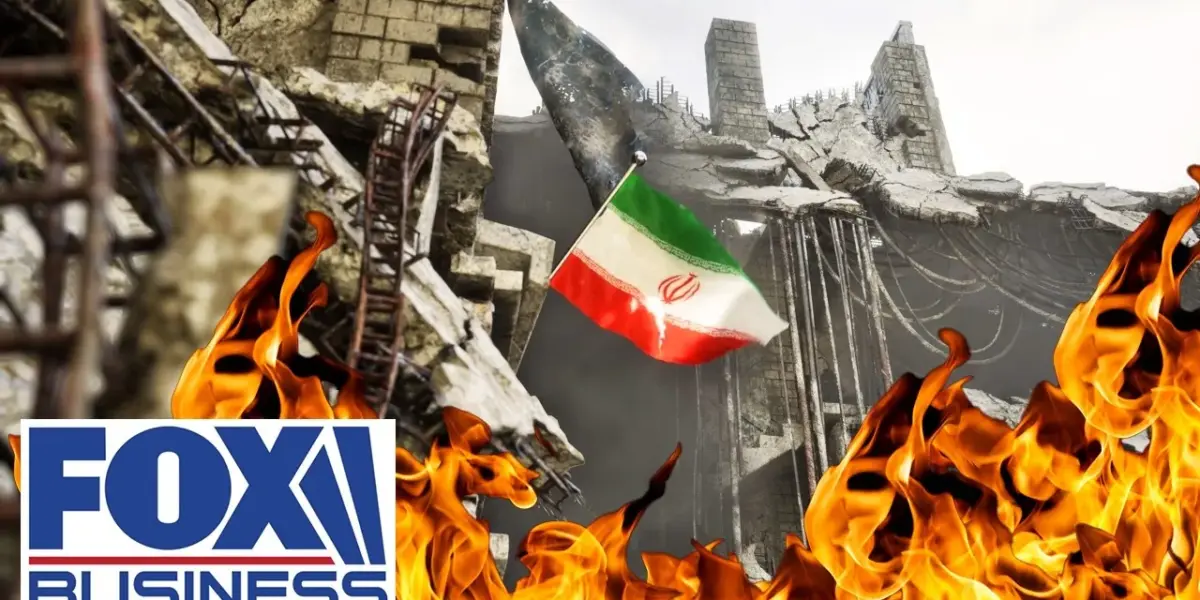
Iran’s Regime Faces Economic Collapse Amid Sanctions
An Iranian gunboat fired on two ships in the Strait of Hormuz recently, causing significant damage to one vessel’s bridge. This attack occurred despite the President’s announcement of a ceasefire extension.
The United States continues to maintain a blockade on Iranian ports. This blockade is costing Iran an estimated $500 million per day, with the President describing the regime as “starving for cash” due to the ongoing closure of the strait.
Economic Warfare Cripples Iran
Victoria Coates, Vice President of the Heritage Foundation’s National Security division, stated that Iran has suffered severe economic damage over the past seven to eight weeks. She believes this damage is irreversible.
Coates described the situation as a fracturing of the regime, lacking the command and control needed for decision-making. The regime is losing money rapidly, and Coates emphasized that time is on the President’s side.
The U.S. can maintain the blockade, limiting Iran’s oil exports and potentially encouraging change from the Iranian people. Meanwhile, U.S. forces conducted an operation against a stateless, sanctioned oil tanker in the Indo-Pacific. Maritime tracking data showed this vessel departed from China, loaded oil at Iran’s Kharg Island, and then headed back out to sea.
Regional Powers Unite Against Iran
China, through President Xi Jinping, has called for the Strait of Hormuz to reopen. China is feeling the economic effects of the U.S. blockade, wanting access to cheaper oil from Iran. However, the region is increasingly uniting against Iran.
The UAE recently took strong action to dismantle illicit terrorist financing networks operating out of Dubai, a major economic lifeline for Iran. Syria has targeted drug smuggling rings that provide cash to the Iranian regime.
Coates explained that Iran’s escape routes and connections to the regional economy are being cut off. She suggested these actions are the consequences of past behavior, and the regime may not last much longer. Despite these pressures, the Iranian regime continues its actions, leading to escalating tensions.
NATO Faces European Security Challenges
The President expressed dissatisfaction with European allies, noting a lack of support during the conflict. He feels relationships with countries like Italy, France, and Germany have weakened due to their unhelpful stance.
In a separate development, NATO jets intercepted Russian strategic bombers and fighter jets over the Baltic Sea. Russia claimed these flights were scheduled and occurred in neutral territory.
The interception involved multiple fighter jets from various NATO countries. Coates believes that European nations, particularly Germany, the UK, France, and Italy, need to prioritize their own defense spending.
She suggested these major economies should aim to spend 5% of their GDP on defense. With a NATO summit approaching, difficult discussions are expected regarding European commitment to collective security.
Decades of Hostility and a New Approach
The article recalled past incidents, such as Iran holding U.S. Navy officers and the 1979 hostage crisis where diplomats were held for 444 days. During that time, chants of “Death to America” were heard, and the U.S. was referred to as the “Great Satan.” Iran has a long history of attacking the U.S. and its military, spanning 47 years.
Past presidents from both parties have vowed to prevent Iran from obtaining nuclear weapons. However, President Trump is highlighted as the first to take decisive action.
This approach is seen as critical for American safety, aiming to prevent a nuclear-armed Iran rather than reshaping the Middle East. The goal is to remove a significant threat to the U.S., ensuring that whatever comes next is different from the policies of the past 47 years.
Iran’s Nuclear Ambitions and Sanctions Leverage
The President indicated the conflict was nearing an end, yet Iran continues its resistance. The regime has not agreed to halt its nuclear enrichment efforts.
Coates suggested Iran’s only remaining leverage is its nuclear program, preventing it from becoming a North Korea in the Persian Gulf. Iran’s past decisions have isolated it as a failing country, and its nuclear program is all it has left.
Regarding a potential deal, the article questions Iran’s trustworthiness, citing past lies about missile capabilities. If an agreement is reached, the lifting of sanctions is unlikely in the near future.
The President has been clear that no money will be sent to Iran. Sanctions could be lifted incrementally if Iran meets specific benchmarks, which serves as the U.S.’s primary leverage over a desperate regime.
Source: 'NO COMMAND’: Inside the chaos GRIPPING Iran’s regime (YouTube)

Related Articles
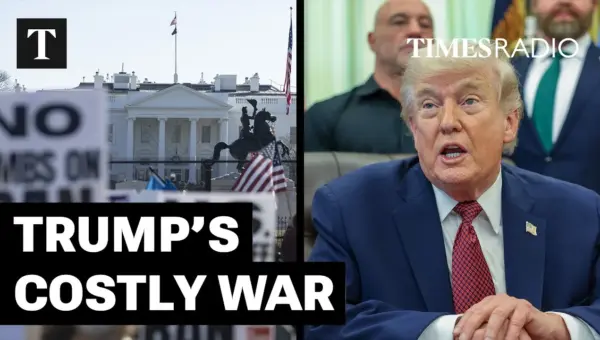
Trump’s Iran Standoff: A Costly War With No Clear Win
President Trump's strategy in the Iran conflict is under scrutiny as the costly standoff yields no clear victory. Key objectives, like securing passage through the Strait of Hormuz, remain unmet, while domestic and international economic impacts persist. Both sides face difficulties in claiming success amid ongoing tensions.

US Faces Iran Standoff: Can Diplomacy Win Over Threats?
The U.S. and Iran are in a tense standoff over the Strait of Hormuz and Iran's nuclear program. High-level talks are set to occur in Pakistan, but experts debate whether diplomacy or threats will lead to a resolution. The situation impacts global oil prices and regional stability.


Iran’s Strait of Hormuz Tensions Flare Amid Peace Talks
Tensions between the US and Iran escalate in the Strait of Hormuz amidst crucial peace talks in Pakistan. Meanwhile, a US investigation probes the mysterious deaths of national security insiders, and new hope emerges for mental health treatment with expanded psychedelic drug research.