Goldberg-Polin Shares Love and Pain in New Book ‘When We See You Again’
Rachel Goldberg-Polin's new book, "When We See You Again," shares her journey of love and loss following the kidnapping and death of her son, Hirsch. She describes the book as a "love letter wrapped in pain," exploring grief as the price of love and finding strength in "tragic optimism." The book details the agonizing 330 days of captivity and her perspective that hope made that period the "good part."

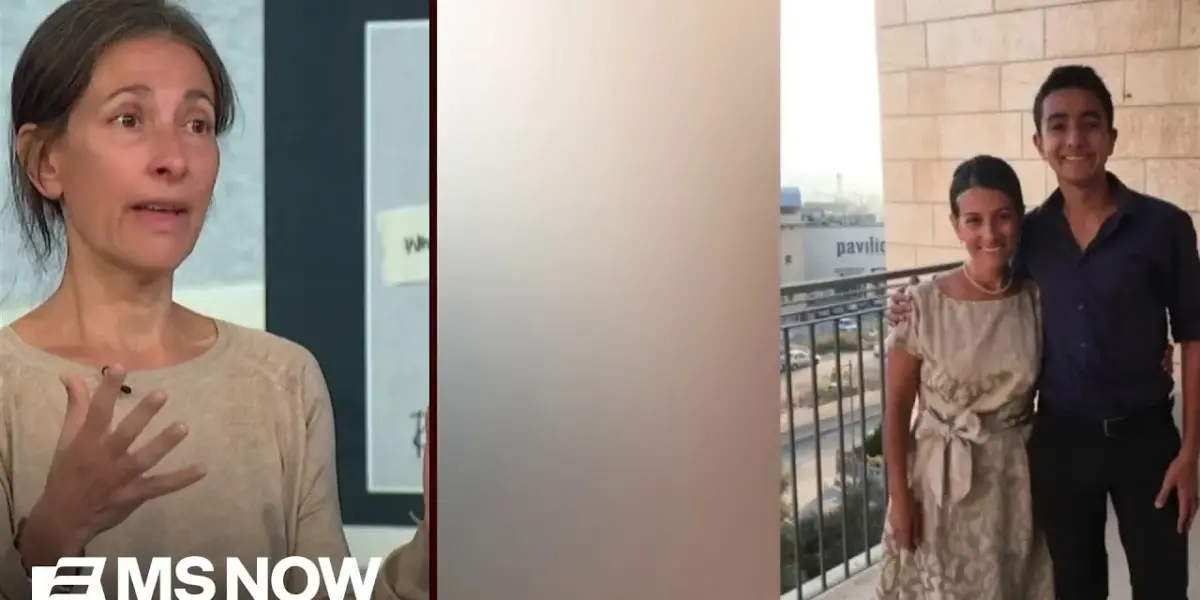
New Book Explores Grief as a ‘Love Letter Wrapped in Pain’
More than two and a half years after the Hamas attacks on Israel, Rachel Goldberg-Polin is sharing her story in a new book. The attacks on October 7th killed over 1,000 civilians and led to the kidnapping of hundreds. Among those taken was American-Israeli Hirsch Goldberg-Polin, who was attending the Nova Music Festival.
Hirsch was held captive in Gaza and later killed while in captivity. His parents, Rachel and John, spent 330 days fighting for his safe return and advocating for all hostages.
Now, Rachel’s experiences and memories are captured in her new book, “When We See You Again,” released this week. Her husband, John, wrote the book’s afterword.
A ‘Love Letter Wrapped in Pain’
Rachel Goldberg-Polin described the book not as a memoir or a tell-all, but as a profound expression of love. “The essence of this book is, I realized, it’s actually a love letter that’s wrapped in pain or maybe it’s a pain letter that’s doused in love,” she explained. Sharing these “packages of pain” allows others to understand her deep emotional responses.
She reflected on the nature of grief, comparing it to actor Stephen Colbert’s view that loss can be a “gift” because it connects people. Goldberg-Polin found an “epiphany” that grief is not something to avoid. “Grief is really a badge of honor.
It’s the price of love,” she stated. “We don’t grieve for people that we didn’t love.” She believes love continues to grow even after a person is gone, creating an ongoing relationship that is worth the price of grief.
The ‘Good Part’ Was the Hope
The book details the agonizing 330 days from when Hirsch was kidnapped until his death was confirmed. Goldberg-Polin revealed a startling perspective: those 330 days were the “good part.” She explained this by describing the period as a “Tupperware container of where he was stolen.” During this time, despite the immense suffering, torture, and anxiety, there was hope and a drive to save him.
“We had the hope and the drive to save him. And now I’m in this other place,” she said. Burying a child, she noted, is a profound loss shared by millions.
However, her experience was made more complex by the preceding period of captivity and the struggle to save him. She had to “unpack those 330 days that I shoved into suitcases and kind of buckled really tight so that I could function and run to try to save him.”
Grief as a Universal Connector
Goldberg-Polin sees grief and loss as powerful unifiers. “Grief and loss and mourning and suffering is actually a uniter. It is part of this human enterprise.
We are all going to go through it,” she stated. She highlighted that the pain of loss is a constant presence for those experiencing it, even if others don’t see it.
This constant pain can create a disconnect with well-meaning people who ask, “How are you doing?” Goldberg-Polin’s internal response is often, “How do you think I’m doing? Do you not see this dagger?” She believes that the question itself reveals a lack of understanding of the depth of ongoing suffering.
Remembering Hirsch: A Radical Listener
When asked to share what made Hirsch special, Goldberg-Polin resisted the urge to mythologize him. “I actually really believe that Hirsch was the perfect son, certainly not perfect,” she said. She emphasized his values, particularly that he was a “radical listener.” This meant he was profoundly curious and genuinely wanted to hear others’ perspectives, a quality she finds unusual and valuable.
She shared small, endearing details that bring a smile to her face. Hirsch always carried a small bag with tissues and band-aids, which she saw as a possible “love language.” Another detail was his habit of always putting the toilet seat down, a gesture he adopted independently. These memories, while simple, offer moments of light amidst the darkness.
‘Tragic Optimism’ in the Face of Loss
Goldberg-Polin challenges the idea that people “get better” after profound loss. Instead, she believes people can get stronger or learn to carry their grief differently. She calls the pressure to be “better” after a certain time a form of “toxic positivity.” She prefers the term “tragic optimism,” a state she embraces.
“I’m an optimist, but I’m a tragic optimist. I will be until I’m put in the ground and I’m actually fine with that,” she stated. She acknowledges her blessings, including her two daughters and her partner, and the 23 years she had with Hirsch.
“I was blessed with this delicious cookie for 23 years. I will pay that price again and again,” she said.
Looking Ahead
The book “When We See You Again” offers a powerful testament to love, loss, and resilience. Rachel Goldberg-Polin’s strength and eloquence continue to resonate, offering a message of hope and understanding for those navigating their own profound grief. Her journey, marked by immense pain and enduring love, provides a new perspective on coping with loss.
Source: 'It's a love letter wrapped in pain': Rachel Goldberg-Polin on new book 'When We See You Again' (YouTube)

Related Articles


China’s Dark Secret: 27 Years of Persecution Emerge
Twenty-seven years ago, a peaceful protest in China sparked a brutal crackdown on Falun Gong. Thousands gathered to practice their faith freely but faced arrest, torture, and death. The persecution continues today, with confirmed deaths and disturbing reports of organ harvesting.


Health Secretary Defends Policies Amid Senate Scrutiny
Health Secretary Robert Kennedy testified before the Senate, defending the Trump administration's healthcare policies, including Medicaid reforms, rural healthcare investments, and prescription drug initiatives. The hearing saw sharp disagreements with Democratic senators over vaccine policies, drug pricing transparency, and the impact of healthcare cuts.


Starmer Faces Backlash Over Vetting Scandal, Lacks Judgment
Prime Minister Keir Starmer is facing backlash after dismissing senior civil servant Oliver Robbins over the Peter Mandelson vetting scandal. Robbins' testimony suggests he followed proper procedure, contradicting Starmer's stated reason for dismissal. Critics accuse Starmer of poor judgment and a disregard for due process, further fueled by revelations that he ignored advice from former cabinet secretary Simon Case.