Global Alliances Fray as Trump’s Policies Spark Outcry
Global allies are voicing sharp criticism of Donald Trump's foreign policy, questioning the value of U.S. military presence and demanding new security arrangements. From the Middle East to Europe, nations are re-evaluating their ties, with some considering significant shifts like currency diversification and even new geopolitical blocs.

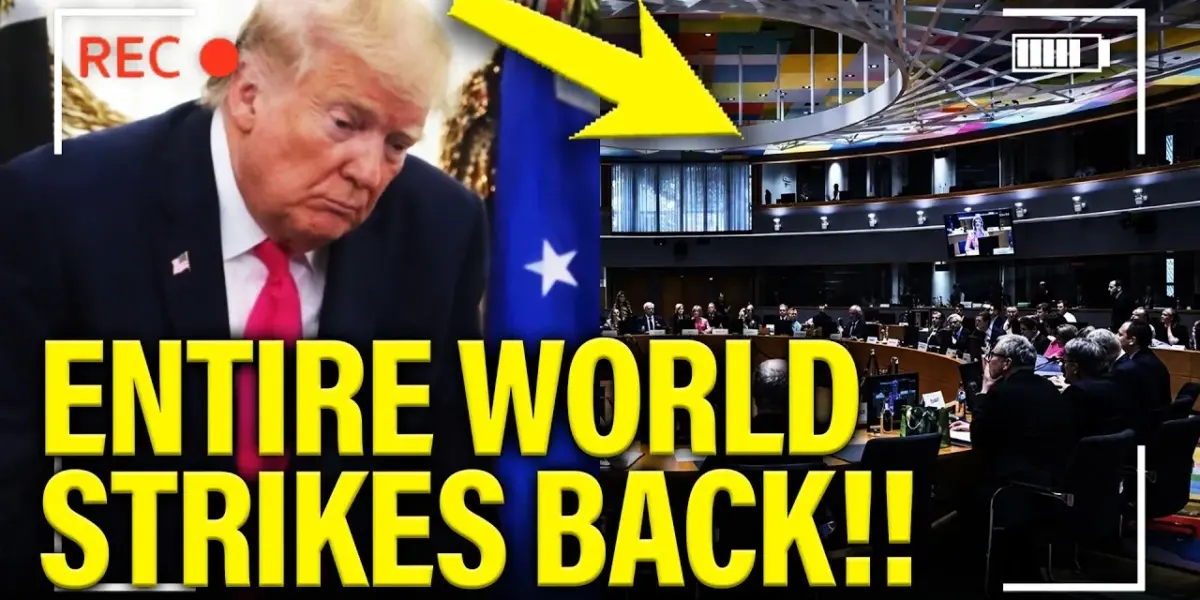
Global Alliances Fray as Trump’s Policies Spark Outcry
World leaders are expressing strong disapproval of Donald Trump’s foreign policy decisions. Allies are questioning the value of U.S. military bases in their countries. They argue these bases have become a liability, drawing them into conflicts without clear benefits in return.
This discontent is not confined to one region. In Australia, Canada, and Europe, voices are rising against Trump, suggesting his actions have damaged the global order. Some discussions even include the possibility of Canada joining the European Union, an idea previously considered unthinkable, now supported by a significant portion of Canadians.
Middle East Allies Rethink U.S. Ties
In the Middle East, the situation is particularly tense. A prominent scholar from the United Arab Emirates (UAE), Abdullik Abdullah, stated that the UAE no longer requires U.S. protection. He described American bases as a burden rather than a strategic asset, advocating for their closure.
Abdullah’s comments to Reuters highlighted the UAE’s self-defense capabilities demonstrated during recent Iranian aggression. He emphasized the UAE’s need for advanced weaponry but suggested that American bases were no longer essential for their security.
Adding to this, UAE economic and foreign ministers have reportedly demanded currency swap agreements from the U.S. They indicated that if the U.S. fails to provide support during emergencies, the UAE might switch to using the Chinese yuan for transactions, potentially weakening the U.S. dollar’s global standing.
These officials also pointed to Trump’s decision to attack Iran as a cause of their country’s entanglement in a destructive conflict. The potential shift to other currencies for oil and gas sales is seen as a direct challenge to the dollar’s dominance, which is largely due to its widespread use in oil trading.
Qatar’s Strategic Shock
Qatar, a close U.S. ally and mediator, has also experienced significant fallout. Despite its efforts to prevent a war with Iran and warnings about the consequences of conflict, Qatar faced over 700 Iranian missile and drone attacks. These attacks disrupted the nation’s natural gas production, a vital source of its wealth and a significant portion of global supply.
Analysts note that neither Qatar’s strong ties with the U.S. nor its relationship with Iran shielded it from this economic pain. The situation has created a “strategic shock” for Qatar and its neighbors, who felt excluded from major decisions like a war with Iran.
Rashid al-Muandi, vice president of the Center for International Policy Research in Qatar, expressed disappointment. He stated that Gulf leaders expected to be consulted on significant regional actions like a war with Iran and believed they had a better working relationship with the U.S. The level of Iranian aggression against Qatari infrastructure has been described as extreme.
While many Gulf Arab nations have historically had difficult relations with Iran, Qatar, Saudi Arabia, and the UAE have recently invested in warmer ties. The expectation that gifts, like a private jet for Trump, would ensure favorable treatment proved unfounded, as Qatar was not even alerted to impending military actions.
Shifting Security Landscape and New Partnerships
The perceived weakening of the U.S. security umbrella has led nations to look elsewhere for protection. A conference in Turkey highlighted the sentiment that the U.S. security guarantee is no longer reliable. Gulf states are now exploring closer ties with China and other allies.
Ukraine has stepped into this void, signing 10-year security deals with Saudi Arabia, the UAE, and Qatar. Ukrainian President Zelenskyy announced that his country has received requests from 11 Middle Eastern and Gulf nations for security support, with plans to expand this cooperation to the Caucasus region.
These agreements include drone deals, co-production of weapons, and joint investment in new technologies. Ukraine is also establishing annual funding and setting fixed terms for these security partnerships.
Concerns Over U.S. Negotiation Tactics
European allies and Gulf states have expressed worries about the U.S. negotiating team’s inexperience. They fear that a rush for a headline-grabbing deal with Iran could create more problems than it solves.
Diplomats are concerned that a superficial agreement on Iran’s nuclear program and sanctions relief might be reached, leading to prolonged technical complexities and downstream issues. The current situation has already led to significant oil price shocks and disruptions, with over $50 billion in crude oil production lost since the conflict began.
Historical Context and Future Outlook
The current global unease echoes past periods of shifting alliances and power dynamics. Historically, international relations have often been tested during times of perceived American unilateralism or withdrawal from global commitments.
The reliance on the U.S. dollar for international trade, particularly oil, has been a cornerstone of global finance for decades. Any significant move away from the dollar could have far-reaching economic consequences for the U.S. and the world.
The prospect of Canada potentially joining the European Union signals a desire for closer integration among like-minded nations, possibly in response to perceived instability in traditional alliances. Finland’s president, Alexander Stubb, noted a distinction between the United States and President Trump, expressing hope for enduring transatlantic ties regardless of U.S. leadership.
The situation highlights a broader trend of nations seeking greater autonomy and diversifying their partnerships. The focus on potential deals involving real estate projects and golf courses, as seen in reports about sanctions on Syria, raises questions about the motivations behind U.S. foreign policy decisions.
Why This Matters
The potential unraveling of long-standing alliances and the questioning of the U.S. dollar’s dominance have significant global implications. If key allies no longer see value in U.S. security guarantees, it could lead to a more fragmented and unstable world order.
The economic impact of disrupted oil supplies and potential shifts in currency usage could affect global markets for years to come. Nations are actively seeking new security arrangements, indicating a proactive response to perceived changes in U.S. foreign policy commitments.
The upcoming months will be critical in determining whether these alliances can be mended or if a new global configuration will emerge. The focus remains on how nations will adapt to a changing geopolitical landscape and secure their interests in the absence of traditional security umbrellas.
Source: All HELL BREAKS LOOSE as Trump Faces GLOBAL RECKONING!!! (YouTube)

Related Articles

US Fires on Ship, Escalating Iran Tensions
The U.S. has fired upon and seized an Iranian cargo ship in the Strait of Hormuz, escalating regional tensions. This military action, combined with aggressive political rhetoric, raises concerns about retaliation and further disruption to global trade. Peace talks now appear unlikely, with potential for prolonged economic impact.

Trump’s Iran Strategy: Bravado Hides Deep Fears, Report Says
New reporting from The Wall Street Journal suggests President Trump's aggressive public stance on Iran hides deep fears, particularly regarding American casualties and past U.S. failures like the 1979 hostage crisis. The report details his internal struggle between bold pronouncements and anxieties about military action, highlighting a complex and sometimes contradictory approach to foreign policy.

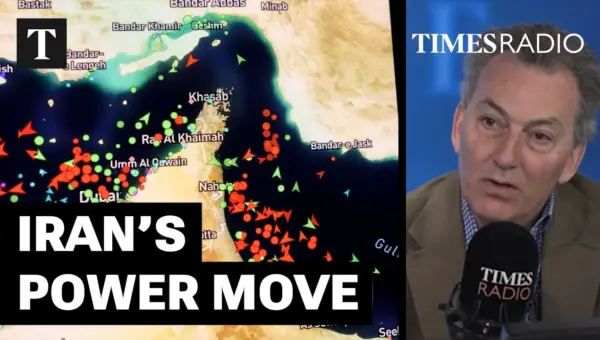
Iran Leverages Strait of Hormuz for Reconstruction Funds
Iran is reportedly leveraging its control over the Strait of Hormuz with a 'toll booth' strategy to fund post-conflict reconstruction. This tactic emerges amidst rising tensions in the Gulf, with U.S. forces seizing an Iranian cargo ship and Iran vowing retaliation. Internal divisions within Iran complicate potential peace talks, while the nuclear program and regional conflicts remain key negotiation points.