Trump’s Fitness: A Divided Nation Seeks Answers
A debate on Donald Trump's fitness to lead reveals deep divisions, weighing democratic legitimacy against concerns over character and norms. Nuanced views highlight the role of authenticity and the impact of globalization on American workers.

Trump’s Fitness: A Divided Nation Seeks Answers
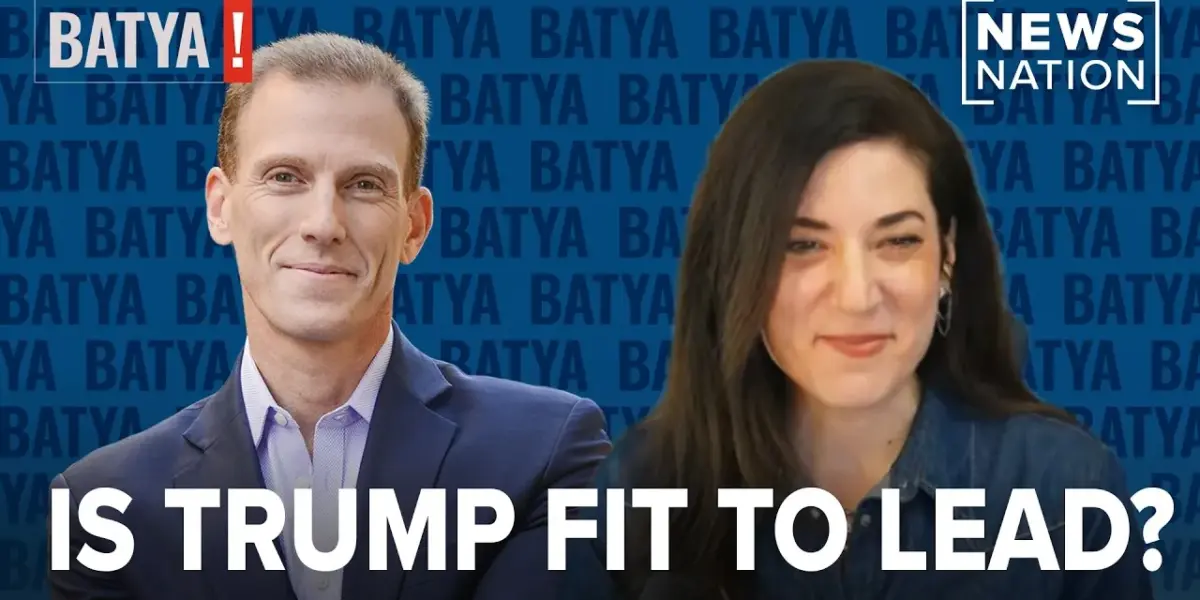
The question of Donald Trump’s fitness to lead is a deeply divisive one, sparking passionate debate across the American political spectrum. While some view him as the best president of their lifetime, others hold strong reservations. This complex issue was explored in a recent discussion featuring Batya and Jamie Metzl, a former national security official and author.
Metzl, identifying as a center-left Democrat, offered a nuanced perspective. He acknowledged Trump’s election victory as proof of democracy, stating that the will of the people, as expressed through the ballot box, makes him the legitimate president.
However, Metzl also voiced significant concerns, particularly regarding attacks on the integrity of the electoral system, which he believes are crucial for democratic stability. He drew parallels to historical empires that collapsed due to failed succession, highlighting the importance of a peaceful transfer of power.
Metzl also pointed to specific actions and statements by Trump that he found troubling. The events of January 6th, which saw protestors attacking the U.S. Capitol, were described as deeply upsetting. Remarks like threatening to “wipe out Iranian civilization” and public criticisms of the Pope were seen as detrimental to U.S. interests and values.
On the other hand, Metzl recognized Trump’s unconventional approach as a potential strategic asset. He noted that NATO allies have increased their defense spending, something that had been long sought but never achieved. This unpredictability, he suggested, can sometimes keep adversaries guessing and create leverage.
A Democracy Needs Graceful Losers
Batya, while acknowledging her strong support for Trump, agreed with Metzl on the critical importance of electoral integrity. She stressed that a democracy relies not just on winners but on losers who concede gracefully. The inability or unwillingness to do so, she argued, directly endangers the electoral system itself.
She also defended Trump’s actions regarding Iran, particularly the decision to target Iranian nuclear sites. Batya contrasted this with the perceived muted reaction from some Democrats, suggesting a political bias in how such actions are viewed. She viewed Trump’s willingness to take a significant political risk to prevent a nuclear-armed Iran as a courageous and beneficial act for future generations.
The discussion touched upon the perceived media bias against Trump, with Batya suggesting that much of the media roots for Iran when it is in conflict with Trump. This, she believes, contributes to a sense of futility among his supporters, who feel that positive actions are often ignored or twisted.
The Nuance of Leadership and Geopolitics
Metzl elaborated on his support for confronting Iran’s nuclear ambitions, long-range missile development, and support for terror proxies. He critiqued the Iran deal (JCPOA) as weak and ineffective, noting its sunset clauses and failure to address Iran’s broader destabilizing activities. He recalled his public support for Trump’s actions against Iran, even receiving a rare positive mention from Trump on Truth Social.
However, Metzl also suggested that the execution of these policies could have been more strategic. He questioned whether better collaboration with allies and clearer communication with Congress could have strengthened the U.S. position. He expressed concern over the growing support for the war in the U.S. and argued for clearer articulation of goals to the American public.
The conversation extended to the complexities of international relations, with Metzl emphasizing the need for respect and collaboration with allies. He highlighted inconsistencies in U.S. foreign policy, such as pushing against Iran while appearing to be less assertive against Russia, China, and North Korea in other contexts, like Ukraine. This, he argued, can undermine U.S. standing and effectiveness on the global stage.
Authenticity and the Working Class
Batya presented an interesting perspective on Trump’s often undignified communication style. She argued that what some see as appalling or beneath the office is, in fact, a facet of his character that allows him to connect with the “forgotten men and women of the heartland.” His willingness to challenge elites and speak directly about issues like trade deals (NAFTA) and open borders, even when facing opposition, resonated with a segment of the population that felt left behind by both parties.
Metzl acknowledged this authenticity, agreeing that it connects with people who feel overlooked. He shared his own experience serving in the Clinton administration and witnessing how globalization policies, like China’s entry into the WTO, negatively impacted American workers. He supported the idea of building a North American economic bloc with Canada and Mexico as a way to compete effectively with China.
However, Metzl reiterated that the presidency requires managing international relationships with respect, even towards adversaries. He warned that extreme political polarization and tribalism, where opposing even good ideas simply because they come from the other party, could be detrimental to the nation’s future. He concluded by emphasizing that American history is built on finding ways to work through disagreements.
Audience Engagement and Lingering Questions
The discussion also briefly touched upon the Epstein files, with Metzl expressing a desire for full transparency to get to the bottom of the matter, while acknowledging its politicization. He also commented on the Operation Warp Speed initiative, praising Trump’s role in accelerating vaccine development and saving lives, despite political challenges related to the anti-vaccine movement.
The audience poll revealed that 62% of respondents found Trump fit to lead, while 38% did not. This reflects the deep divisions in the country. The conversation concluded with a call for continued dialogue and a focus on finding common ground, even amidst significant disagreements.
Why This Matters
This debate highlights the core tensions in evaluating a political leader. It pits the democratic principle of elected legitimacy against concerns over character, rhetoric, and adherence to democratic norms. The discussion also highlights the role of authenticity in politics and the deep-seated feelings of being left behind by economic and global changes.
Implications and Future Outlook
The differing viewpoints presented suggest that voters are weighing different factors when assessing a candidate. For some, adherence to traditional political decorum and respect for institutions are paramount.
For others, a leader’s perceived authenticity, willingness to challenge the status quo, and focus on specific economic grievances are more important. This suggests that future political campaigns will continue to grapple with these competing priorities.
The conversation also points to the ongoing challenges in foreign policy. Balancing assertive action with maintaining strong alliances and clear communication remains a difficult task. The strategic use of unpredictability versus the need for stable international relations will likely continue to be a key debate.
Historical Context
The discussion implicitly references historical patterns of political division and the challenges of maintaining democratic institutions. The mention of failed empires due to succession issues and the historical context of globalization’s impact on American jobs provides a backdrop for understanding current anxieties. The Clinton administration’s role in trade deals, for instance, is revisited as a point of contention that continues to shape political discourse.
The debate also touches upon the evolution of political communication, from the directness of figures like Trump to the more carefully managed personas of past politicians. The acknowledgment of how media narratives can shape public perception is also a recurring theme in American political history.
Ultimately, the discussion is a microcosm of the broader national conversation. It reveals a desire for leaders who can navigate complex domestic and international challenges while also addressing the concerns and aspirations of a diverse electorate. The challenge remains to find common ground and reinforce democratic processes, regardless of who holds office.
Source: Live Debate: Jamie Metzl Joins Batya on "Prove It with Batya! " (YouTube)

Related Articles
Trump’s Pope Feud Fuels Political Gain, Analysts Say
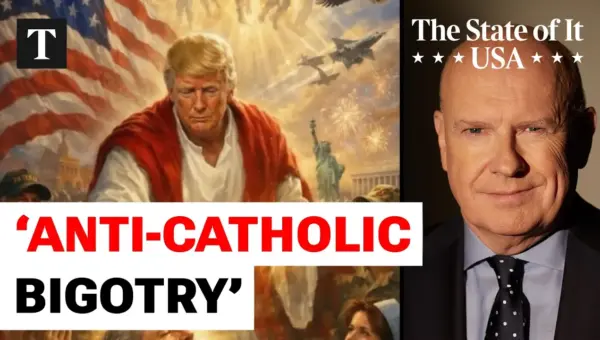
Donald Trump's social media post depicting himself as Jesus Christ has sparked controversy and debate about the role of religion in politics. Analysts suggest that while the post drew criticism, Trump's political base, including Catholic supporters, is likely to remain loyal, potentially even benefiting from the ensuing discussion. The incident also highlights historical anti-Catholic sentiments and the complex relationship between faith and political expediency in the United States.


World Cup Woes: Boycott Calls Threaten US Tourism
Reports indicate a surprising lack of international interest in the upcoming FIFA World Cup hosted in the U.S., leading to widespread hotel cancellations. Calls for a boycott are growing, fueled by concerns over high costs, inflation, and political actions, threatening the event's expected economic benefits.
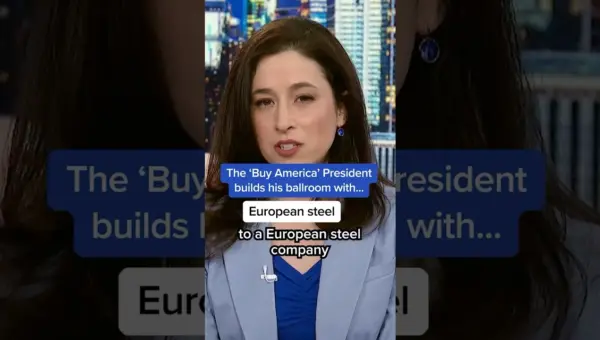
Trump’s Ballroom Built With Foreign Steel, Not ‘Buy America’
President Trump's new White House ballroom is reportedly being built with tens of millions of dollars in steel donated by European manufacturer ArcelorMittal. This use of foreign steel has drawn attention, given Trump's 'Buy America' policy. The White House defended the project as a taxpayer-funded enhancement.