Army Leaders Face Tough Questions on Budget and Readiness
Army Secretary Daniel J. Driscoll and General Christopher D. LaNeve faced sharp questions from the House Appropriations Subcommittee on Defense regarding the Army’s fiscal year 2025 budget. Lawmakers focused on funding for modernization, readiness challenges, and personnel retention. The leaders defended the budget request, highlighting investments in new technologies and efforts to maintain a ready fighting force amidst global instability.


Army Leaders Face Tough Questions on Budget and Readiness
Army Secretary Daniel J. Driscoll and Vice Chairman of the Joint Chiefs of Staff and Acting Chief of Staff of the Army Christopher D. LaNeve appeared before the House Appropriations Subcommittee on Defense on Tuesday for a crucial budget hearing.
The lawmakers pressed the Army leaders on funding priorities, readiness challenges, and the service’s strategic direction in a complex global security environment. The hearing focused on the Army’s fiscal year 2025 budget request and its ability to meet current and future threats.
The subcommittee members sought clarity on how the proposed budget would address critical needs, including modernization efforts, personnel retention, and the maintenance of aging equipment. Secretary Driscoll and General LaNeve presented the Army’s case for the requested funds, emphasizing the need for sustained investment to ensure the force remains prepared and capable. They highlighted specific programs and initiatives designed to enhance combat effectiveness and technological superiority.
Budget Priorities and Modernization
Secretary Driscoll outlined the Army’s key budget priorities, stressing the importance of investing in future capabilities. He explained that a significant portion of the requested funds is earmarked for modernization programs aimed at developing next-generation technologies.
These include advancements in areas like artificial intelligence, long-range precision fires, and soldier lethality systems. The goal is to ensure the Army can deter potential adversaries and win if conflict arises.
General LaNeve elaborated on the operational impact of these modernization efforts. He provided examples of how new technologies are being integrated into training and operational planning.
The Army is working to ensure that soldiers have the tools and training necessary to operate effectively in contested environments. This includes developing new tactics and strategies that incorporate these advanced capabilities.
Readiness and Global Challenges
Lawmakers raised concerns about the Army’s current readiness levels, particularly in light of ongoing global tensions. They questioned how the budget would address any shortfalls in training, equipment, and personnel that could impact the Army’s ability to respond to crises. Secretary Driscoll assured the committee that readiness remains a top priority, despite competing demands on the budget.
He detailed the steps being taken to improve maintenance and sustainment for existing equipment, ensuring that the force is ready to deploy when needed. General LaNeve added that the Army is constantly assessing its global posture and making adjustments to ensure forces are positioned effectively. He noted the importance of alliances and partnerships in maintaining regional stability.
Personnel and Retention
The discussion also touched upon the critical issue of personnel. Recruiting and retention challenges have been a significant concern for the Army in recent years.
Lawmakers inquired about the strategies in place to attract and keep talented soldiers, especially in specialized fields. Secretary Driscoll highlighted initiatives aimed at improving quality of life for soldiers and their families, as well as enhancing career development opportunities.
General LaNeve emphasized the human element of the Army’s strength. He explained that investing in soldiers, providing them with excellent training, and ensuring their well-being are paramount to maintaining a high-performing force. The Army is exploring innovative approaches to recruitment and career management to meet its personnel needs.
Looking Ahead
The hearing concluded with a clear understanding of the challenges and priorities facing the U.S. Army. Secretary Driscoll and General LaNeve reiterated their commitment to fiscal responsibility and to ensuring the Army is prepared for any future contingency.
The subcommittee is expected to review the Army’s budget request further before making its recommendations. The decisions made in the coming weeks will significantly shape the Army’s capabilities and readiness for years to come.
Source: LIVE: House Subcommittee hearing with Army Secretary Dan Driscoll (YouTube)

Related Articles


Trump Threatens UK Trade Deal, Fuels Defense Spending Debate
Former U.S. President Donald Trump has threatened to revise the trade deal with the UK, drawing criticism for his unpredictable approach. Meanwhile, UK Chancellor Rachel Reeves has labeled the Iran conflict a mistake, citing economic instability and a lack of clear objectives. The nation also faces an intensifying debate over defense spending amid rising global tensions and a need for a clear investment strategy.

Trump Budget Slashes Domestic Programs, Boosts Defense
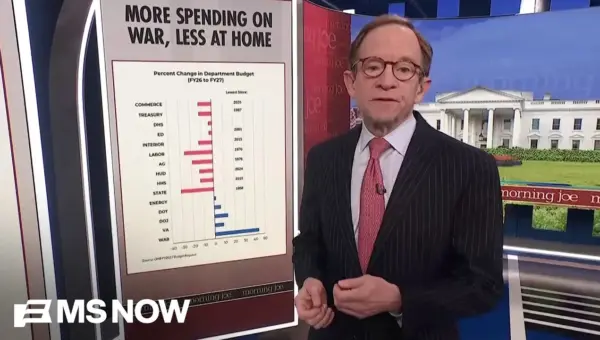
President Trump's new budget proposal calls for deep cuts to nearly all domestic agencies, including the Labor and Agriculture Departments, while significantly increasing defense spending. This plan aims for a dramatic restructuring of federal priorities, but relies on optimistic economic growth forecasts to project debt reduction. Analysts suggest the proposal could offer Democrats substantial campaign advantages in upcoming elections.


Melania Trump Denies Epstein Links, Urges Public Hearing for Victims
Melania Trump has strongly denied any association with Jeffrey Epstein, calling for an end to rumors linking her to the disgraced financier. She also urged Congress to hold a public hearing for Epstein's survivors to testify under oath.