China’s Military Purge: Who Is Really In Control?
China's PLA is undergoing a massive audit and purge, revealing deep-seated corruption and equipment failures. The situation raises questions about who is truly in control: Xi Jinping or lingering influence from purged officials. This complex internal struggle impacts military readiness and political power dynamics.

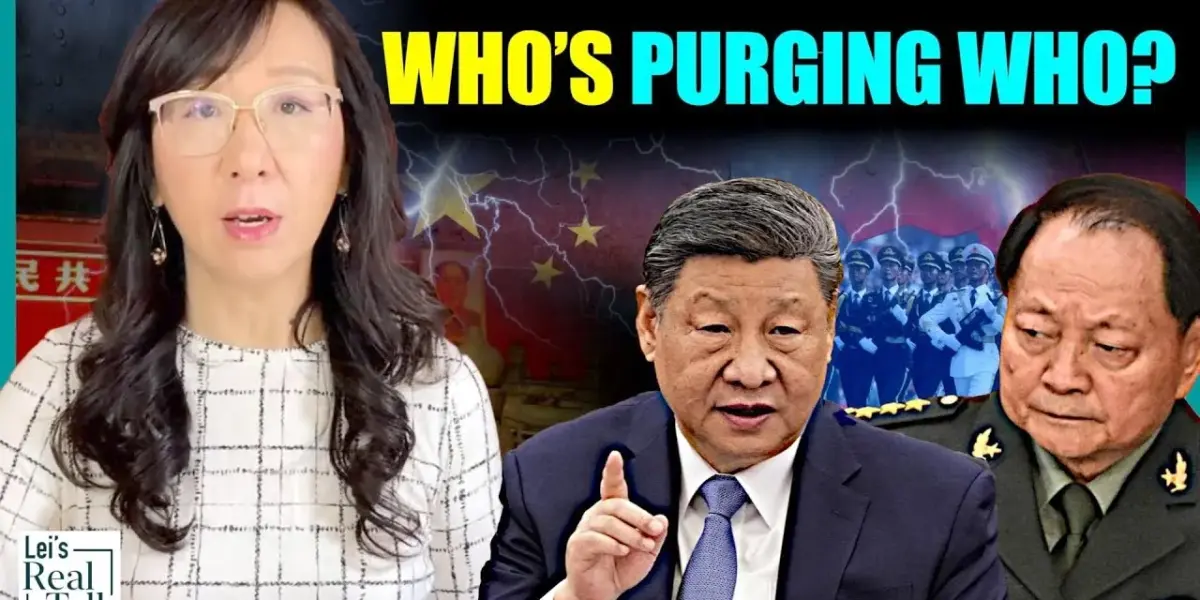
China’s Military Purge: Who Is Really In Control?
Springtime in Beijing usually means renewal, but this year, the air feels heavy and tense. Unusual security measures are in place, making it harder to even get into the city center. This isn’t just another anti-corruption drive; something bigger is happening within China’s People’s Liberation Army (PLA).
A quiet claim has spread across social media: Xi Jinping is purging the military. But the real question no one is asking is whether this is truly Xi’s purge, or if he’s trying to control a situation that’s already spiraled out of his grasp.
Looking closely at the details, the timing, and the targets reveals a deeper story. This isn’t just about cleaning up bad actors; it’s about who truly holds power and controls the military’s might. Two key events clarify this complex situation: a massive inventory audit of PLA equipment and an announcement about military purges.
The ‘Sharp Sword 2025’ Audit: Uncovering Deep-Seated Problems
A large-scale audit, codenamed ‘Sharp Sword 2025,’ is currently underway across the entire PLA. This operation is far from a simple check-up.
It involves a deep dive into equipment quality, stretching back 9 to 15 years. The audit uses a ‘four nos and two directs’ approach: no prior notice, no advanced warning, no listening to reports, no accompanying officials, but going directly to warehouses and sites.
The scope is immense, covering 53 key depots and checking everything from Air Force and Navy equipment to the Rocket Force’s assets. They are tracing the entire supply chain, from production to delivery, and re-examining procurement, maintenance, and storage records. This isn’t just about counting inventory; it’s about ensuring accuracy, checking for old parts passed off as new, and verifying the technical performance of critical systems.
The audit involves physically disassembling missiles and ammunition, testing radar and electronic systems, and inspecting aircraft engines. It also digs into the supply chain, reviewing contracts and checking for substandard or counterfeit materials.
This goes as deep as looking for shell companies and experts who might have evaluated bids from their own firms. The goal is to find and remove everything that is subpar or corrupt.
A History of Fake Success and Real Failures
To understand the significance of this audit, we need to look at how military exercises were conducted in the past. Instead of testing real combat capabilities, the focus was often on guaranteeing success for visiting leaders. Key parts of exercises were pre-recorded, edited, and polished, meaning audiences often watched a finished product rather than a live event.
Even live demonstrations were staged. For example, a helicopter attack might involve blank rounds and pre-planted explosives at the target site, creating the illusion of a successful strike. This practice, revealed by former military journalists, highlights a system where failure was never allowed to be seen, leading to widespread falsification of performance and quality.
What the Audit Has Revealed
Internal briefings suggest the audit has uncovered serious issues. Reports indicate corroded missile fuses, insufficient explosive charges, contaminated materials, and even expired rounds repackaged and relabeled. Grenades have been found filled with sand or sawdust, leading to misfires and reduced lethality during exercises.
Radar and electronic systems have shown falsified power ratings, with downgraded components and poor performance in real-world conditions. Aircraft and engine components have also been found to use counterfeit parts, with exaggerated lifespans and high failure rates.
Why Now? Three Main Reasons
The massive audit is happening now for several reasons. Firstly, ongoing anti-corruption efforts have exposed widespread problems across the defense industry, with senior executives being sacked.
This indicates systemic, full-chain falsification of equipment quality. Secondly, preparations for potential conflict mean such deep-seated issues can no longer be ignored; faulty missiles or radar systems are unacceptable in real warfare.
Thirdly, this audit is a perfect opportunity for political maneuvering. It allows officials to settle scores, bring down rivals, and remove elements of disloyalty within the military. Essentially, it’s a full-scale military-industrial purge aimed at rebuilding a functional military, though the gap between reality and reporting remains a significant challenge.
The NPC Announcement: A Pattern of Purges
Adding to the picture, the Standing Committee of China’s National People’s Congress (NPC) released a bulletin announcing the removal of nine senior military officers—five full generals, one lieutenant general, and three major generals—due to serious violations of discipline and law. This is the second time these removals have been announced, the first being a less specific announcement in February.
What’s notable is that two very high-profile military figures, Zhang Youxia and Liu Zhenli, who were accused of sabotaging the responsibilities of the CMC chairman (Xi Jinping), still retain their NPC deputy status. This raises questions about who is truly being targeted and why the announcement is being made in this way.
A Timeline of Control and Influence
Examining the dates of these generals’ actual removal by their respective service branches reveals a telling pattern. Most were removed in December or January, before Zhang Youxia was reportedly detained on January 20th. This suggests that these generals might have been purged by Zhang Youxia himself while he was still in control of parts of the military.
The subsequent NPC announcements, first in February and then again in April with more specific accusations, could be a way of signaling that these purges did not begin with Xi Jinping. Instead, they may have started under Zhang Youxia’s influence before his downfall. This intricate timing and the selective announcement of names point to internal political maneuvering within the CCP, where institutional language is used to convey signals without explicit statements.
Who Is Purging Whom?
The outside world sees another round of military purges, but insiders are asking a more critical question: who is purging whom? Different factions are watching closely, trying to understand who is truly driving the purge and who controls the military narrative. The people paying the closest attention are those within the system, where the stakes are real.
The fact that Zhang Youxia and Liu Zhenli, despite serious accusations, still retain their NPC deputy status is significant. It suggests that Xi Jinping may not have complete control, or that the purge is not a straightforward top-down operation. The ‘Sharp Sword 2025’ audit, which started at the end of last year when Zhang Youxia was still in command, further supports the idea that this initiative predates Xi’s direct control and is now being continued by him.
External Factors and Internal Struggles
Some commentators link the downfall of these generals to missile failures observed in real-world conditions, such as in Iran or Venezuela. Several of the removed generals were directly responsible for deploying and operationalizing missile systems that later failed. This suggests that the audit and purges are also a response to battlefield failures and a desire to rebuild a military that can perform when needed.
However, the situation is complicated by internal party struggles. Xi Jinping has inherited the problem of a military that cannot perform, and he has limited ability to control who takes the blame.
The purges expose not only corruption but also who approved, protected, and benefited from it, leading to a struggle over accountability. Even Xi’s own family members are reportedly accused of taking bribes, indicating a deep and widespread issue.
The Future Outlook: Uncertainty and Internal Battles
The ongoing purges and audits highlight a military system facing immense challenges. Xi Jinping is trying to assert control and rebuild a functional military, but he faces internal opposition and a system riddled with corruption and falsified performance. The lack of promotions to fill vacant high-ranking positions suggests that Xi may not have the full authority to reshape the military leadership as he wishes.
The current situation is proof of the complex internal battles within the Chinese Communist Party. The military purges are not just about discipline but also about political power.
The outcome remains uncertain, with opposing factions using the purges to advance their own agendas. The next steps will reveal whether Xi can truly reassert control or if he will continue to grapple with a military that is both a symbol of his ambitions and a source of his current struggles.
The next official announcement regarding the status of military personnel is expected with the next NPC Standing Committee meeting.
Source: China’s Military Purge Isn’t What It Looks Like (YouTube)

Related Articles


Millions Made on War News: Is Insider Trading Rampant?
Traders may be illegally profiting from U.S. government announcements related to the Iran conflict, with suspicious trades occurring minutes before major statements. Experts suggest this points to insider trading, though proving it is difficult due to challenges in tracing information sources. The issue raises concerns about corruption and the influence of money in politics.

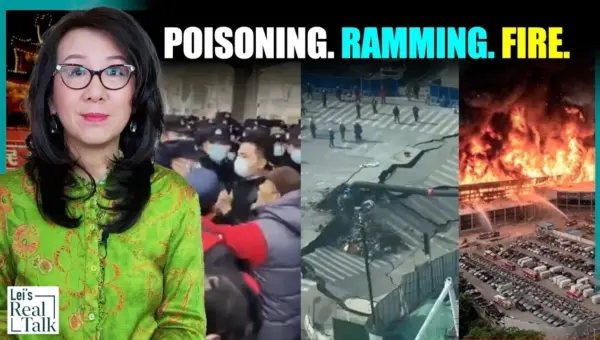
China’s Social Fabric Tears Under Strain
Recent events in China reveal a society under immense strain, marked by violent incidents, infrastructure failures, and growing public distrust. As economic hardship and government overreach increase, citizens are moving from quiet suffering to open defiance, challenging the regime's legitimacy.
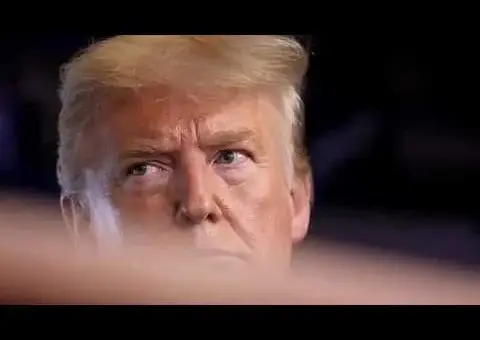
Trump’s $10 Billion Lawsuit: A Corrupt Play for Taxpayer Cash?
Donald Trump is reportedly seeking a $10 billion settlement from the IRS, the agency he oversaw as president. This move, involving taxpayer funds, has sparked accusations of unprecedented corruption and conflicts of interest. Congress is now considering legislation to prevent such payments.