Middle East Tensions Simmer as Ceasefire Nears End; Apple Names New CEO
As a temporary ceasefire in the Middle East nears its end, uncertainty looms over potential US-Iran talks, while Lebanon voices frustration at being excluded from negotiations. Meanwhile, Apple announced Tim Cook's departure after 15 years, appointing John Ternus as his successor, signaling a new era for the tech giant.


Mideast Standoff: Ceasefire Uncertainty and Lebanon’s Plea
As a temporary ceasefire between the US and Iran edges toward its expiration, people across the Middle East are holding their breath. Hopes for lasting peace are overshadowed by the looming threat of renewed conflict, leaving many feeling insecure.
Vice President JD Vance and other U.S. negotiators were reportedly ready to travel to Pakistan for talks aimed at ending the Iran war. However, as of late Tuesday, Iran had not committed to joining these discussions. President Trump has warned of continued bombing if talks falter, but Iran’s top delegate stated they would not negotiate under such threats.
Lebanon’s Role in the Negotiations
Notably absent from these potential talks is Lebanon, despite its central role as a sticking point in the negotiations. Yasmin Vossoughian, reporting from Beirut, spoke with residents who feel like pawns in a larger conflict. Many Lebanese expressed a strong desire for their country to negotiate its own ceasefire and a permanent end to the war.
“This is Lebanon, and Lebanon should negotiate its own ceasefire, it should negotiate its own permanent end to a war,” said one resident.
Young adults in Beirut, some in their early twenties, have never known a country at peace. They yearn for a sense of safety, a chance to wake up without fear of explosions or uncertainty. The current ceasefire, which began ten days ago between Israel and Lebanon, has seen breaches on both sides, highlighting its fragility.
Border Tensions and Disputed Territories
The Israeli Defense Forces (IDF) established a buffer zone about 10 kilometers from the Israeli-Lebanese border. Residents are forbidden from entering this zone, with warnings that they could be considered a threat by the IDF. This buffer zone is a key Israeli demand for peace, aimed at preventing attacks from Hezbollah.
Lebanese citizens, however, overwhelmingly reject giving up this land, viewing it as rightfully theirs. Even those not directly from southern Lebanon expressed a fierce determination to reclaim their territory. The demand for Hezbollah’s disarmament also creates division within Lebanon, with some believing it’s the government’s responsibility to rein in the group, while others see Hezbollah as a necessary resistance defending the country.
Interconnected Conflicts and the Path Forward
The situation is deeply interconnected. A collapse of the US-Iran ceasefire could lead Iran to target Israeli assets through its proxy, Hezbollah, reigniting conflict in Lebanon. Conversely, a stable ceasefire could allow Iran to signal Hezbollah to de-escalate.
Ending wars is incredibly difficult, especially in the complex geopolitical landscape of the Middle East. The world watches with bated breath to see if the negotiations in Islamabad will materialize and offer a path toward de-escalation.
Following discussions, President Trump announced an extension of the US-Iran ceasefire, allowing Iran’s leaders time to develop a unified proposal. However, he also stated the U.S. naval blockade of Iran’s ports would continue in the interim.
Apple’s Leadership Transition: Tim Cook Steps Down, John Ternus Takes the Helm
After 15 years leading Apple, CEO Tim Cook announced he will step down at the end of the summer. Cook, who took over from Steve Jobs in 2011, transformed Apple into a tech powerhouse, making it the first company to surpass a $1 trillion valuation. It remains one of the world’s most valuable public companies.
Tim Cook’s Legacy at Apple
Cook’s tenure was marked by operational excellence and massive global supply chain management. Unlike Jobs, who was deeply involved in product design, Cook focused on scaling production and expanding Apple’s product lines. Under his leadership, Apple’s sales have soared, consistently delivering high-quality products at premium prices.
“Cook is not that. His background was working in operations, global supply chain, figuring out how to make Apple even bigger and make these high-quality products at a mass scale. And that’s what Cook brought to the table.”
Cook also skillfully navigated challenging political environments, including trade tariffs and manufacturing policies, demonstrating a knack for maintaining neutrality amidst global headwinds.
John Ternus: The Next Chapter for Apple
John Ternus, a 25-year veteran at Apple and current Senior Vice President of Hardware Engineering, will succeed Cook on September 1st. Ternus has been instrumental in developing key products like the iPad and AirPods.
Experts suggest Ternus may blend Jobs’ product enthusiasm with Cook’s operational focus. He is known for his deep understanding of hardware and product details, which could lead to a renewed emphasis on product innovation and excitement. However, he will also inherit Apple’s established operational structure and global reach.
Product Strategy and the AI Challenge
Apple’s product strategy has spanned various price points, from the more affordable MacBook Neo to high-end models like the M4 MacBook Pro and rumored foldable iPhones. This approach is expected to continue under Ternus, catering to different market segments.
A significant challenge for Apple has been its slower progress in artificial intelligence compared to competitors. The company’s reliance on Google’s Gemini for some AI features has raised questions. While Ternus’s appointment doesn’t signal an immediate AI strategy shift, the integration of Apple’s own AI capabilities with external models like Gemini, and crucially, the improvement of Siri, will be key areas to watch.
Siri, in particular, has faced criticism for its limitations. The future integration of Apple’s AI, Google’s models, and Siri’s functionality will be critical for Apple’s continued success in the AI space.
Source: The Middle East Hopes for More Than a Ceasefire; Apple’s Post-Tim Cook Era – April 21 (YouTube)

Related Articles

Trump’s Iran Strategy Criticized: ‘Winging It’ Without a Plan
Critics are questioning President Trump's strategy in Iran, arguing the administration lacks a clear plan amidst a significant troop deployment to the Middle East. The reliance on individuals without traditional diplomatic experience is a key point of concern, contrasting with past, expert-led negotiations. This situation is seen as potentially leading to a prolonged period of heightened military readiness.
Apple’s New Leader: Can John Ternus Revive Innovation?
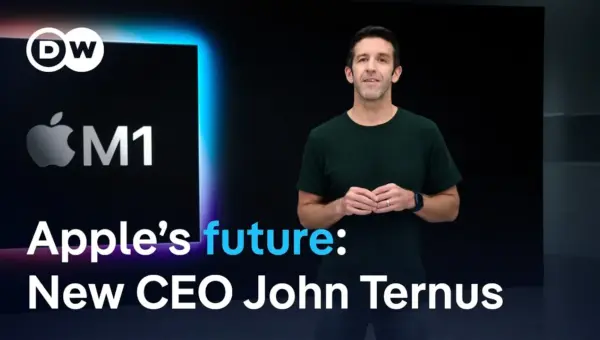
Tim Cook is stepping down as Apple CEO after 15 years, handing the reins to hardware chief John Ternus. While Cook remains chairman, Ternus faces challenges in AI and innovation. The transition marks a new era for the tech giant as it seeks to maintain its market leadership.
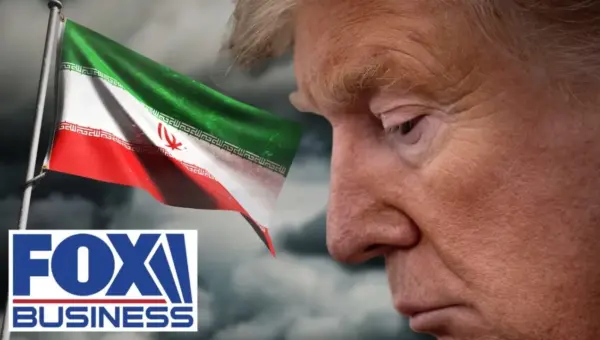
Trump Extends Iran Ceasefire, Seeks Unified Dealmakers
President Trump has extended a ceasefire with Iran, a move praised for its strategic approach to negotiations. The decision aims to ensure a unified Iranian delegation is present at the table, following a military blockade of Iranian ports. This pause allows for diplomatic pressure to build towards a lasting resolution.