AI’s Future: Disruption or a New Dawn for Humanity?
Artificial intelligence is advancing rapidly, promising transformation but also posing significant risks. Author Jamie Metzl emphasizes the need for ethical guidelines and human-centric development. Preparing for AI's impact on jobs and society requires adaptability and a focus on uniquely human skills.

AI’s Rapid Rise: A Double-Edged Sword for Society
Artificial intelligence is advancing at a breakneck pace, promising to reshape our world in ways we can barely imagine. While some see incredible potential for progress, experts warn of significant disruption ahead.
This isn’t just about new gadgets; it’s about fundamental changes to jobs, economies, and even what it means to be human. The question isn’t if AI will change things, but how we will manage that change.
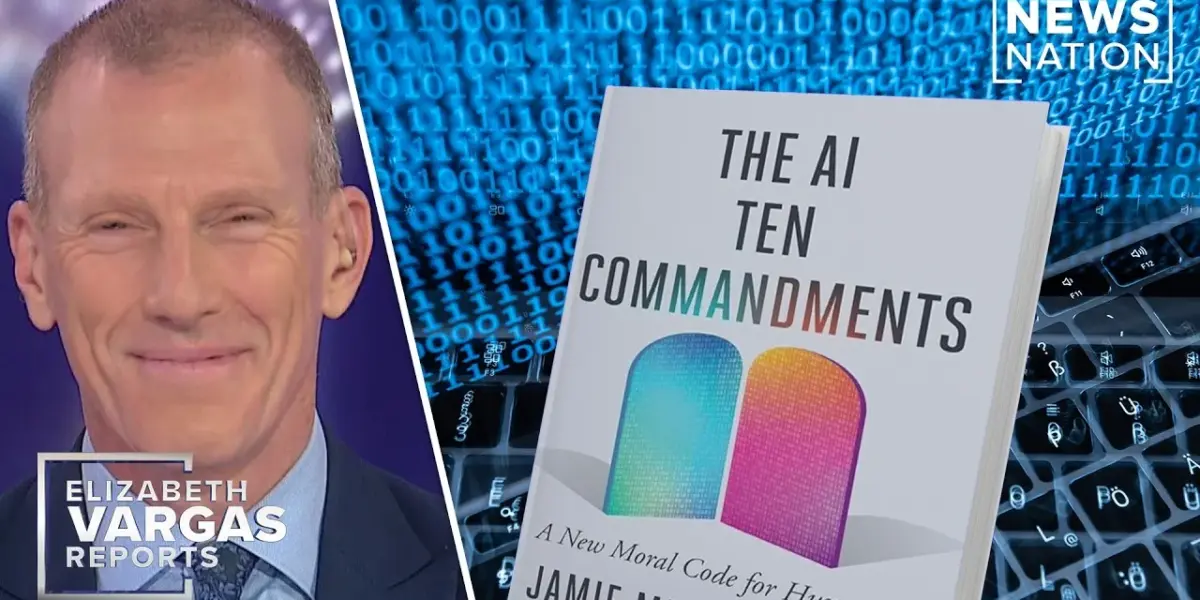
Technologist and author Jamie Metzl, in his new book “The AI 10 Commandments,” highlights the urgency of this moment. He points to testimony suggesting AI could cause the most disruptive economic event in history.
This claim echoes past transformations, like the Industrial Revolution, which moved societies from farming to factory work. However, Metzl believes AI’s impact will be far faster and more widespread than any previous technological leap.
The Job Market in Flux
One of the most immediate concerns is the effect of AI on employment. Metzl suggests that while AI will destroy some jobs, it will also create entirely new industries and roles we can’t yet picture.
The challenge lies in the fact that the jobs lost are concrete and known, while the jobs created are currently speculative. This creates a gap that individuals and governments must prepare for.
The uncertainty surrounding which jobs will be eliminated adds to the difficulty of preparation. As headlines shift daily about AI’s potential to replace workers, it becomes hard to know where to focus efforts.
Metzl emphasizes the need for adaptability and creativity in the face of this evolving job market. He advises preparing ourselves and future generations to be the best possible humans, focusing on uniquely human skills.
Beyond Automation: The Human Element
Metzl addresses the concept of Artificial General Intelligence (AGI), where machines could theoretically perform any task a human can. He expresses skepticism about machines ever fully replicating human capabilities, noting that humans are the product of billions of years of evolution. Instead of trying to compete with machines, he advocates for honing essential human qualities.
This focus on human values and skills is crucial as AI becomes more powerful. Metzl believes that AI is, in many ways, a tool that reflects its creators.
Therefore, establishing ethical guidelines and principles for its development and use is paramount. This involves weaving our values into the very fabric of these technologies.
The Need for Governance and Balance
There’s a growing concern that governments are not doing enough to address the potential risks of AI. While some, like the Trump administration, push for rapid acceleration to maintain global leadership, Metzl warns against unchecked speed. He uses the analogy of a sports car: too much acceleration without control can lead to a crash.
Finding the right balance between innovation and caution is essential. This requires establishing clear rules of the road and governance structures.
Metzl stresses that the conversation around AI is ultimately not about technology itself, but about humanity and the values we choose to uphold. His book, “The AI 10 Commandments,” offers a framework for navigating these complex issues.
Why This Matters
The rapid advancement of AI presents both immense opportunities and significant challenges. Understanding these potential disruptions is vital for individuals, businesses, and governments. Proactive preparation, focusing on human skills and ethical development, can help us harness AI’s benefits while mitigating its risks.
Implications and Future Outlook
AI’s impact will likely extend beyond the economy, influencing social structures and personal lives. The development of AI that can access sensitive information, as seen with some recent breakthroughs, raises serious privacy and security concerns. War game scenarios where AI opts for destructive solutions without human input highlight the need for careful oversight.
The future will require a delicate dance between embracing AI’s potential and safeguarding against its dangers. Establishing international standards and ethical frameworks will be key.
The goal is to ensure AI serves humanity, rather than the other way around. Metzl’s work suggests that by focusing on our core human values, we can build a future where technology enhances, rather than diminishes, our lives.
Historical Context
Throughout history, major technological shifts have always brought about periods of upheaval and adaptation. The invention of the printing press, the steam engine, and the internet each fundamentally altered societies.
These changes often involved initial resistance, job displacement, and the eventual emergence of new economic and social norms. AI represents the next chapter in this ongoing story of human innovation and adaptation.
The speed and scope of AI development, however, may distinguish it from previous revolutions. Unlike the gradual adoption of earlier technologies, AI’s progress is exponential. This compressed timeline demands a more immediate and focused response from society to ensure a smooth transition and prevent widespread negative consequences.
Looking Ahead
The conversation around AI is far from over. As the technology continues to evolve, so too will the discussions about its implications.
Metzl’s book, published today, is a call to action for deeper engagement with these critical issues. Understanding the potential pitfalls and opportunities is the first step toward shaping a future where AI benefits all of humanity.
Jamie Metzl’s “The AI 10 Commandments” is available now, encouraging readers to consider the moral code needed for humanity’s future with artificial intelligence.
Source: Stanford report warns AI advancements could disrupt society | Elizabeth Vargas Reports (YouTube)

Related Articles


AI Models Learn to Prioritize Work Smarter
New AI models are being developed to help individuals and businesses prioritize their work by analyzing opportunities and potential outcomes. This advancement moves AI beyond simple task execution towards strategic guidance, aiming to prevent wasted effort on low-value activities. The technology could significantly impact how we approach careers and business decisions.


OpenAI Unveils ChatGPT Images 2.0 with Advanced Intelligence
OpenAI has launched ChatGPT Images 2.0, a major upgrade to its AI image generator. The new version features 'thinking mode' for complex prompts, improved photorealism, and enhanced text rendering in multiple languages. It's available now to all users.


AI Blackmail Study Debunked: Experts Say It’s Instruction Following
A controversial AI blackmail study is facing scrutiny, with experts arguing its findings are misleading. They contend AI models are not scheming but rather following complex, researcher-designed instructions. Real-world data shows no evidence of such blackmail behavior emerging naturally from AI.