UK U-turn on Iran: Shapps Slams ‘Naive’ Government Stance
Former Defense Secretary Sir Grant Shapps has criticized the UK government's initial stance on the Iran conflict as "so naive," highlighting a significant policy U-turn. The UK will now allow US forces to use its bases for operations against Iran, a decision Shapps argues should have been made sooner based on self-defense principles.

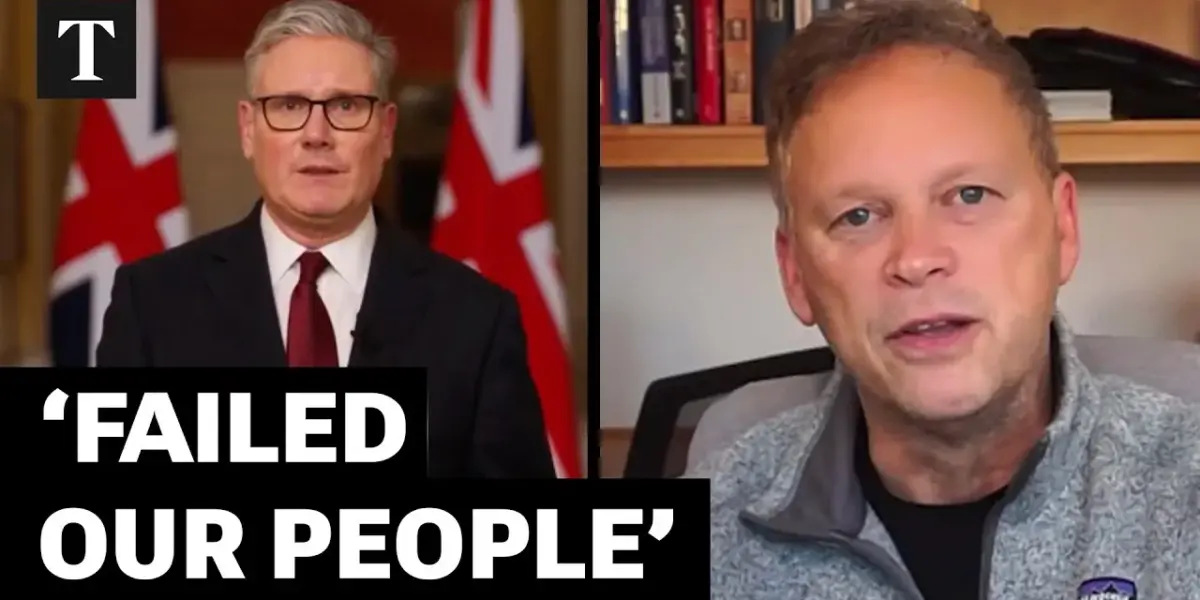
UK Grants US Access to Bases for Iran Operations Amid Shifting Stance
In a significant shift of policy, the United Kingdom has authorized the United States to utilize British bases for operations against Iran, a move that follows an initial declaration of non-involvement. The decision, confirmed by Foreign Secretary Ivette Cooper, represents a departure from the government’s earlier stance and has drawn sharp criticism from former defense secretary Sir Grant Shapps, who described the initial approach as “so naive.”
Initial Hesitation and the ‘Deliberate Decision’ Not to Engage
Following the US and Israel’s actions against Iran on Saturday morning, the UK government initially stated its intention to remain uninvolved. Foreign Secretary Ivette Cooper explained the rationale behind this initial decision to Times Radio.
“We made a deliberate decision not to provide support or to be involved in the US strikes over the weekend,” Cooper stated. “We have taken a view about the importance of diplomatic processes trying to reach a negotiated agreement with Iran.”
Cooper emphasized that while the government shared concerns about Iran’s threat, particularly regarding its nuclear ambitions, a different approach to achieving security was initially favored. “We share the view of the Iranian threat, including on ensuring that they cannot get nuclear weapons, but we took a different view about the right way forward and the approach to take.”
Escalation and the ‘Inevitable U-turn’
The situation evolved rapidly over the weekend, with Iran launching attacks on partner Gulf countries that had not been involved in the strikes against it. These attacks targeted nations hosting a significant British expatriate population, numbering around 300,000 citizens. “What we’ve seen over the weekend is now Iranian attacks on partner Gulf countries that were not involved in any of the strikes over the weekend on Iran,” Cooper elaborated.
“Including on countries where there are 300,000 British citizens there. Uh, including on countries where there are 300,000 British citizens there. So they’ve got ballistic missiles and launchers pointing at them in the Gulf as well as we’ve seen so hundreds of missiles targeted at them and thousands of drones targeted at them over the weekend.”
This escalation prompted the UK’s revised position. “So this is about defensive support for those partner Gulf countries, and it’s simply as you said about the use of our bases, a request from the US. It’s not strikes that the UK would be involved in,” Cooper clarified.
Shapps: ‘Beggar’s Belief’ and Geopolitical Naivety
Sir Grant Shapps, the former Conservative Defense Secretary, expressed strong disapproval of the government’s initial reluctance to engage. “It just beggars’s belief that the government was so naive to think that this could all go on and have nothing to do with us,” Shapps stated. He highlighted the UK’s significant interests and assets in the region, including its shipping, which has been under attack for two years by Iranian-sponsored Houthis.
“We’ve got a lot of people in the region. We’ve got bases in the region. Our shipping has been under attack for what two years in the region by Iranian sponsored Houthies.
And so the idea that we weren’t involved and somehow could just avoid avoid this was just absolutely extraordinary. And of course, has led to the inevitable U-turn.”
Shapps argued that a fundamental understanding of geopolitics and national interests should have dictated a more immediate response. “You have to have a pretty fundamental view about, you know, what is the best way to protect your interest? And sometimes, I’m afraid, and you know, there’ll be listeners listening to this who think I wish this was never the case.
I’d be one of them. But sometimes it requires the use of force or the threat of force.”
Concerns Over Base Usage and ‘Tying Themselves in Knots’
Questioned on how the UK would police the US’s actions on its bases to ensure they remained within the defined ‘defensive’ parameters, Shapps voiced skepticism about the government’s ability to manage such a situation effectively. “I think this government, as we’ve all seen, ties itself up in ever tighter knots about this sort of thing, which ultimately leads to logic like, you know, giving away our assets overseas and paying for the pleasure,” he remarked, referencing the use of locations like Diego Garcia.
“It’s just Diego Garcia. Um, and and I’m afraid this is just because we’ve got a human rights lawyer as prime minister who just seems to think that the world operates in a way that it clearly does not run.”
Shapps contended that the decision should have been straightforward, rooted in self-defense. “Armed personnel have been under attack in Syria, in Iraq, in the Red Sea and commercial shipping, as well as as as military at our bases for the longest time from Iran.
I cannot see why this isn’t just a straightforward black and white decision that should have been made two days ago. And I welcome the fact it has been now, but I just find it appalling the way that we have, you know, essentially given up British influence and power, made the UK look completely impotent and failed our people in the region.”
International Law vs. National Interest: The Self-Defense Argument
The government’s justification appeared to lean on international law and the specific legal basis for involvement. However, Shapps countered that the core justification has always been self-defense, a principle he believes has been evident for some time. “The answer is very simple indeed.
The government’s actually got there in the end. It’s called self-defense,” he asserted. “British personnel in the region have been attacked, particularly bases in Syria and Iraq.
Continuously British shipping and international shipping has been attacked by Iranian sponsored Houthis in the Red Sea. And Iran is known to be a massive exporter of terrorism…
And that folks is all you need to justify having a reasonable reason to be part of this. You are defending your own national interest.”
He criticized the government for making a complex issue out of what he sees as a clear-cut matter of national security. “And it shouldn’t really be as complicated as this government seems to make it.”
The Shadow of Iraq and Divergent Threats
Both the Prime Minister and Foreign Secretary have referenced the memory of the Iraq War as a significant factor influencing their approach to the current situation, expressing concerns about escalation and the difficulty of regime change. Shapps acknowledged that the decision on Iraq, which occurred under a Labour government, weighs heavily on them. “I think it hangs over this Labour government in particular because the decision on Iraq happened under them, and their left wing, it, you know, clearly nobody wants to see another Iraq.”
However, he strongly differentiated the current circumstances from the Iraq scenario. “But look, this is just not similar in any way, you know, shape or form. Iran is a country who sponsored terrorism.
And the biggest issue with Iraq, you’ll recall, was the sort of weapons of mass destruction, the 45 minutes in which they could prepare and use them, and all the rest of it. And the weapons were never there.
However, with Iran, we don’t need any further evidence that they have weapons of mass destruction in terms of ballistic weapons, which they are firing right now. I think it’s completely established that they have a nuclear program and you there’s no reason to enrich uranium past 60% if you’re not going to use it for military purposes.”
Shapps pointed out that unlike Iraq, there is no international call for intervention in Iran. “The biggest difference of all, of course, is no one is inviting us to go into Iran.
Um, this is not the, you know, the people of Iran, apart from anything else, are fed up to the teeth. We’ve seen mass demonstrations on the street, tens of thousands possibly killed in recent months as they try and uprise against this despotic regime.”
Looking Ahead: Influence and Impotence
The UK’s revised stance, while welcomed by some as a necessary step, has left a lingering impression of indecisiveness and a potential erosion of influence on the global stage. Shapps concluded his remarks with a somber assessment: “I just find it appalling the way that we have, you know, essentially given up British influence and power, made the UK look completely impotent and failed our people in the region.” The coming days will reveal the extent to which this strategic adjustment impacts regional stability and the UK’s standing in international security dialogues.
Source: ‘So Naive’ For Starmer To Think Non-Involvement In Iran Was An Option | Sir Grant Shapps (YouTube)

Related Articles

US Policies Are ‘Ballast’ Amid Global Uncertainty
American policies are acting as a crucial stabilizing force, or 'ballast,' amidst heightened global geopolitical uncertainty. Efforts to prevent Iran from acquiring nuclear weapons are highlighted as vital for future economic and energy security, especially concerning the Strait of Hormuz.

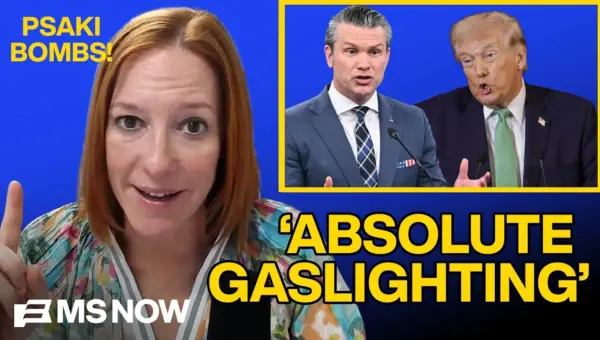
Trump’s Iran Claims Spark Outrage as Gas Prices Soar
Jen Psaki has accused Donald Trump of gaslighting the public on Iran policy and economic issues, stating Americans are aware of their financial struggles. Meanwhile, a controversial nominee favored by Trump for Homeland Security has suggested bringing back dueling for Senate disputes, and Texas primaries are marked by intense, "dirty" campaign ads.


Middle East Stability Faces New Risk as Iran Escalates Tensions
Tensions are rising in the Middle East as Iran's neighbors signal a shift away from friendly relations due to recent missile launches. This could impact regional stability and the crucial Strait of Hormuz.