Umpire’s Blown Call Costs UCLA Batter Big Moment
A controversial strike three call by an umpire ended a promising at-bat for a UCLA player, denying him a chance to extend the inning. The batter and his team strongly disagreed with the pitch's location, leading to visible frustration and questioning the umpire's judgment.


Umpire’s Blown Call Costs UCLA Batter Big Moment
A crucial at-bat in a recent UCLA game ended in controversy when an umpire’s questionable strike three call denied a batter a chance to extend the inning. The sequence, which left players and fans bewildered, highlighted how a single decision can drastically alter the mood and momentum of a game.
The batter, who felt he had earned his at-bat, expressed his frustration after the game, stating, “I was so proud of myself, too.” This pride stemmed from a hard-fought battle against the pitcher, where he worked the count and showed resilience.
The At-Bat Unfolds
The at-bat began with two balls, putting the batter in an early hole. The pitcher threw a high fastball that was called a ball, followed by an outside fastball that also missed the strike zone. This put the count at two balls and no strikes, a favorable position for the hitter.
The pitcher then adjusted, throwing a pitch inside that the batter managed to foul off, getting himself on the scoreboard for strikes. The next pitch, described as “below the zone,” was called a strike, bringing the count to two strikes. The batter continued to fight, battling back against the pitcher’s attempts to finish the at-bat.
A pitch went outside, which the batter likely felt was another ball, potentially evening the count or bringing it closer to a walk. However, the umpire saw it differently, calling it a strike.
The Controversial Strike Three
The very next pitch was thrown, and the umpire immediately signaled strike three. The call was met with disbelief and loud protests from the UCLA dugout and the batter himself. The player, who had visibly put up a strong fight throughout the at-bat, was stunned by the decision.
Analysis of the play suggests the pitch was indeed outside the strike zone, a call that directly ended the batter’s opportunity. The player’s clear frustration and the reaction from his team indicated a strong belief that the umpire had made a significant error. This single call ended a promising at-bat and shifted the game’s energy.
Impact and Looking Ahead
Moments like these can have a ripple effect, impacting player confidence and team morale. For the batter, it was a moment of pride snatched away by a judgment call. The feeling of having earned a chance to continue battling was replaced by the sting of an unfavorable and, by many accounts, incorrect call.
The UCLA team, known for its competitive spirit, will need to shake off this type of officiating controversy. Moving forward, they will aim to focus on controlling what they can on the field, relying on strong performances and avoiding situations where questionable calls can have such a visible impact.
This incident is a reminder of the human element in sports and the inherent challenges faced by umpires. While technology is increasingly used to aid officiating, judgment calls remain a critical part of baseball. The focus now shifts to how UCLA responds to this setback and whether they can maintain their focus in future games.
The team will look to regroup and prepare for their upcoming schedule, aiming to put such frustrating moments behind them and secure more wins.
Source: Umpire ruined the batter’s proud moment, a breakdown (YouTube)

Related Articles


Suarez Survives Pitch Clock Chaos, But Controversy Reigns!
Edmundo "Suarez" Sosa survived a potential strikeout on a pitch clock violation thanks to a controversial umpire's call. The play sparked confusion and debate about the enforcement of baseball's new pace-of-play rules.


Umps’ Blunder Costs USA in WBC Loss to Japan
A controversial umpire's call and conflicting replays in the WBC nearly cost Japan the championship, but the eventual winners overcame the blunder. The incident highlights the chaotic nature of high-stakes umpiring.

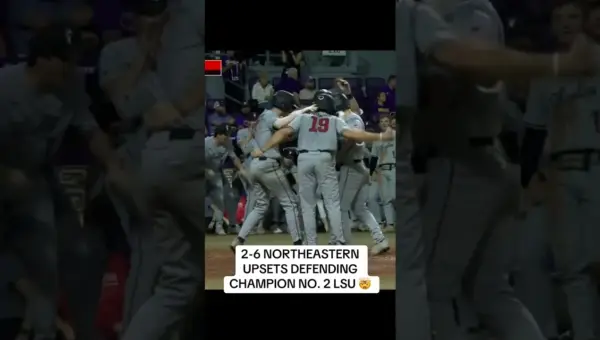
Huskies EXPLODE for 10 runs, stun LSU Tigers!
The Northeastern Huskies unleashed a 10-run offensive explosion against the LSU Tigers, highlighted by Chris Walsh's first home run of the season. This dominant inning has put LSU in a deep hole early in the game.