Astrophysicist Shares Breast Cancer Journey & Science Insights
Astrophysicist Dr. Becky Smethurst shares her breast cancer diagnosis journey and emphasizes the importance of evidence-based medicine over unproven treatments. She also discusses her passion for space and scientific discovery.

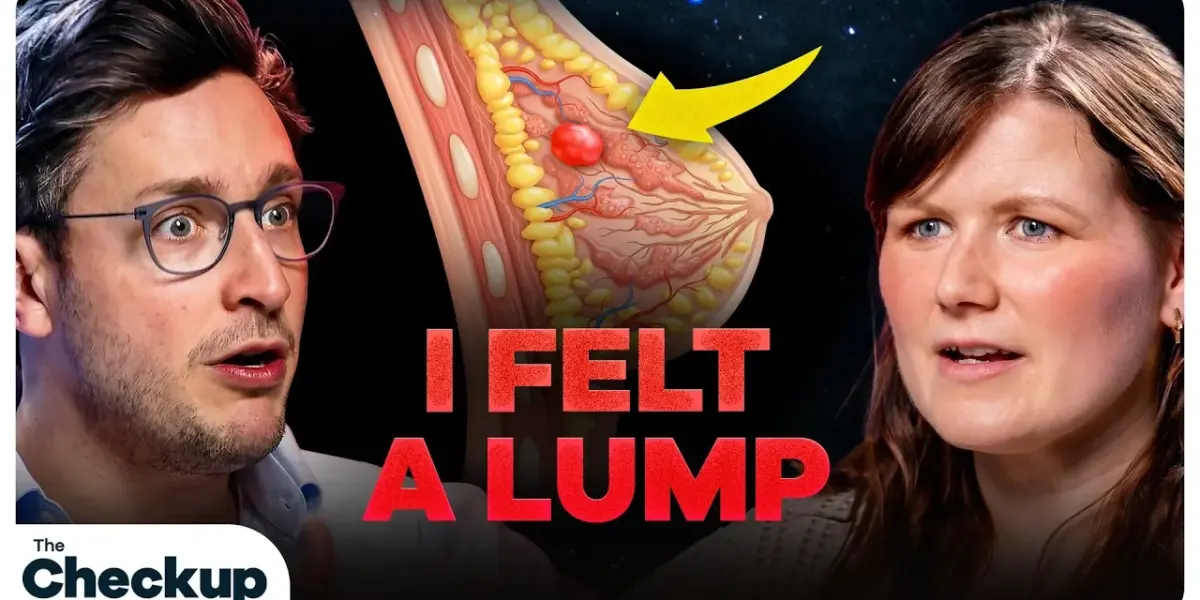
Astrophysicist Dr. Becky Smethurst’s Cancer Battle and Cosmic Discoveries
Dr. Becky Smethurst, an astrophysicist from Oxford University known for her work on black holes and her popular YouTube channel, recently shared a deeply personal experience: her own breast cancer diagnosis. Speaking on the “Checkup Podcast,” Dr. Smethurst detailed how she discovered a small dimple on her left breast in May of last year, a finding that led to a life-altering diagnosis.
The experience of hearing the words “you have cancer” can shatter one’s world, often leading to questions like, “What did I do?” This is a sentiment many patients grapple with. During the conversation, Dr. Smethurst also addressed the dangerous trend of people rejecting conventional medical treatments in favor of unproven natural remedies. Her message to those promoting such advice is stark: “You’re gambling, but the gamble might not pay off. And the thing is, you only hear from the people that the gamble pays off for.” This highlights the critical importance of evidence-based medicine and trusting healthcare professionals.
From Black Holes to Breast Cancer: A Scientist’s Perspective
Dr. Smethurst, who has nearly a million subscribers on YouTube, educates audiences about the wonders of the cosmos, from the inevitable death of the sun to the possibility of alien life. Her background in astrophysics, a field driven by relentless curiosity and the pursuit of unanswered questions, provided a unique lens through which she approached her own health crisis.
Her journey into astrophysics began in childhood. Like many millennials, she was drawn to the mysteries of unexplored frontiers, whether the deep ocean or the vastness of space. She describes herself as a child who constantly asked “why,” a trait that, while sometimes frustrating for others, is the hallmark of a dedicated scientist. This innate curiosity led her to pursue physics and eventually astrophysics at university, not with a fixed career goal, but by following her passions.
The Spark of Discovery: Astrophysics and the Unknown
The realization that there were still profound unanswered questions about the universe was a pivotal moment for Dr. Smethurst. While initially believing we knew everything about space after reading a childhood book, she later discovered that research itself was a profession dedicated to finding answers. This revelation fueled her decision to study astrophysics, a field where the unknown is the very subject of study.
She explained that astrophysics involves different approaches: theorists develop equations, simulation experts use computers to model these equations, and observational astrophysicists like herself use telescopes to gather data from the universe. Unlike many scientific fields where experiments can be repeated endlessly, astrophysics often relies on observing different stars of the same type or using telescopes as time machines. Because light takes time to travel, observing distant galaxies allows scientists to see them as they were billions of years ago, effectively watching the universe evolve.
This observational approach is akin to a cohort study in medicine, where a group is observed over time. However, in astrophysics, replication isn’t truly possible. Instead, scientists use simulations to see if their observations can be reproduced by plugging the laws of physics into a computer. If the simulation doesn’t match the observation, it means something is missing or misunderstood. This rigorous process of questioning and refining theories, rather than seeking confirmation, is crucial for scientific progress.
Beyond the Cosmos: Personal Reflections and Warnings
Dr. Smethurst also touched upon the visual aspect of astrophysics, explaining how the stunning, colorful images often seen from telescopes like Hubble are created. Raw data from telescopes is typically black and white, capturing light intensity. Color is added later by using filters to isolate different wavelengths of light and then combining them. This process is similar to how medical imaging is enhanced for better interpretation.
She shared a particularly emotional moment during her PhD when she used a professional telescope to observe galaxies with growing supermassive black holes. After a 20-minute exposure, seeing a resolved spiral galaxy on screen, something she had only seen in iconic Hubble images, made her feel like a true astrophysicist. It was a profound realization of her ability to contribute to understanding the universe.
When discussing the search for exoplanets—planets around other stars—Dr. Smethurst pondered the possibility of life beyond Earth. While not her direct research area, she finds the concept fascinating and believes that statistically, life must exist somewhere in the vast universe. This sense of wonder and the ongoing quest for knowledge are central to both her scientific career and her personal journey.
Her experience with cancer, however, serves as a powerful reminder that even those who dedicate their lives to understanding the grandest scales of the universe are vulnerable to earthly ailments. Her candidness about her diagnosis and her strong stance against unproven medical advice underscore the importance of informed decision-making in health, just as in science.
Key Health Takeaways
- Trust Medical Advice: Rejecting conventional medical treatments for unproven alternatives is a dangerous gamble. Always consult with healthcare professionals for diagnosis and treatment.
- Early Detection is Crucial: Dr. Smethurst’s discovery of a small dimple highlights the importance of self-awareness and seeking medical attention for any unusual changes in your body.
- Scientific Curiosity Applies to Health: Approaching health decisions with a critical, evidence-based mindset, similar to scientific inquiry, can help navigate misinformation.
- The Universe of Health: While exploring the cosmos is fascinating, don’t neglect the importance of understanding and caring for your own health.
Disclaimer: This article is based on a podcast interview and is for informational purposes only. It does not constitute medical advice. Always consult with a qualified healthcare provider for any health concerns or before making any decisions related to your health or treatment.
Source: The Astrophysicist Who Caught Her Own Cancer | Dr. Becky Smethurst (YouTube)

Related Articles


Universe’s End Time Shrinks Dramatically
New research suggests the universe's end may arrive much sooner than previously thought, with a revised timeline of 10 to the power of 78 years. This 'heat death' theory posits that all matter will decay, not just black holes. While still an immense duration, it's a significant shift from earlier predictions.

TikTok Health Trends: Separating Fact from Fiction
Dr. Mike analyzes popular health advice trending on TikTok, separating scientifically sound recommendations from potentially dangerous misinformation. Learn about protein intake, heart rate, supplement risks, and more.

Loeb Challenges Musk’s Mars Dream, Eyes Space Habitats
Astrophysicist Avi Loeb criticizes Elon Musk's Mars colonization plans, calling the planet uninhabitable. He proposes building large, city-sized space platforms instead, arguing this is a more scientifically sound and achievable goal for humanity's future in space.