Gravitational Waves Reveal Universe’s Deepest Secrets
Humanity's ability to detect gravitational waves has advanced dramatically, with observatories now capturing nearly one black hole merger daily. These cosmic events are not only spectacular but also crucial for testing Einstein's theories and understanding the universe's fundamental nature. Future upgrades promise even greater insights.

Gravitational Waves Reveal Universe’s Deepest Secrets
Just over a decade ago, humanity first directly detected gravitational waves, ripples in the fabric of spacetime predicted by Albert Einstein. This groundbreaking discovery, made by the LIGO observatory, has since been joined by partners like the Virgo Observatory in Europe and Kagra in Japan, forming a global network. This network now detects a stunning number of cosmic collisions, painting an ever-clearer picture of black holes and neutron stars merging across vast cosmic distances.
These observatories, after periods of maintenance and upgrades, are now detecting close to one black hole merger every single day. This remarkable cadence allows scientists to not only witness individual cataclysmic events but also to build up a population study of black holes. Understanding this population can reveal fundamental physics about our universe.
A Cosmic Symphony of Collisions
The process of black holes merging is an incredibly energetic and chaotic event. When two black holes, each roughly 30 times the mass of our Sun, orbit each other, they generate gravitational waves. These waves become significant enough for detection when the black holes are mere tens of kilometers apart and are moving at nearly the speed of light.
The final moments before merger are a rapid dance, with the black holes completing about five orbits. This inspiral phase can last for millions of years, but the final merger happens in a fraction of a second. It is this violent collision that releases a massive burst of energy, warping spacetime itself and creating the gravitational waves we detect on Earth.
Mass Transformed into Energy
A common question arises: if nothing can escape a black hole, how can they lose mass during a merger? The answer lies in understanding energy storage. Energy can be stored in the mass of the black hole itself, following Einstein’s famous E=mc² equation.
However, energy is also stored in the gravitational field surrounding these massive objects. When black holes merge, about 5% of their combined mass is converted into energy and released as gravitational waves. This means the final black hole is slightly less massive than the sum of the two initial black holes, with the difference radiated away as ripples in spacetime.
Testing Einstein’s Theories
The gravitational wave observatories are powerful tools for testing Einstein’s theory of general relativity. This theory, which describes gravity as the curvature of spacetime caused by mass and energy, has been incredibly successful. However, physicists know it is not the complete picture, especially at very small scales where quantum mechanics dominates.
A recent event, designated GW25114, provided a particularly clear signal. The black holes involved were relatively “vanilla” – similar in mass and not spinning rapidly. This simplicity allowed for a straightforward comparison between the observed gravitational waves and the predictions of general relativity.
A ‘Boring’ but Beautiful Signal
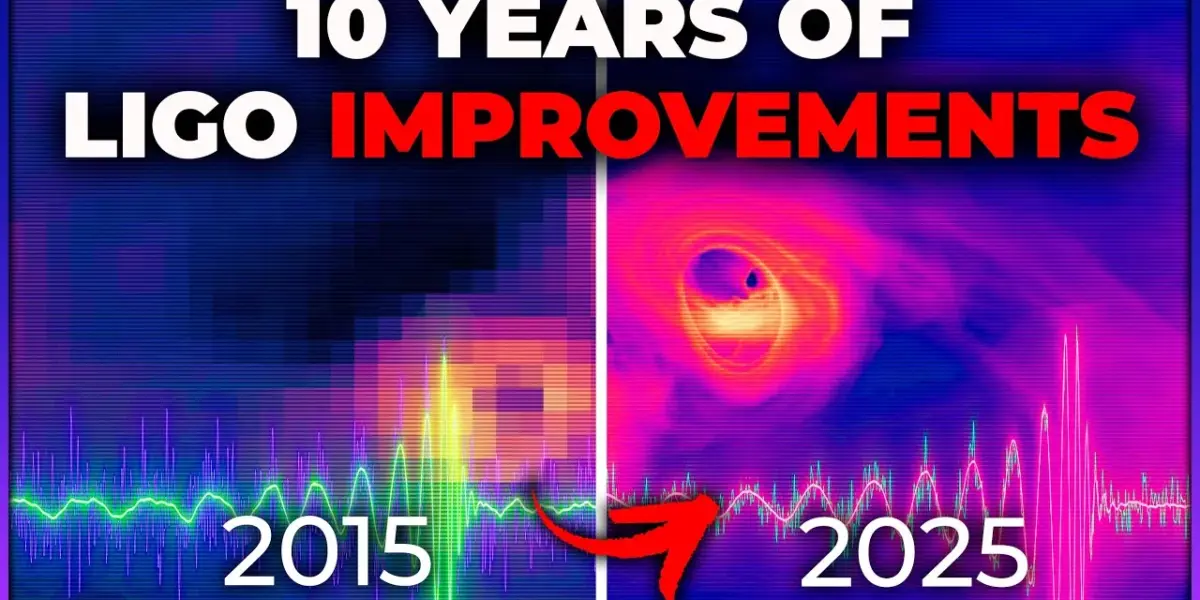
While GW25114 was described as “boring” due to its simplicity, it was also the loudest gravitational wave event ever detected by a significant margin. Compared to the first detected event in 2015, GW25114 provided a much cleaner signal. This improvement is proof of the ongoing upgrades and increased sensitivity of the gravitational wave detectors.
The data from GW25114 allowed scientists to constrain deviations from Einstein’s theory to an unprecedented level, effectively pinning them near zero with a very small error margin. This precision is crucial for either confirming Einstein’s predictions or, eventually, identifying subtle cracks that could lead to a new theory of gravity.
The Future of Gravitational Wave Astronomy
Gravitational wave observatories are currently undergoing maintenance and upgrades to further enhance their sensitivity. These improvements are essential for pushing the boundaries of our understanding. A key goal is to improve the ability to detect signals with greater clarity and to observe even more events.
This enhanced capability is vital for the field of multi-messenger astronomy. This field combines signals from gravitational waves with observations from telescopes that detect electromagnetic radiation, like light. By observing both, scientists can gain a more complete understanding of cosmic events.
Cosmic Sirens and the Expanding Universe
Gravitational waves, particularly those from merging neutron stars, can act as “cosmic sirens.” When neutron stars merge, they produce both gravitational waves and observable electromagnetic signals, like kilonovae. This dual signal allows astronomers to independently measure distances to objects in the universe, a crucial step in understanding the universe’s expansion rate.
By combining gravitational wave data, which provides distance information, with redshift data from electromagnetic counterparts, astronomers can refine measurements of the Hubble parameter. This parameter tells us how fast the universe is expanding. While current gravitational wave measurements have large error bars, future observatories promise to make significant contributions to cosmology.
Probing the Universe’s Earliest Moments
Beyond black hole and neutron star mergers, scientists are interested in detecting primordial gravitational waves. These waves would have been generated during the very first moments after the Big Bang. Detecting them would offer a direct window into the universe’s infancy, much like the cosmic microwave background radiation does for light.
Detecting these primordial waves is challenging due to their extremely low frequency. Specialized instruments, such as pulsar timing arrays, which use precisely timed signals from distant pulsars, are being developed to probe these low-frequency gravitational waves. These arrays can help map the gravitational wave background and potentially reveal details about the universe’s origin.
The next observing run for the LIGO, Virgo, and Kagra detectors is planned to begin later this year, promising new discoveries and further tests of our understanding of gravity.
Source: Your Ultimate Guide to Gravitational Waves (YouTube)

Related Articles
Cosmic Hum Hints at Gigantic Black Hole Mergers
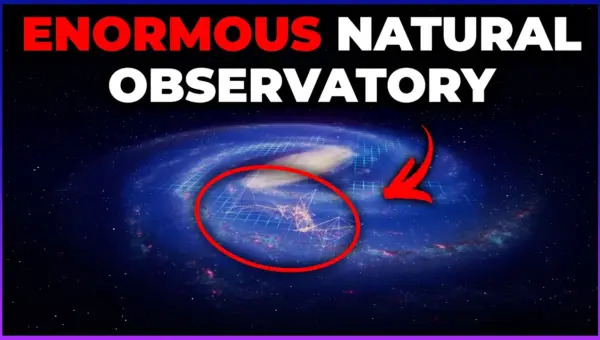
Astronomers are using networks of rapidly spinning pulsars, nature's precise cosmic clocks, to detect the faint hum of merging supermassive black holes. New research is now focusing on pinpointing individual merger events, moving beyond the general background noise to understand these colossal cosmic collisions.
Artemis II Astronauts Set New Human Distance Record
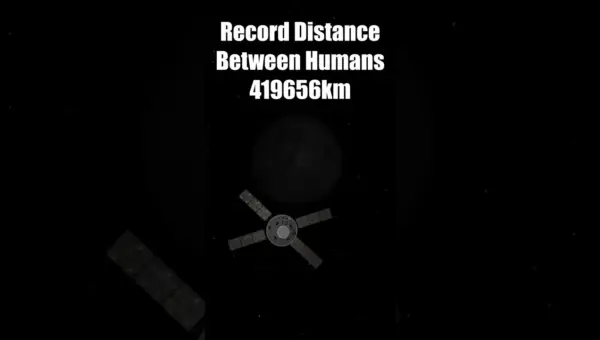
The Artemis II mission set a new human distance record, reaching 413,145 km from Earth. The mission also established a record for the greatest distance between two groups of humans, with astronauts on China's Tiangong space station being 419,656 km away from the Artemis II crew.


Distant Galaxy Appears to Break Light Speed Limit
A distant galaxy, GN-z11, appears to be moving away from Earth faster than the speed of light due to the expansion of space. This phenomenon, while seemingly violating Einstein's laws, is a key indicator of the universe's dynamic growth and offers insights into its early history.