US Warehouses Burn as Workers Strike Back
A series of warehouse fires across the US signals growing worker frustration over economic inequality and a perceived abandonment by the government. Experts link these acts to the widening K-shaped economy, where the wealthy prosper while others struggle. This unrest mirrors historical protests against technological change and raises concerns about the future.

US Warehouses Burn as Workers Strike Back
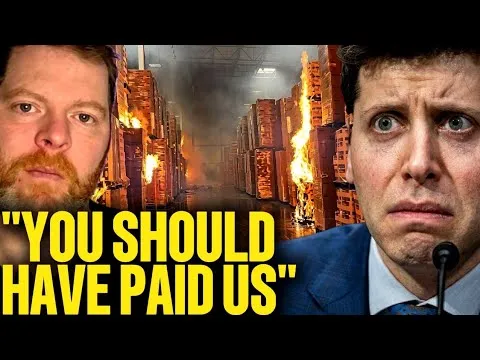
A wave of warehouse fires across the United States is sparking alarm and raising tough questions about America’s economic future. An employee in California was arrested for arson at one massive blaze. This is not an isolated incident; at least ten warehouses have been burned down recently. Experts suggest this trend could become more common.
Government’s Role Questioned
The US government is facing criticism for its handling of the economy, with some arguing it has failed the working class. Instead of helping everyday Americans, the government is accused of favoring lobbyists, big corporations, and the wealthy elite. This has led to national wealth being drained, pushing some people to extreme actions as a form of protest. Burning down their workplaces is seen by some as a last resort.
Billionaires Insulated, Workers Struggle
However, these acts of protest may not hurt the ultra-rich as intended. Billionaires and CEOs are often protected by insurance and security, like private guards. The system appears designed to shield the wealthiest from the struggles of ordinary people. Many workers are forced to work long hours, sometimes 80 or 90 hours a week across multiple jobs, just to have a slim chance of owning a home or starting a family.
The Silent Revolution: A K-Shaped Economy
What’s happening in the US is described as a growing, though initially quiet, revolution. It stems from the widening gap between the rich and the poor, often called a K-shaped economy. This means the wealthy are getting richer (the top line of the K), while most others are falling behind or staying stagnant (the bottom line of the K). When peaceful ways to address problems fail, violence can emerge.
Youth Disillusionment and Economic Reality
A significant portion of young Americans, between 19 and 29 years old, view such drastic actions as understandable. A poll found that 50% of this age group saw aggressive protests as acceptable. This contrasts sharply with older Americans, where only 5% felt the same. This disconnect highlights a deep frustration among the younger generation about their economic prospects.
The media often points to stock market gains, like the S&P 500, as proof of a healthy economy. They then tell young people to work harder, using the phrase “pull yourself up by your bootstraps.” But for many, this advice is impossible to follow. Extreme individualism and corporate practices have made it harder for the average person to get ahead. The basic agreement between society and its citizens, the social contract, seems broken.
Declining Birth Rates and Shifting Blame
The declining birth rate in the US is also a point of concern. While 3.6 million babies are born each year, the fertility rate among teens and young adults has dropped significantly. Some reports blame young people for not having children, linking it to their supposed lack of responsibility. This narrative shifts blame away from economic issues like low wages and corporate practices.
The idea that people, even those as young as 15, should have children they can’t afford is being pushed by some. This is seen as a desperate attempt to shift economic responsibility onto the next generation. It contradicts previous advice from public figures who suggested waiting until financial stability is achieved before starting a family.
Historical Parallels: The Luddites and AI
The current unrest is compared to the Luddite rebellion of 1811. The Luddites were skilled workers who protested against new machinery that threatened their jobs and wages. Today, Amazon fulfillment centers are seen as modern textile mills, and artificial intelligence (AI) is viewed as the new, threatening technology. The target is often the infrastructure of large corporations, not local businesses.
The wealthy are aware of the potential for unrest. Some, like Sam Altman, have begun talking about universal basic income. This is a response to the fear that widespread job losses due to AI could lead to more social upheaval. Protests and lobbying Congress haven’t worked because lawmakers are often influenced by the AI industry.
A Radical Time Demands Radical Solutions
The wealth gap in the US is wider than during the Gilded Age. While the top 1% profit immensely, most Americans worry about their jobs. If 40-50% of jobs disappear due to automation, society needs to offer people purpose and a future. Jobs provide this meaning for many.
Abandoning the younger generation risks their backlash. If they feel the nation is hostile and offers no opportunity, they may seek to dismantle it. People want their work to have meaning and lead to personal growth, especially in a culture that values individualism. If that opportunity is limited to a tiny elite, the system itself is called into question.
The current situation is not about endorsing violence. It’s about objectively observing a society facing extreme economic inequality and a broken social contract. The frustration is building, and the consequences are becoming increasingly visible.
Source: Why America’s Warehouses Are Suddenly Burning Down (YouTube)

Related Articles

US Markets Surge as Iran Tensions Ease, Oil Prices Steady
U.S. stock markets are hitting new highs as tensions with Iran ease, with the S&P 500 reaching record levels. Despite persistent oil prices around $92 a barrel, the U.S. economy shows resilience, boosted by record oil exports. The focus is shifting to the economic confrontation with Iran, including the non-renewal of oil sales waivers, and long-term strategies to bypass the Strait of Hormuz.


Global Oil Crisis Fuels US Economic Divide
A massive influx of oil tankers to the Gulf of Mexico signals a global supply crisis, not American victory. While some celebrate, the reality points to soaring prices and economic hardship for average Americans, benefiting only big oil companies and traders.
Tax Refunds Swell, Boosting Consumer Spending Power
Millions of Americans are receiving larger tax refunds this year, totaling an average of $3,500, an 11% increase from last year. While this boost could fuel consumer spending and aid the economy, it arrives amidst rising inflation for gas and groceries. Experts highlight the importance of timely tax filing to secure these refunds.