US Fires on Ship, Escalating Iran Tensions
The U.S. has fired upon and seized an Iranian cargo ship in the Strait of Hormuz, escalating regional tensions. This military action, combined with aggressive political rhetoric, raises concerns about retaliation and further disruption to global trade. Peace talks now appear unlikely, with potential for prolonged economic impact.

US Fires on Ship, Escalating Iran Tensions
The United States has fired upon and seized an Iranian cargo ship in the Strait of Hormuz, marking a significant escalation in the ongoing conflict. This was not a warning shot or a routine stop, but a live military engagement where artillery was fired, disabling the vessel and bringing it under U.S. control. This direct action changes the dynamics of the situation considerably.
The targeted vessel was a commercial cargo ship carrying exports from Iran, not a military vessel. Video footage circulating online appears to show U.S. Navy forces approaching the ship and issuing warnings.
When the ship did not comply with instructions to stop or change course, U.S. forces opened fire, disabling critical systems like the engine. U.S. forces then boarded and took control of the disabled ship.
This incident demonstrates that the U.S. blockade is being actively enforced with live fire. This is a critical development, especially concerning ongoing peace talks.
Iran has stated that lifting the U.S. blockade is a requirement for any ceasefire deal. This action proves the blockade remains in place and is being enforced aggressively.
From Iran’s perspective, negotiating a peace deal while its commercial vessels are fired upon and seized presents a difficult situation. This increases the risk of retaliation significantly, making the current situation very dangerous.
Strait of Hormuz: A Vital Waterway
The Strait of Hormuz is a narrow waterway that runs along Iran’s coast. This geography gives Iran significant control over shipping in the region.
Iran can potentially disrupt maritime traffic using missiles, drones, and naval forces. This has been a point of contention, with Iran previously responding to the blockade by effectively closing the strait.
Markets had begun to believe tensions were easing, but this incident has reignited concerns. The blockade is still active, the strait is effectively closed again, and tensions have dramatically increased due to direct military action. This is a stark contrast to hopes for deescalation.
Political Rhetoric Adds Fuel to the Fire
Adding to the heightened tensions, former President Donald Trump issued an aggressive statement on his Truth Social platform. He stated the U.S. is offering a fair deal and warned that if Iran does not accept, the U.S. would “knock out every single power plant and every single bridge in Iran.” He declared, “No more Mr. Nice Guy,” and suggested that Iran would “come down very fast.”
This strong political rhetoric, combined with actual military action against a commercial vessel, creates a highly dangerous scenario. The risk is no longer just about trade disruption but about potential retaliation from Iran. The seizure of a commercial vessel is unlikely to be ignored by Iran and could lead to rapid escalation.
Market Impact and Investor Concerns
This situation is precisely what investors have been hoping to avoid. The ongoing conflict has already inflicted an estimated $50 billion in damage to the global economy through disrupted trade, delays, and increased costs. If tensions escalate further with retaliation from Iran and a continued closure of the Strait of Hormuz, this economic damage is likely to rise significantly.
The impact extends beyond oil prices. Global trade, supply chains, energy costs, and inflation are all affected when activity in this vital region stops. Everything flowing through the Strait of Hormuz has a global ripple effect when it is interrupted.
Peace Talks in Doubt
The hope for a peace deal is diminishing rapidly. Expected talks within the next 24 hours now appear unlikely, as Iran has stated it will not attend. With the blockade remaining in place and military action escalating, the situation is moving back towards conflict rather than deescalation.
If this trend continues, it could lead to a prolonged disruption of the Strait of Hormuz. This would result in a much larger shock to the global economy. Investors will be watching closely for any further developments and potential responses from Iran.
Further updates will be provided as events unfold.
Source: Shots Spark Shutdown (YouTube)

Related Articles


Trump’s Iran Strategy: Bravado Hides Deep Fears, Report Says
New reporting from The Wall Street Journal suggests President Trump's aggressive public stance on Iran hides deep fears, particularly regarding American casualties and past U.S. failures like the 1979 hostage crisis. The report details his internal struggle between bold pronouncements and anxieties about military action, highlighting a complex and sometimes contradictory approach to foreign policy.
Iran Leverages Strait of Hormuz for Reconstruction Funds
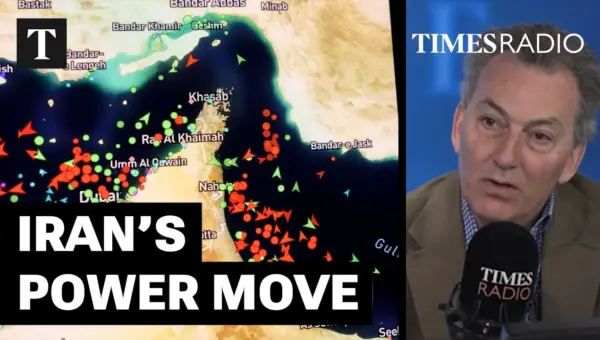
Iran is reportedly leveraging its control over the Strait of Hormuz with a 'toll booth' strategy to fund post-conflict reconstruction. This tactic emerges amidst rising tensions in the Gulf, with U.S. forces seizing an Iranian cargo ship and Iran vowing retaliation. Internal divisions within Iran complicate potential peace talks, while the nuclear program and regional conflicts remain key negotiation points.

US Navy Seizes Iranian Ship in Red Sea Operation
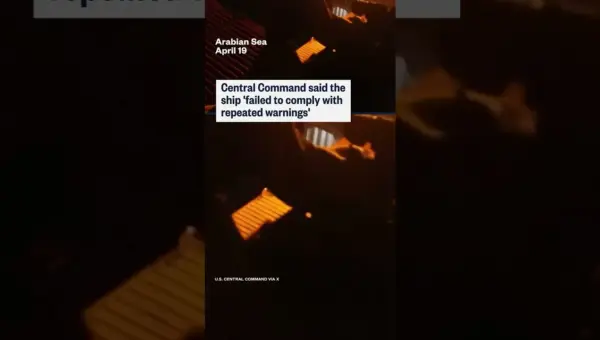
The U.S. Navy seized an Iranian-flagged cargo ship in the Red Sea carrying a large cache of advanced weaponry. The operation targeted the M/V Behshad, suspected of smuggling Iranian-made missiles and drone parts. This action is part of broader efforts to counter arms trafficking and destabilizing activities in the region.