Trump’s Phoenix Speech: A Web of Falsehoods and Distortions
Donald Trump's recent speech in Phoenix was filled with unsubstantiated claims about Iran, healthcare, and climate change. His assertions sharply contrasted with official statements and verifiable facts, raising concerns about political discourse. The speech highlighted a pattern of narrative control over factual reporting, posing challenges for informed public debate.

Trump’s Phoenix Speech: A Web of Falsehoods and Distortions
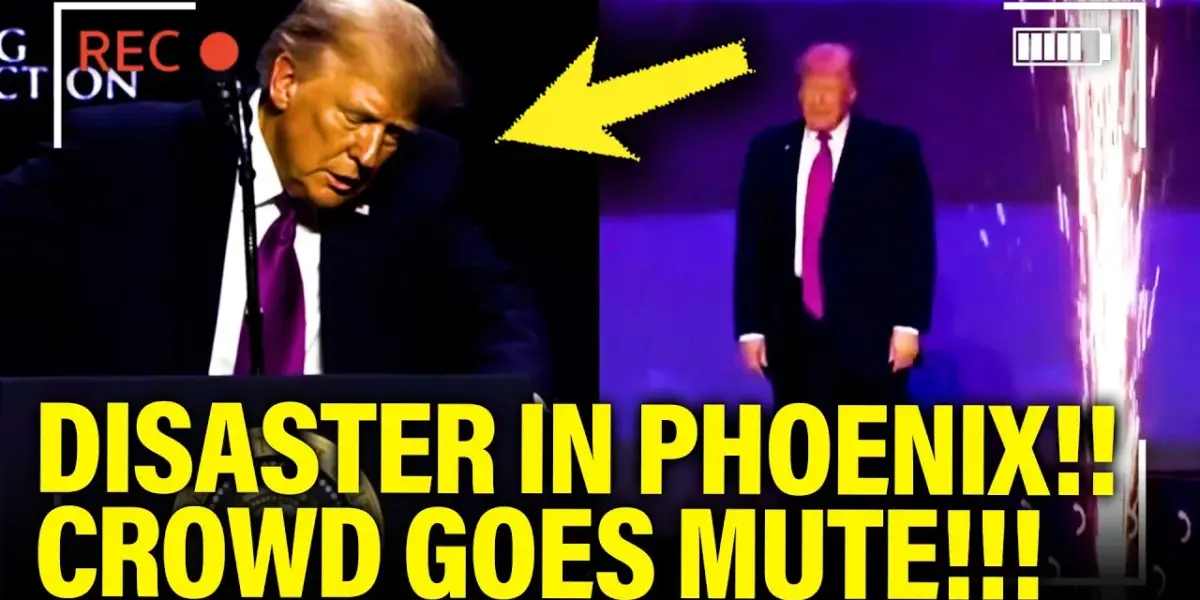
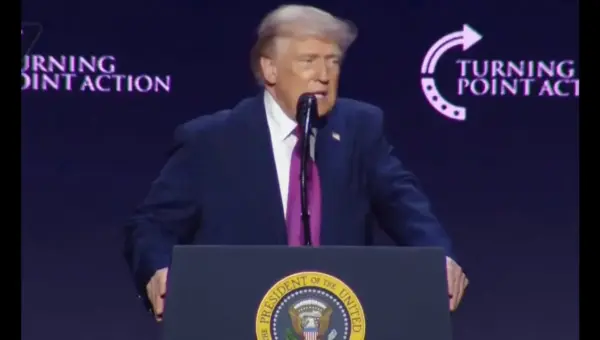
Donald Trump recently delivered a speech in Phoenix, Arizona, at a Turning Point USA event. The address was marked by a series of claims that sharply contrasted with verifiable facts and official statements, particularly concerning foreign policy and domestic issues.
One of the most striking assertions Trump made was about a supposed deal with Iran. He claimed that the United States and Iran would jointly excavate nuclear sites, stating, “We have now secure the straight of Hormuz. It is ours.” He also suggested a collaboration on retrieving “nuclear dust.” These statements were directly contradicted by Iran, which asserted its sole control over the Strait of Hormuz and did not confirm any such nuclear site excavation agreement with the U.S.
The speech also touched upon domestic policy, including a recurring promise of a new healthcare plan. Trump stated, “We have a healthcare plan coming,” a promise he has made since his first term.
This echoes past instances where such plans were announced but never fully materialized or delivered as promised. For example, a previous interview mentioned a healthcare plan that turned out to be a binder of blank pages.
International Relations and Unsubstantiated Claims
Trump’s remarks about Iran’s actions in the Strait of Hormuz were particularly contentious. He declared, “Iran has just announced that the straight of Hormuz is fully open and ready for business.” However, reports indicated that Iran’s stance was that the strait would remain open under its control, with a designated route and potential tolls, asserting full sovereignty. This marked a significant divergence from Trump’s portrayal of an open and readily available passage for all.
Further claims involved American soldiers working alongside Iranian soldiers to excavate nuclear sites. Trump stated, “We’re going to go in together with Iran, we’re going to get it and we’re going to take it back home to the USA.” He also mentioned the U.S. and Iran working together to remove sea mines, describing “nuclear dust” as a substance created by B2 bombers. These assertions were also met with denials and factual corrections from Iranian officials, who labeled all seven of Trump’s claims in a single hour as false.
Adding to the contentious rhetoric, Trump suggested a new focus on Cuba after addressing Iran. He stated, “Now that we’re done with Iran, it’s time for Cuba’s turn.
A new dawn for Cuba.” This was framed as a move to help Cuba, referencing Cuban Americans who have experienced hardship. However, this statement followed Trump’s characterization of his Iran dealings as a successful resolution, which was disputed by the reality of Iran’s asserted control over the Strait of Hormuz.
Domestic Issues and Social Commentary
The speech also included a segment on UFO files, with Trump promising, “We will release the files on UFOs.” He indicated that the process was underway and that interesting documents would be released soon. This was presented to a crowd he described as being “a little bit out there,” suggesting their interest in such topics.
On the topic of immigration and refugees, Trump stated, “We suspended all refugee resettlement except for persecuted South Africans.” He characterized the situation in South Africa as a “genocide” against white people, claiming, “They kill people if they’re white.” He also asserted that he had performed well with Black voters, who he believed understood the situation in South Africa. This narrative was presented alongside claims of saving millions of lives by ending wars, which also faced factual challenges.
Trump also addressed climate change, calling it a “scam.” He stated, “On the Green News scam, one of the greatest scams in history. Remember climate change, global warming, all of this.
They actually had global warming, remember? And then that wasn’t working because we’re actually cooling as a planet.” He suggested that the terms were changed to “climate change” to encompass various weather events, implying a manipulation of scientific consensus.
Why This Matters
The consistent pattern of making claims that are demonstrably false or highly misleading raises significant questions about the nature of political discourse and the information presented to the public. When a political figure makes assertions about international agreements, military actions, and domestic policies that are quickly refuted by the parties involved or by factual evidence, it can erode public trust and create confusion about critical global and national issues.
The discrepancy between Trump’s pronouncements and the documented reality, especially concerning foreign policy, can have tangible consequences. Misinformation about international relations can influence public opinion, affect diplomatic efforts, and potentially lead to miscalculations. The repeated promises of unfulfilled domestic policy initiatives, like the healthcare plan, also highlight a pattern of communication that may not align with actual policy delivery.
Implications and Future Outlook
This speech exemplifies a communication style that relies on strong, often unverified, statements. The strategy appears to be to present a narrative that resonates with a specific audience, regardless of its factual accuracy. This approach can be effective in mobilizing supporters but poses challenges for informed public debate and policy-making.
The reliance on such rhetoric suggests a continued focus on narrative control over factual reporting in political communication. As campaigns evolve, the ability to discern truth from falsehood becomes increasingly important for voters. The events in Phoenix highlight the ongoing need for critical evaluation of political claims and a commitment to verifying information from reliable sources.
Looking ahead, the effectiveness of this communication strategy will likely continue to be tested. The public’s access to information and the speed at which counter-narratives can be disseminated mean that unsubstantiated claims may face quicker scrutiny. However, the deep divisions in public trust and media consumption mean that such claims may still find receptive audiences.
Historical Context
Donald Trump’s political career has been characterized by a distinctive communication style, often involving bold pronouncements and a willingness to challenge established narratives. His rallies have frequently served as platforms for delivering speeches that blend policy discussions with personal anecdotes and strong assertions about his achievements and the failures of his opponents.
The specific issues raised in the Phoenix speech, such as the Iran deal, healthcare, and climate change, are not new topics in political discourse. However, Trump’s approach to these subjects has often involved framing them in stark, often simplified, terms that emphasize his own actions and perceived successes. This speech appears to follow that established pattern, presenting a version of events that aligns with his political platform.
The mention of ending wars and saving millions of lives, for instance, speaks to a broader theme of Trump positioning himself as a decisive leader who has brought peace and security. Similarly, his stance on climate change aligns with a broader skepticism of international agreements and scientific consensus that has been a recurring theme in conservative political thought.
The speech also touches on themes of national identity and foreign policy priorities. The focus on specific groups, such as persecuted South Africans, and the framing of international relations in terms of deals and control, reflect a transactional approach to diplomacy that has been a hallmark of his foreign policy. The inclusion of topics like UFOs also taps into popular culture and can serve to energize specific segments of the electorate.
The event in Phoenix, therefore, can be seen as a continuation of Trump’s established communication playbook. It combines familiar talking points with new assertions, all delivered within the context of a political rally designed to rally support and reinforce his message to his base. The stark contrast between his claims and external facts highlights the ongoing challenge of navigating political information in the current media environment.
The next Turning Point USA event is scheduled for July 19-21 in West Palm Beach, Florida.
Source: Trump gives DISASTER SPEECH before SILENT CROWD…in PHOENIX!! (YouTube)

Related Articles
Trump Promises UFO Files Release ‘Very Soon’
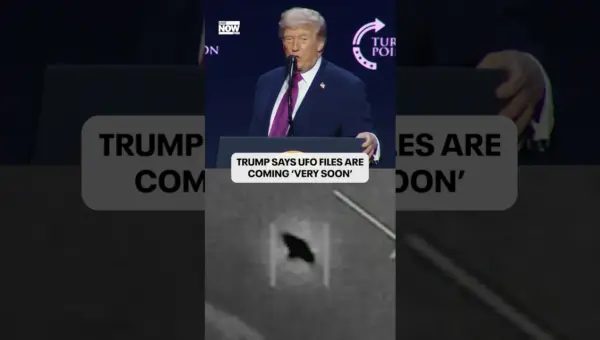
Former President Donald Trump announced that government files on UFOs and unexplained aerial phenomena will be released "very, very soon." The review process, initiated during his presidency, has uncovered "very interesting documents." The upcoming disclosures are expected to offer the public a closer look at information previously kept classified.
Trump Claims Strait Open, But Was It Ever Closed?
Donald Trump declared the Strait of Hormuz open, but critics question the actual gains given the conflict's cost. Reports from Iran contradict key claims, suggesting the strait may not have been fully closed. This situation raises concerns about accountability and the true impact of foreign policy decisions.
Trump’s Iran Deal Hypocrisy Fuels Political Firestorm
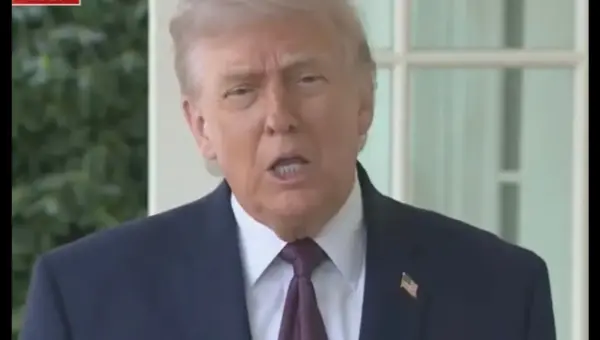
Reports suggest a potential $20 billion asset release to Iran, drawing accusations of hypocrisy against Donald Trump due to his past strong criticisms of similar deals. This controversy highlights ongoing debates about his negotiating tactics and foreign policy consistency. The situation also brings attention to broader themes of political accountability and the scrutiny of business dealings by political figures and their families.