US Threatens China Banks Over Iran Business Deal
The US is warning Chinese banks against doing business with Iran, threatening "secondary sanctions" if Iranian money flows through their accounts. This move is part of the US "maximum pressure" campaign on Tehran. The strategy aims to isolate Iran economically, with China's oil purchases previously serving as a key lifeline.

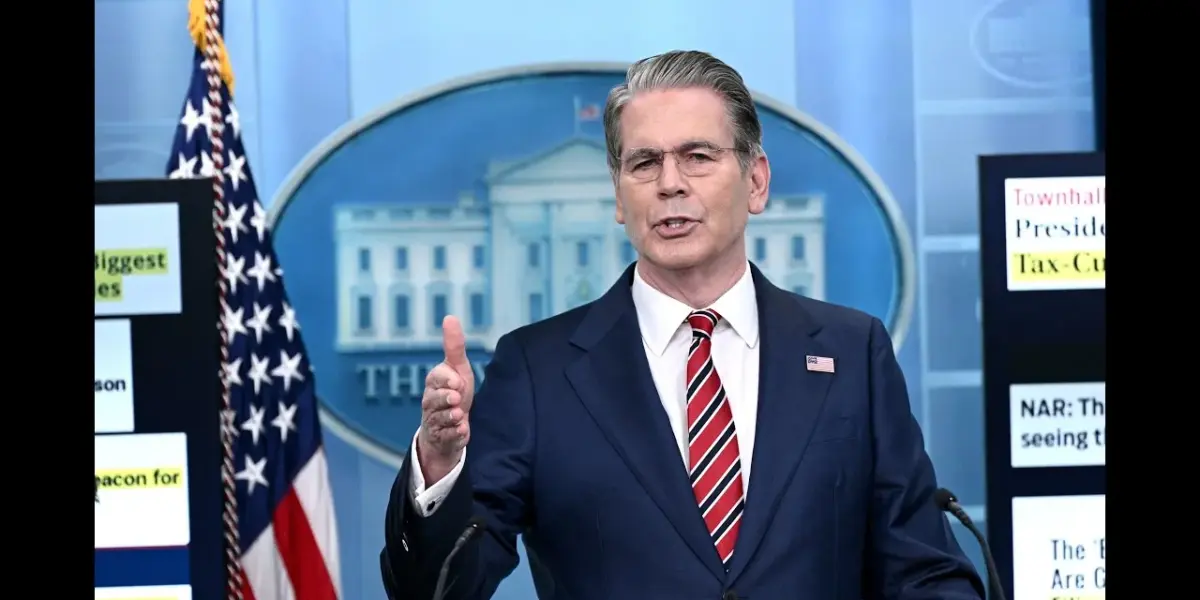
US Warns China Banks: Stop Doing Business with Iran or Face Penalties
Even as the United States and Iran consider peace talks, Washington is not backing down from its strategy of putting economic pressure on Tehran. Treasury Secretary Scott Bessent has made it clear that any country doing business with Iran could face American sanctions. He specifically pointed out that two Chinese banks have already received warnings.
This move is part of a larger effort by the US to increase economic pressure on Iran. The Trump administration wants to send a strong message: doing business with Iran, especially buying its oil, means supporting groups that Iran uses to carry out attacks. This support, the US says, will lead to American sanctions.
Treasury Secretary Details Warnings to Chinese Banks
Treasury Secretary Scott Bessent stated that two Chinese banks have received letters from the US Treasury. While he did not name these banks, he explained the US position clearly. If the US can prove that Iranian money is flowing through these banks’ accounts, then the US is prepared to impose what are called “secondary sanctions.” These sanctions target foreign firms and individuals who do business with sanctioned countries.
Earlier this week, the US Treasury sent similar warnings to banks in China, Hong Kong, and the United Arab Emirates. China is a major focus because its purchases of Iranian oil have been a crucial economic lifeline for Iran. At one point, China was buying over 90% of Iran’s oil, which made up about 8% of China’s total energy needs.
Why Banks Remain Anonymous: A Strategic Move
Professor Sun Guoxiang, who studies international affairs at Taiwan National University, offered insight into why Secretary Bessent kept the Chinese banks anonymous. He suggested a few reasons for this approach. First, the US aims to apply pressure in a targeted way while still leaving room for negotiation and cooperation.
Second, keeping the banks anonymous creates a widespread sense of unease and anxiety among financial institutions in China, Hong Kong, and other regions. Banks are left wondering if they might be inadvertently involved and what the consequences could be. This uncertainty can lead to cautious behavior even without direct public action.
Finally, this strategy preserves the US’s flexibility. If the targeted banks or China cooperate and stop dealings with Iran, the US doesn’t need to take public action. However, if they don’t cooperate, the US can choose to take more public and direct action later.
US Doubles Down on ‘Economic Fury’
The US Treasury has stated it is intensifying its strategy, which it calls “economic fury,” to maintain maximum pressure on Iran. This warning comes shortly after President Trump announced he had secured a promise from Chinese leader Xi Jinping that China would not assist Iran militarily. Previously, President Trump had threatened to impose 50% tariffs on Chinese goods if China was found to be sending weapons to Iran.
The White House is now closely watching the situation, and the possibility of tariffs remains a potential tool. Meanwhile, President Trump is still scheduled to visit Beijing on May 14th and 15th to continue discussions with Xi Jinping.
Why This Matters
This situation highlights the complex geopolitical and economic ties between major world powers. The US is using its financial influence to isolate Iran, and China’s role as a major trading partner makes it a key player in this strategy. The warnings to Chinese banks show that the US is willing to extend its sanctions reach beyond direct dealings with Iran, impacting third-party financial institutions.
Implications and Future Outlook
The US’s threat of secondary sanctions could have significant ripple effects. Chinese banks might become more hesitant to engage in any transactions that could be linked to Iran, potentially impacting global trade and finance.
This could lead to a chilling effect on business with Iran, further isolating the country economically. The success of this strategy depends on the US’s ability to enforce these sanctions and China’s response to the pressure.
Historical Context
The US has a history of using sanctions as a foreign policy tool, particularly against countries it deems a threat or that violate international norms. Sanctions against Iran have been in place for decades, aimed at curbing its nuclear program and its support for regional groups.
The current administration’s focus on “maximum pressure” is an intensification of these long-standing policies. The inclusion of secondary sanctions, targeting entities doing business with sanctioned countries, has become a more prominent tool in recent years.
The US Treasury issued a warning to banks on April 24, 2024, regarding their dealings with Iran.
Source: US Warns of 'Secondary Sanctions' to Chinese Banks Aiding Iran (YouTube)

Related Articles
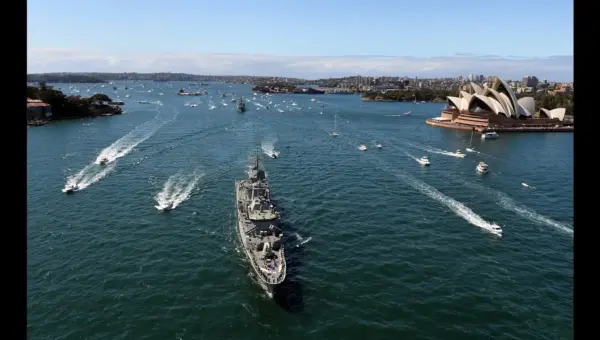
Japan Ships Warship Through Taiwan Strait, Eyes Global Arms Market
Japan is taking a more assertive defense role, relaxing weapons export rules and sending a warship through the Taiwan Strait. This marks a significant shift from its post-WWII pacifist stance and could reshape regional security dynamics, especially with potential deals like the one with Australia.


Markets Brace for Uncertainty Amid Geopolitical Tensions, AI Boom
Geopolitical tensions surrounding Iran are creating market uncertainty, but a booming artificial intelligence sector and a stable labor market are providing significant economic support. Investors are watching closely as AI investment continues to drive growth and buffer against potential downturns.
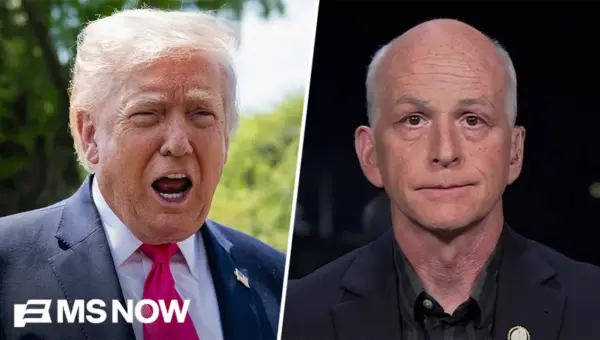
Dem Lawmaker Slams Trump’s Iran Claims as ‘Otherworldly BS’
Rep. Adam Smith, top Democrat on the House Armed Services Committee, disputes President Trump's claims of Iran agreeing to concessions on its nuclear program and more. Smith stated there is 'no truth whatsoever' to the President's assertions, noting that the Strait of Hormuz is not truly open and Iran has not halted support for terrorism. He called Trump's ability to convince people of his claims 'otherworldly BS'.