Florida Housing Market Sees Surge in Short Sales
Florida's housing market is experiencing a significant downturn in 2026, with foreclosures and short sales surging. This trend is creating substantial discounts for buyers and investors, though demand remains low and future price declines are possible in many areas. Localized market analysis is crucial for navigating these opportunities.

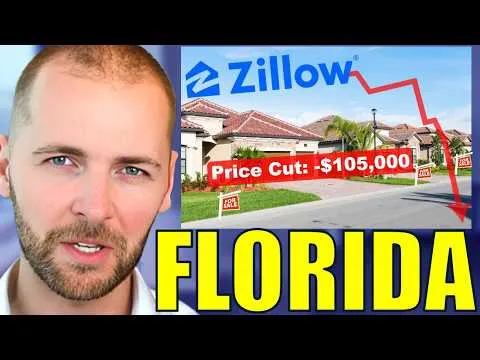
Florida Housing Market Faces Downturn Amidst Rising Foreclosures
Florida’s housing market is experiencing a significant downturn in 2026, marked by a sharp increase in foreclosures and short sales. This trend signals a new phase of decline for the state’s property sector, a situation many believed was impossible after past market corrections.
Data reveals that 118,000 properties across the U.S. had a foreclosure filing in the first quarter of 2026, a 26% jump from the previous year. However, Florida’s growth rate for foreclosures is even higher, reaching 44% year-over-year. This surge is creating substantial discounts for buyers and investors looking for opportunities within the state.
Short Sales Highlight Market Distress
A search on real estate platforms shows over a thousand properties in Florida listed with the term “short sale.” These are situations where homeowners are selling their property for less than they owe on their mortgage, often to avoid foreclosure. Many of these listings represent significant losses for the original owners.
For example, a recently built 4,300-square-foot home in Florida, purchased for $750,000 in September 2023, is now listed for $600,000. This represents a $150,000 loss for the seller.
Another property in Orlando, bought for $415,000 in 2023, is now listed at $334,000, a loss of $81,000 or 20%. Both listings are identified as short sales.
Price Declines and Regional Impact
Florida’s housing market has already seen a correction of about 6% to 7% since the downturn began. Home values are down 4.6% year-over-year as of February 2026. This decline is affecting most areas across the state, with even major cities like Miami experiencing year-over-year drops in home values in many zip codes.
While overall market declines are in the single digits, the increasing number of foreclosures and short sales suggests a potentially deeper correction. Individual listings are showing price drops of 15% to over 30% from their previous sale prices, indicating significant distress in specific segments of the market.
Understanding Short Sales and Foreclosures
A short sale occurs when a homeowner defaults on their mortgage payments and chooses to sell the property before a foreclosure is finalized. There are two types: unapproved and bank-approved short sales. An unapproved short sale means the bank has not yet agreed to the sale terms, which can lead to lengthy closing times of three to six months.
A bank-approved short sale, however, means the lender has already agreed to accept less than the outstanding mortgage amount. These sales typically offer a smoother and quicker closing process for buyers. Targeting these approved short sales can be a strategic move for those seeking discounts.
Geographic Distribution of Distress
The west coast of Florida, particularly areas like Tampa, St. Petersburg, Port Charlotte, and Fort Myers, shows a high concentration of short sales. Central Florida, including Lakeland, Davenport, and Orlando, also has a significant number of these distressed properties. Even areas like Jacksonville and parts of South Florida are beginning to show signs of distress.
One example in Point, between Lakeland and Orlando, features a bank-approved short sale for a 3-bedroom, 2-bathroom home. Purchased for $306,000 in August 2022, it is now listed for $234,000, a 21% loss. The lender could also face a loss of around $50,000 on this FHA mortgage, highlighting the banks’ acceptance of lower sale prices.
Demand Remains Low, Inventory Fluctuates
Despite the increasing number of distressed sales, overall demand in Florida’s housing market remains low. Home sale activity in February 2026 recorded 25,000 closed transactions, a level not seen since 2015-2016. This demand is down over 30% from its peak during the pandemic.
While the total inventory of listings has decreased by about 5% year-over-year to 162,000 properties, this drop is attributed to sellers holding back their homes rather than increased demand. Many owners are hesitant to sell in a declining market, especially with short sales offering lower prices nearby. Experts predict inventory may rise again in the latter half of the year.
Looking Ahead: Potential for Further Decline
Current default rates, while historically normal at 1.9% for 30-90 day delinquencies and 1.2% for 90-day plus delinquencies at the end of 2025, are a point of concern. Given the falling property values, rising taxes, and insurance costs, homeowners are facing increasing financial pressure.
If default rates continue to climb, it could exert even more downward pressure on prices and lead to a further increase in short sales. Historical data from 2007-2008 shows that default rates can skyrocket, leading to a significant rise in foreclosures. While a repeat of that crisis is not necessarily expected, even a fraction of that distress could add considerable pressure to Florida’s market.
Opportunities for Buyers and Investors
For those interested in buying in Florida, whether as a homeowner or investor, the current market presents significant discounts. The rapid emergence of large price reductions means that now could be a time to start exploring opportunities and making offers. However, buyers should be aware of potential future price drops in their chosen areas.
Tools like Reventure.app can provide home price forecasts for the next 12 months and assess how overvalued or undervalued specific neighborhoods are. For instance, some areas in Orlando are forecast to see a 9% price drop in the next year, while a nearby suburb like Winter Park might see a 1.9% increase. Understanding these localized forecasts can help buyers make informed offers and protect against immediate losses after purchase.
Market Bifurcation and Future Outlook
The market is showing signs of bifurcation, with some areas expected to decline while others may see modest growth. In Miami, while most areas are declining, pockets like Coral Gables are forecast to increase by 4.6%. This highlights the importance of detailed, localized market analysis.
For potential buyers and investors in Florida during 2026, the time to investigate is now. While immediate purchase isn’t necessary, starting to look and make offers could reveal substantial discounts. Armed with data on price forecasts and market valuation, buyers can approach the market strategically.
As of February 2026, Florida’s housing market is showing clear signs of a downturn, with foreclosures and short sales on the rise. For those considering entering the market, understanding localized forecasts and property valuations is key to navigating potential future price movements. The Reventure app offers data on home price forecasts and overvaluation rates for a monthly fee, providing valuable insights for making informed decisions.
Source: Florida’s housing market is spiraling (short sales rise fastest since 2008) (YouTube)

Related Articles

Real Estate Market Faces Syndicator Strain
Real estate syndicators are facing significant financial pressure as property values fall and loan maturities loom. This market shift is creating opportunities for investors who can navigate distressed debt and focus on fundamentally strong markets. Maintaining high occupancy and strategic rent setting are key tactics in the current climate.

Housing Market Correction: Why Sellers Are Staying Put
The housing market is currently undergoing a correction, not a crash, according to recent data. Inventory levels are flat or declining as sellers hold back, indicating a rational market response rather than panic. Delinquency rates remain below pre-pandemic levels, suggesting widespread financial distress is not imminent.
War Fuels Inflation, Squeezes Housing Market
Geopolitical conflict has driven inflation up, pushing mortgage rates higher and signaling a slowdown in the housing market. While a crash is unlikely, savvy investors can find opportunities by focusing on cash flow and buying below market value.