Bitcoin Surges, Igniting FOMO: How to Trade Smartly
As Bitcoin surges, many traders experience FOMO, a complex emotional and biological response. Understanding these triggers and implementing a structured portfolio strategy is key to navigating volatile crypto markets and making rational decisions.

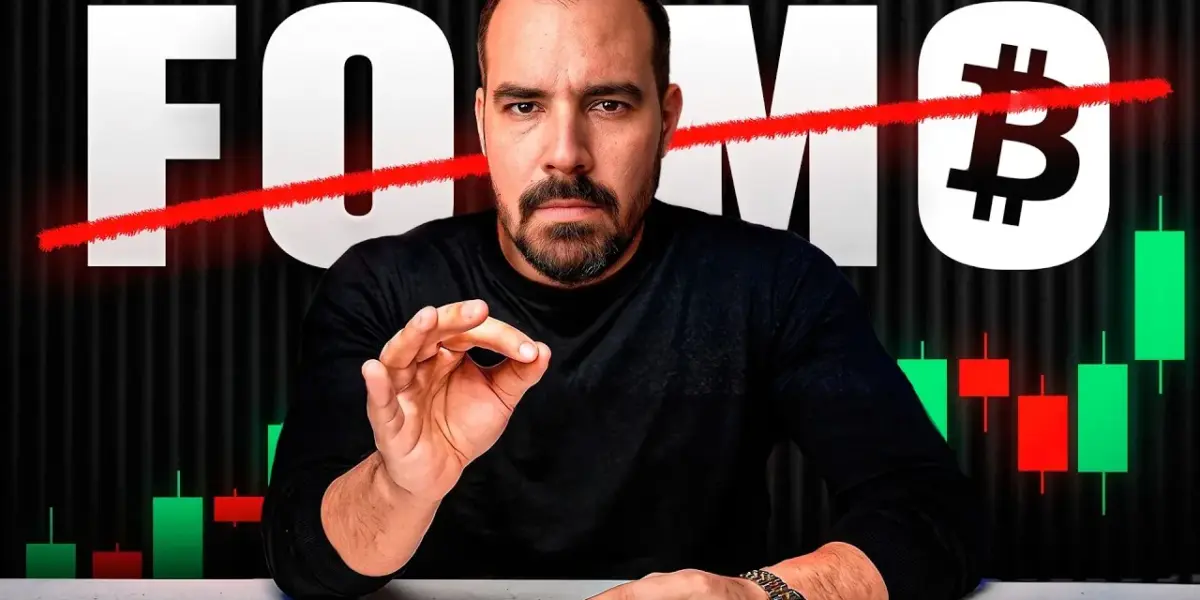
Bitcoin’s Price Leap Sparks Market Frenzy
Bitcoin recently experienced a significant price surge, pushing past previous resistance levels and reigniting enthusiasm among cryptocurrency traders. This upward momentum has left many who were on the sidelines feeling a strong sense of FOMO, or the Fear Of Missing Out. Understanding the psychological drivers behind this feeling is crucial for making sound investment decisions in the volatile crypto market.
Understanding FOMO: More Than Just Greed
FOMO isn’t simply about wanting to get rich quick; it’s a complex emotional and biological response. Your brain’s amygdala, the ancient threat-detection center, can interpret a rapidly rising market you’re not participating in as a danger, similar to facing a predator. This triggers a fear response that feels intense, even if no direct threat exists.
Simultaneously, the nucleus accumbens, your brain’s reward system, releases dopamine not just when you win, but in anticipation of winning. Watching green candles ascend triggers this reward pathway, making the chase for potential profits feel like an immediate gratification, independent of the trade’s actual quality.
Seeing others post gains on social media activates the same brain regions associated with physical pain. This social pain can override your carefully laid plans and rational decision-making processes, pushing you towards herd behavior where you feel compelled to follow the crowd to alleviate this discomfort.
The Prefrontal Cortex: Your Rational Trader
The prefrontal cortex is the part of your brain responsible for planning, logic, and impulse control – essentially, the CEO of your decision-making. However, during intense emotional states driven by fear, reward anticipation, and social pain, the connection to this rational center can be temporarily disrupted. This is why a well-thought-out trading plan made yesterday can feel inaccessible in the heat of the moment, leading to impulsive actions.
Recognizing that FOMO is a biological reaction, not a personal failing or a lack of discipline, is the first step toward managing it. Every trader, regardless of experience or success, possesses this same brain wiring. The key difference between those who thrive and those who face liquidation often lies in the timing and execution of their decisions.
Building a Portfolio Strategy: A Framework for Stability
To combat emotional decision-making, especially when feeling FOMO, a structured approach is vital. The speaker proposes a portfolio allocation framework with five categories: Bitcoin (as a reserve asset), large-cap altcoins, mid-cap altcoins, small-cap altcoins, and ‘Degen’ assets (like meme coins and micro-caps). This framework is designed to align with four distinct risk profiles.
Risk Profiles and Asset Allocation
- Conservative Profile: This strategy emphasizes stability, with a significant portion in Bitcoin (70%), followed by large-caps (20%), and smaller allocations to mid and small-caps, with no ‘Degen’ assets. It’s designed for investors who want to remain in crypto but can tolerate substantial drawdowns without significant distress.
- Balanced Profile: A common approach for those who have navigated multiple market cycles, this profile typically includes 50% Bitcoin, 30% large-cap altcoins, and smaller portions in other categories. It aims for a blend of stability and growth potential.
- Aggressive Profile: This strategy is for traders seeking higher potential upside, accepting greater volatility. It involves a smaller Bitcoin allocation (under 20% in the speaker’s case), with a larger focus on altcoins, acknowledging the potential for significant losses during bear markets in exchange for larger gains during bull runs.
- Degen Profile: This is the highest-risk profile, often seen with smaller accounts needing asymmetric bets for growth. It might include only 20% Bitcoin and a substantial 50% in ‘Degen’ assets. Investors in this category must be fully prepared to lose their entire allocation, understanding that ‘rubbish might happen,’ meaning substantial or total loss is a distinct possibility.
Navigating Current Market Conditions
The current market sentiment shows similarities to previous cycles, with some analysts predicting a bear market while others see continued upward potential. Bitcoin’s price action is being closely watched, with key support and resistance levels indicating potential structural changes. The speaker notes that while market conditions can be complex, historical patterns suggest that periods of correction can occur even within a broader bull market.
Strategic Entry and Position Sizing
For those currently outside the market and experiencing FOMO, a strategic approach to entering positions is recommended. Instead of making large, impulsive buys, the advice is to begin ‘layering in’ with small tranches. For example, if you have a significant amount to invest, starting with 10-15% of your Bitcoin allocation allows you to test the market’s strength.
This method ensures that if the market drops, you retain capital to buy at lower prices, thereby averaging down your entry cost. The same principle applies to other asset classes, with slightly higher initial percentages for large-cap altcoins like Ethereum, Solana, and XRP due to their higher growth potential compared to Bitcoin, but still within a defined risk framework.
For mid-cap and small-cap altcoins, which offer higher risk and reward, initial entry should be even more cautious, perhaps only 5% for mid-caps and 2% for small-caps of the allocated capital. This disciplined layering approach helps manage risk and reduce the emotional impact of market volatility.
Managing Degen Plays and Profit Taking
When engaging with ‘Degen’ assets, such as newly launched tokens or micro-cap coins, a clear strategy for profit-taking is essential. A common tactic is to take out the initial investment once a certain profit target is reached (e.g., a 3x gain). This allows you to hold the asset with ‘house money,’ meaning you’ve removed your risk capital.
Any profits generated from these high-risk plays can then be redeployed into more stable assets like Bitcoin or used to fund further ‘Degen’ explorations. The core principle is to have a predetermined plan for asset allocation and profit-taking before entering any trade, preventing impulsive decisions driven by hype or social media trends.
Geopolitical Factors and Market Uncertainty
Recent geopolitical events, including tensions and potential conflicts, have added another layer of complexity to the market. While crypto has shown resilience and even outperformed traditional assets in certain periods, news-driven volatility can lead to sharp price swings. The speaker highlights the importance of staying informed but avoiding overtrading, especially when market reactions to news are uncertain.
For instance, shorting Bitcoin at a price of $77,273 was a strategic decision based on testing resistance levels and anticipating a weekend drop, but it also carried inherent risks. The speaker advises caution, suggesting that waiting for confirmation of market direction or significant price rejection at key levels is often a safer approach than trying to time every move.
The Path Forward: Patience and Planning
Ultimately, navigating the cryptocurrency market successfully, especially during periods of high volatility and FOMO, hinges on understanding your own psychology and having a well-defined plan. By recognizing the biological basis of FOMO and implementing a structured portfolio allocation strategy, traders can make more rational decisions.
The speaker emphasizes that consistent application of a chosen strategy, whether it’s conservative, balanced, or aggressive, is more critical than trying to perfectly time every market move. The journey through crypto markets often involves learning from mistakes, with early cycles focused on gaining experience and later cycles on wealth accumulation.
For those looking to refine their approach, resources like cryptos.pt offer free tools and trade journals to aid in strategy development. The key takeaway is to be prepared for market fluctuations, avoid impulsive decisions, and stick to a plan that aligns with your risk tolerance and financial goals.
Source: If I Were Out This Bitcoin Pump Here's EXACTLY What I'd Do (YouTube)

Related Articles


Wall Street Floods Crypto With ETFs, Eyes Clarity Act
Wall Street's entry into crypto is accelerating with new ETFs from major firms and expanded trading options. The upcoming Clarity Act is influencing these moves, though debates around stablecoin yields continue. Bitcoin's price is at a key juncture amidst this institutional adoption.


Crypto Soars as Clarity Bill Nears Passage, Iran Deal Eases Tensions
The cryptocurrency market is experiencing a significant rally, with Bitcoin hitting $78,000, driven by progress on a U.S. crypto Clarity Bill and easing geopolitical tensions. Analysts predict further gains, especially for Ethereum, as institutional interest grows.


Bitcoin Plunges 50%; Analysts Eye Low $50Ks
Bitcoin has dropped 50% from its peak, with analysts eyeing the low $50,000s as a key support level. Historical data shows the 200-week Simple Moving Average, currently around $59,000, has acted as a strong buying indicator in past market cycles. This suggests a potential accumulation zone for aggressive buying if prices fall within this range.