Trump’s Hormuz Deal: Capitulation or Diplomacy?
Reports suggest a recent deal involving Donald Trump and Iran regarding the Strait of Hormuz has effectively given Iran significant control over the vital waterway. Critics argue this represents a major concession, while supporters claim it's a diplomatic achievement.

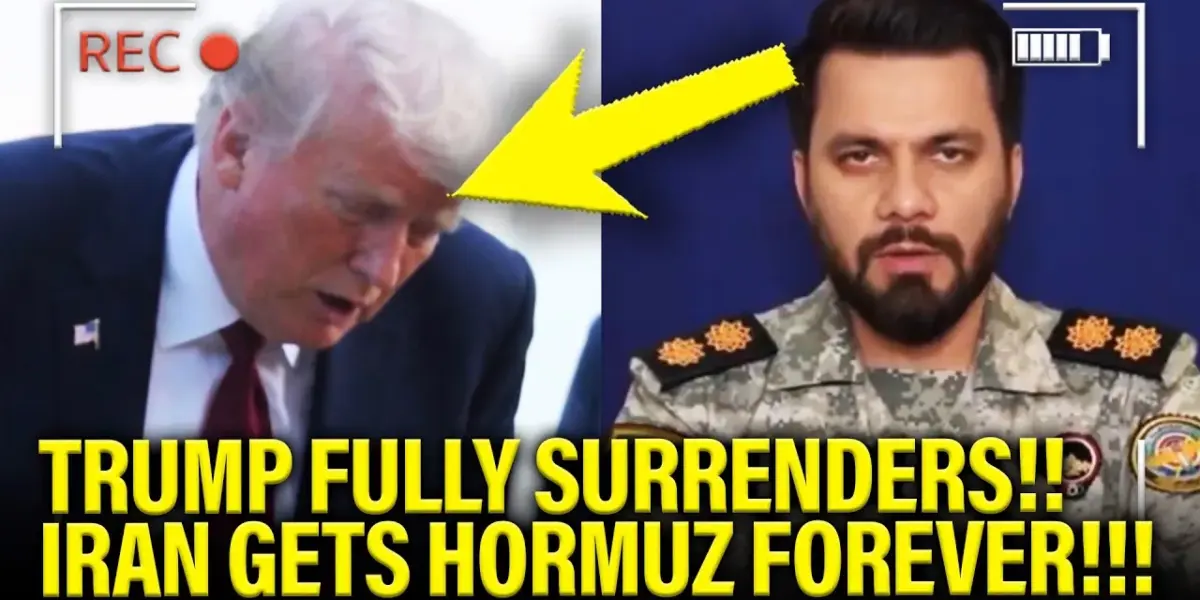
Trump’s Hormuz Deal: Capitulation or Diplomacy?
A recent announcement concerning the Strait of Hormuz has sparked intense debate, with claims that former President Donald Trump has effectively surrendered control of this vital waterway to Iran. The core of this claim rests on the conditions under which the strait has reportedly been reopened.
Iran’s Foreign Minister, Javad Zarif, posted that passage for commercial vessels is open for the remaining ceasefire period, but crucially, only on routes coordinated and announced by Iranian authorities. This suggests Iran maintains significant control over maritime traffic.
Donald Trump himself announced the reopening of the Strait of Hormuz, calling it a major deal. However, critics point to his own statements, which later referred to it as the “Strait of Iran,” a term that Iranian social media users have mocked.
Trump also stated that a U.S. naval blockade of the Persian Gulf would remain in effect regarding Iran until their transactions were complete. He further claimed Iran agreed never to close the strait again, framing it as a significant victory.
The Details of the Agreement
Reports suggest a potential $20 billion deal where the U.S. might offer financial aid to Iran in exchange for Iran voluntarily halting its enrichment of uranium to weapons-grade levels. This proposed agreement is seen by some as weaker than the 2015 Joint Comprehensive Plan of Action (JCPOA) negotiated under President Obama, which involved multilateral agreements and stricter international controls.
The specific conditions for passage through the Strait of Hormuz, as detailed by Iranian state media and sources close to Iranian officials, are quite restrictive. Only commercial vessels are permitted, excluding any ships linked to “hostile countries.” Ships must use routes designated by Iran, entering from the north of Laric Island and exiting from the south. This rerouting effectively places the strait under Iran’s territorial waters and ensures Iran’s sovereignty over it.
Iran will determine which ships are considered commercial, naturally excluding vessels connected to adversaries. This means passage is not free but limited by Iran’s discretion.
Commercial vessels passing through will also be required to pay tolls to Iran for security provisions. All transit must be coordinated with the Iranian Revolutionary Guard Corps (IRGC) Navy, involving permission on a tanker-by-tanker basis.
Historical Context and Previous Deals
The Strait of Hormuz, a narrow waterway between the Persian Gulf and the Gulf of Oman, is a critical chokepoint for global oil shipments. Its closure or disruption can significantly impact global energy markets and economies. During previous tensions, Iran has used the threat of closing the strait as leverage.
The JCPOA, agreed upon in 2015 by Iran and world powers including the U.S., aimed to prevent Iran from developing nuclear weapons in exchange for sanctions relief. However, the Trump administration withdrew from the deal in 2018, reimposing stringent sanctions. Critics argue this withdrawal weakened international oversight and increased regional tensions, potentially leading to the current situation where Iran dictates terms.
The narrative surrounding a $1.7 billion cash payment to Iran under the Obama administration has also resurfaced. This payment was reportedly a settlement of an old arms deal dispute resolved through international tribunals, predating the Iranian Revolution. Unlike the current proposed $20 billion deal, it was not directly linked to nuclear enrichment or strait passage, and due to sanctions, American dollars had to be converted into other currencies.
Differing Perspectives
Supporters of the current arrangement, including Donald Trump, frame it as a diplomatic achievement that has reopened a vital shipping lane and prevented further conflict. They highlight Iran’s agreement not to close the strait and suggest that this is a sign of de-escalation achieved through negotiation.
However, many analysts and commentators view this agreement as a significant concession, bordering on surrender. They argue that Iran has leveraged a period of conflict and pressure to impose terms that give it de facto control over the strait. This perspective suggests that the reopening is on Iran’s terms, not a true victory for the U.S. or global maritime freedom.
Even some right-wing commentators, like Ann Coulter, have expressed skepticism, noting that the strait was open before military action began and questioning the narrative of a major Trump victory. Experts like Danny Citronitz, an Israeli foreign policy analyst, are concerned that Iran has emerged with the upper hand, demonstrating its ability to control the strait and dictating terms for passage.
Why This Matters
The control and security of the Strait of Hormuz have direct implications for the global economy, particularly energy prices. If Iran truly dictates terms of passage, it could lead to increased costs for shipping and potentially disrupt supply chains. This situation also affects international relations, potentially weakening alliances and altering the balance of power in the Middle East.
The agreement, or lack thereof, also raises questions about the effectiveness of U.S. foreign policy. If the U.S. is perceived as conceding ground or accepting unfavorable terms, it could embolden other adversaries. The debate over whether this is a diplomatic success or a strategic loss has significant consequences for future negotiations and the U.S. standing on the global stage.
Implications, Trends, and Future Outlook
The trend appears to be a shift towards Iran exerting greater influence over regional waterways. The reliance on voluntary compliance for nuclear non-enrichment and Iran’s control over Hormuz passage suggests a departure from previous, more robust international agreements. This could set a precedent for future negotiations, where adversaries might demand similar terms.
The future outlook depends heavily on how these terms are enforced and whether Iran adheres to them. Ship owners and oil executives are reportedly adopting a wait-and-see approach, expecting only a partial recovery in traffic. The situation highlights the ongoing tension between diplomacy, economic pressure, and military posturing in international relations.
The events surrounding the Strait of Hormuz are a clear reminder of the complex geopolitical dynamics at play. The narrative of victory or defeat often hinges on the interpretation of complex agreements and the perceived power balance. As Iran solidifies its control, the international community faces the challenge of ensuring stable maritime passage without compromising security or national interests.
The ongoing situation at the Strait of Hormuz will continue to be closely watched. Iran’s state-run Tasnim news agency has indicated that if the U.S. maritime blockade continues, it will be considered a violation of the ceasefire, potentially leading to the closure of the strait once again.
Source: Trump FULLY SURRENDERS to Iran giving them HORMUZ FOREVER!!! (YouTube)

Related Articles

Boxer Slams Trump’s ‘Corner Store’ Remark as Out of Touch
Former Senator Barbara Boxer criticized Donald Trump's "corner store" comment as out of touch, highlighting voter concerns amid the Strait of Hormuz reopening. Analysts debate whether the administration's touting of the strait's opening is a true victory or a resolution to a self-created crisis. Economic anxieties and voter enthusiasm remain critical factors in the upcoming elections.


Trump’s Truth Social Tirade Reveals Political Divide
Donald Trump's recent Truth Social attacks on media figures during the Iran crisis highlight his communication style. His contradictory statements on U.S. global standing and past failed international initiatives raise questions about his priorities. This behavior impacts political discourse and international relations.


Middle East Ceasefire Holds Amid Global Economic Storms
A fragile ceasefire in the Middle East offers a pause from conflict, but global economic pressures are mounting. Rising energy prices and inflation are impacting consumers worldwide, while severe weather continues to affect millions across the United States. Domestic political developments and a tragic incident in Virginia also make headlines.