JWST Unveils Galaxies Too Mature for Early Universe
The James Webb Space Telescope has discovered early galaxies that are far too mature and bright for current cosmological models, suggesting the early universe was more developed than previously thought. This finding may point to the existence of 'Dark Stars.'

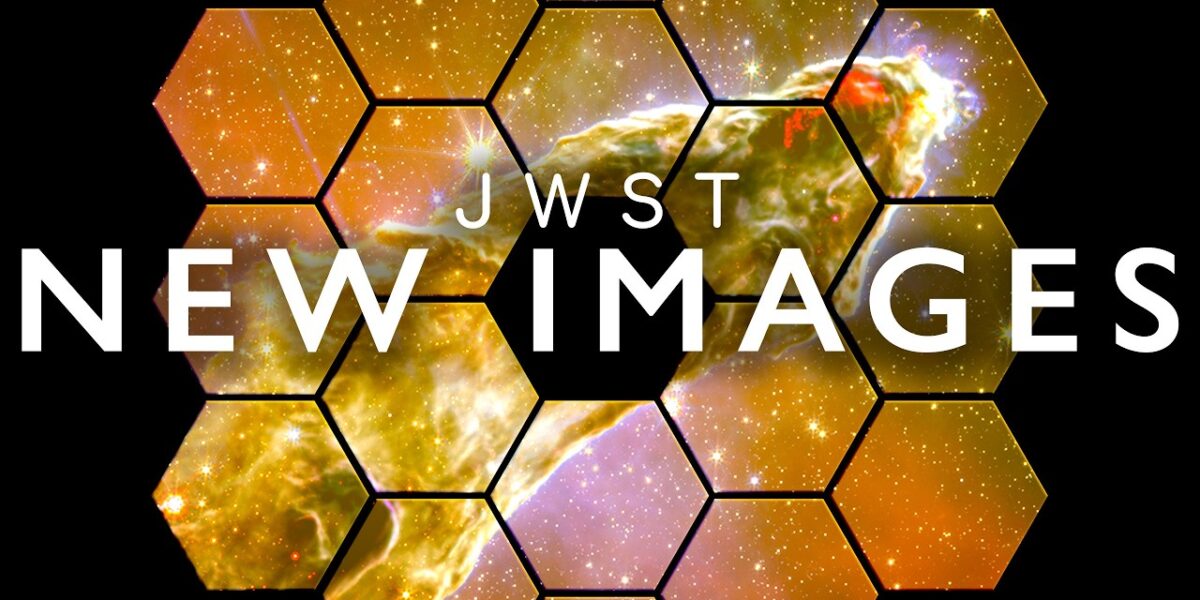
JWST Unveils Galaxies Too Mature for Early Universe
The universe, in its infancy, was a chaotic crucible where the very first stars and galaxies began to coalesce from the cosmic dust and gas left over from the Big Bang. For decades, astronomers have relied on theoretical models to envision this nascent cosmos, predicting small, dim collections of simple stars. However, the James Webb Space Telescope (JWST), humanity’s most powerful eye in the sky, is challenging these long-held assumptions with astonishing discoveries that suggest the early universe was far more advanced than previously believed.
A Glimpse into the Cosmic Dawn
Launched on Christmas Day 2021, the JWST was designed to pierce the veil of cosmic dust and gas that obscures our view of the universe’s earliest epochs. Its advanced infrared detectors are capable of capturing light that has traveled for billions of years, allowing us to look back to a time just a few hundred thousand years after the Big Bang – the era known as the Cosmic Dawn. This period marks the universe’s transition from a dark, opaque state to one illuminated by the first stars.
Challenging Cosmological Models
Through its Near-Infrared Spectrograph (NIRSpec) and Near-Infrared Camera (NIRCam), JWST has been surveying the distant universe as part of programs like the JWST Advanced Deep Extragalactic Survey (JADES). These observations have uncovered galaxies that existed surprisingly early in cosmic history.
One such galaxy, JADES-GS-z14-0, has been confirmed to have a redshift of 14.32, placing it at an age of just 300 million years after the Big Bang. This makes it one of the earliest galaxies ever detected.
The prevailing cosmological model, known as the Lambda Cold-Dark-Matter (ΛCDM) model, predicts that galaxies at this early epoch should be relatively small and dim, just beginning to form their first, simple stars. However, JADES-GS-z14-0, and several other similar early galaxy candidates, appear far too mature and bright for their age. Their existence suggests that star formation in the early universe was significantly more rapid and efficient than current models allow.
The Mystery of Dark Stars
This discrepancy has led scientists to reconsider the conditions of the early universe and explore alternative explanations. One intriguing hypothesis, first proposed in 2007 by cosmologists Katherine Freese, Paolo Gondolo, and Douglas Spolyar, involves the existence of ‘Dark Stars.’ These hypothetical celestial objects are theorized to be powered not by nuclear fusion, like our Sun, but by the annihilation of dark matter particles within their cores.
Dark Stars could have grown to immense sizes, potentially millions of times the mass of our Sun, and remained cool and long-lived. Their unique energy production mechanism could have resulted in strong infrared emission, precisely the kind of light that JWST excels at detecting. The JWST’s observations of these unexpectedly mature early galaxies may, in fact, be providing the first observational evidence for the existence of these enigmatic Dark Stars, potentially bridging the gap between the most distant observations and our limited understanding of dark matter.
A Universe Richer Than Imagined
Beyond the profound implications for early galaxy formation, JWST has continued to revolutionize our understanding of the cosmos across a vast range of scales. From stunningly detailed images of Neptune’s rings and moons, revealing previously unseen arcs and clouds, to analyzing the composition of comets like 3I/ATLAS, which carry vital clues about the universal building blocks of planetary systems and life.
JWST’s ability to peer through cosmic dust has also provided unprecedented views of stellar nurseries like the Pillars of Creation and the Carina Nebula. These images reveal thousands of previously hidden newborn stars, their energetic births marked by glowing hydrogen molecules and powerful jets. This allows scientists to test theories of star and planet formation with direct observational data, showing that stellar births are far more explosive and dynamic than previously thought.
In exoplanets, JWST has made significant strides. It has provided strong evidence for a potential Saturn-mass gas giant orbiting Alpha Centauri A, our closest stellar neighbor. This exoplanet candidate, directly imaged by JWST’s Mid-Infrared Instrument (MIRI), appears to follow an elliptical path within its star’s habitable zone, hinting at the possibility of moons or other terrestrial worlds within this nearby system.
JWST’s investigation into the protoplanetary disk around the exoplanet CT Cha b has revealed a carbon-rich environment, contrasting sharply with the disk surrounding its host star. This discovery offers crucial insights into the diverse chemical ingredients available for forming moons and planets across the galaxy.
The Future of Cosmic Exploration
The James Webb Space Telescope, a monumental collaboration between NASA, the European Space Agency, and the Canadian Space Agency, is proof of human ingenuity and our insatiable curiosity about the universe. Having already collected nearly 550 terabytes of data – more than the Hubble Space Telescope gathered in its 35-year mission – JWST is just beginning to unlock the universe’s deepest secrets.
With an estimated 20 years of operational life remaining, JWST promises to continue pushing the boundaries of our knowledge. Its ongoing observations will refine our understanding of the universe’s expansion rate, probe the atmospheres of exoplanets for signs of life, and delve even deeper into the mysteries of dark matter and dark energy. The unexpected maturity of the earliest galaxies discovered by JWST is a powerful reminder that the universe is full of surprises, and that our quest to understand our place within it is an ever-evolving journey.
Source: JWST Just Found Something That Shouldn't Exist (YouTube)

Related Articles


Universe’s End Time Shrinks Dramatically
New research suggests the universe's end may arrive much sooner than previously thought, with a revised timeline of 10 to the power of 78 years. This 'heat death' theory posits that all matter will decay, not just black holes. While still an immense duration, it's a significant shift from earlier predictions.


Distant Galaxy Appears to Break Light Speed Limit
A distant galaxy, GN-z11, appears to be moving away from Earth faster than the speed of light due to the expansion of space. This phenomenon, while seemingly violating Einstein's laws, is a key indicator of the universe's dynamic growth and offers insights into its early history.


Artemis 2 Crew Captures Stunning Earth Views from Moon Orbit
The Artemis 2 mission has captivated the world with stunning images of Earth from lunar orbit and record-breaking distances. Meanwhile, proposed NASA budget cuts, new insights from the James Webb Telescope, and novel approaches to exploring Mercury highlight the dynamic nature of space exploration.