AI Threatens White-Collar Jobs: A New Economic Reality
A new report indicates AI could significantly disrupt white-collar jobs, potentially leading to a 'white-collar recession.' High-earning professionals and those with advanced degrees are identified as most at risk, with implications for consumer spending and the broader economy.

AI Threatens White-Collar Jobs: A New Economic Reality
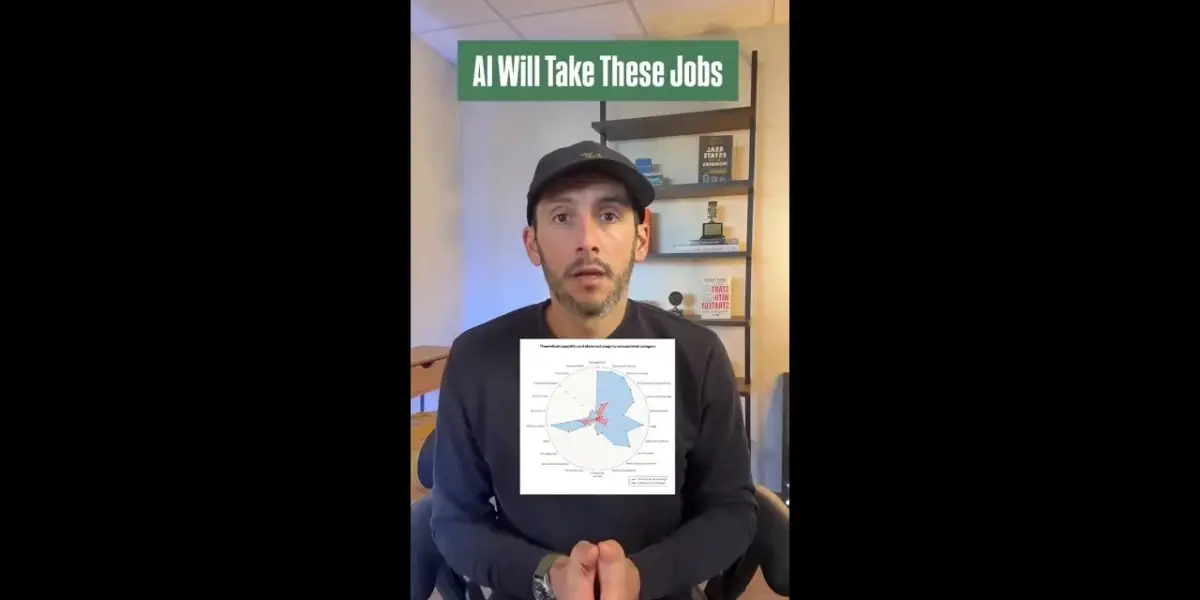
The rapid advancement of Artificial Intelligence (AI) is no longer a distant concept; it’s actively reshaping industries and prompting serious questions about the future of work. A recent report by Anthropic highlights the significant potential for AI disruption, particularly impacting professions traditionally considered secure, such as white-collar roles. This shift could usher in a time of what some are terming a “white-collar recession,” with high-earning individuals and those with advanced degrees facing the most immediate exposure.
Identifying High-Risk Professions
The Anthropic report categorizes industries based on their susceptibility to AI-driven changes. The data indicates a pronounced concentration of potential disruption within fields like:
- Computer Programming
- Data Entry
- Legal Services
- Office Administration
Specifically, roles such as computer programmers, customer service representatives, and data entry personnel are identified as being among the most likely to experience significant changes due to AI integration. This is largely attributed to the nature of their tasks, which often involve pattern recognition, data processing, and logical rule-following – areas where AI excels.
Resilience in Trades and Healthcare
Conversely, industries that rely heavily on manual dexterity, complex physical interactions, and nuanced human judgment appear to be less vulnerable in the short to medium term. The report projects minimal disruption for sectors like healthcare, construction, and many skilled trades. These professions often require hands-on skills, critical on-site problem-solving, and direct patient care or physical labor that current AI technologies cannot easily replicate.
The Specter of a White-Collar Recession
The findings lend credence to the growing theory of a “white-collar recession.” Unlike traditional recessions that often disproportionately affect lower-wage manual labor, this potential downturn could hit highly educated and high-earning segments of the workforce hardest. The report explicitly points to individuals with bachelor’s and master’s degrees, as well as high earners, as being the most exposed. This is a significant departure from historical economic cycles, where these groups often served as a stabilizing force.
Economic Implications of Shifting Incomes
While the full impact of AI on employment remains speculative, the potential ramifications for the broader economy are substantial. The current economic landscape often relies on high-income spending to drive consumer demand and Gross Domestic Product (GDP) growth. If a significant portion of high earners face job displacement or job insecurity due to AI, their reduced spending could create a ripple effect throughout the economy.
This could manifest in several ways:
- Decreased demand for luxury goods and services.
- Reduced investment in housing and other major assets.
- A slowdown in sectors that cater to affluent consumers.
This scenario highlights the interconnectedness of the labor market and consumer spending, highlighting how changes at the top of the income spectrum can influence economic activity across the board.
Broader Economic Context and Current Unemployment
It is crucial to note that, as of the report’s analysis, the overall unemployment rate remains relatively low at 4.4%. This suggests that widespread job losses have not yet materialized.
However, recent trends and data indicate a potential for a shift. Economic indicators can be lagging, meaning that the effects of technological disruption may not be immediately apparent in headline unemployment figures.
Factors such as inflation, interest rate hikes, and global supply chain issues are also contributing to economic uncertainty. The AI disruption adds another layer of complexity, potentially exacerbating existing economic pressures or creating new challenges.
Regional Variations and Who is Most Affected
The impact of AI-driven job displacement is likely to vary geographically and demographically. Regions with a high concentration of technology companies, financial services, and legal firms may experience more immediate effects. Conversely, areas that are heavily reliant on manufacturing, agriculture, or skilled trades might see a slower transition, though not necessarily immunity from broader economic shifts.
This trend will disproportionately affect:
- Buyers: A potential increase in high-skilled unemployment could lead to decreased demand in certain housing markets, potentially stabilizing or even lowering prices in affected areas. However, if AI also boosts productivity and creates new high-paying jobs, demand could remain robust.
- Sellers: In markets experiencing AI-related job losses, sellers might face longer listing times and potentially lower offers, especially if inventory levels rise due to increased supply from those seeking to relocate or downsize.
- Investors: Real estate investors will need to closely monitor regional economic trends. Areas with diverse economies or those less exposed to white-collar professions might offer more stability. Investment strategies may need to adapt, focusing on properties catering to essential workers or sectors less impacted by AI. Understanding local employment dynamics will be key to assessing risk and opportunity.
As AI continues its integration into the workforce, understanding these potential shifts is vital for individuals, businesses, and policymakers alike. The future of work is evolving, and proactive adaptation will be key to navigating the challenges and opportunities that lie ahead.
Source: How AI Could Reshape the Entire Labor Market (YouTube)

Related Articles


AI’s ‘Slopaganda’ War Infiltrates Online Feeds
Artificial intelligence is fueling a new wave of online propaganda, termed 'slopaganda,' which floods social media feeds with low-quality, emotionally charged content. This AI-generated material aims to influence public opinion by overwhelming users rather than informing them, creating a significant challenge for distinguishing truth from fabrication. Combating this requires technological solutions, media literacy, and increased user vigilance.


AI Chip Demand Fuels Data Center Growth Past $25 Billion
The artificial intelligence boom is fueling massive demand for computing power, with companies like Anthropic seeing revenue growth potentially exceeding $25 billion. This surge is driving significant investment in data center infrastructure, though power delivery remains a key bottleneck. The market is increasingly focused on hardware solutions supporting AI inference.


OpenAI’s GPT Image 2 Stuns with Unmatched Visual AI Prowess
OpenAI's new GPT Image 2.0 model sets a new standard in AI image generation, outperforming competitors in detail, accuracy, and versatility. Its advanced capabilities in text rendering and front-end web development are particularly noteworthy. This release solidifies OpenAI's lead in the visual AI space, with further advancements expected soon.