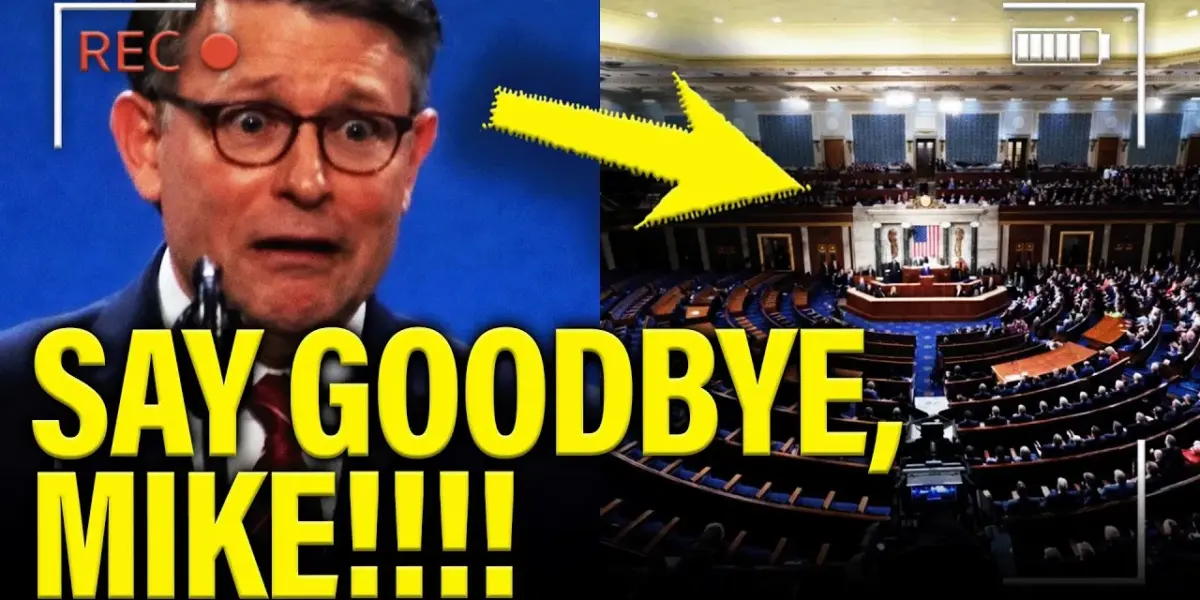
GOP’s Crumbling Foundation: Party Switcher Signals Deeper Divide
Representative Kevin Mullin's switch to independent status signals deeper GOP fractures. Internal criticism from MAGA figures and public dissatisfaction with economic and foreign policy issues highlight a party struggling with its direction and leadership, potentially facing a crisis of confidence.

GOP’s Crumbling Foundation: Party Switcher Signals Deeper Divide
The political landscape of the United States is in constant flux, but recent events within the Republican party suggest a more profound internal fracturing than usual. The departure of Representative Kevin Mullin from the Republican party to become an independent, while still caucusing with the GOP, has sent ripples of concern through its leadership, particularly Speaker Mike Johnson. This move, framed by Mullin as a response to partisan gerrymandering and a desire for independent representation, also occurs against a backdrop of internal dissent and public criticism from within the MAGA movement itself.
A Shifting House and a Panicked Speaker
The immediate consequence of Mullin’s decision is a recalibration of the House of Representatives’ balance of power: 217 Republicans, 214 Democrats, and now one independent. While Mullin pledges to continue working with the GOP, his formal disaffiliation highlights a growing dissatisfaction with the party’s direction. This mirrors historical precedents, such as Representative Justin Amash’s switch to independent status in 2019, underscoring that such defections are not entirely unprecedented but remain significant indicators of internal party stress.
The timing of Mullin’s announcement is particularly notable. It follows closely on the heels of California’s redistricting process, which could create five new Democratic congressional seats, potentially impacting Mullin’s own district.
His immediate reaction, as described in the transcript, was to blame Governor Gavin Newsom for gerrymandering, a narrative that the analysis argues is a misdirection. The underlying claim is that Donald Trump’s broader efforts at gerrymandering have, in this instance, backfired, leading Democrats to leverage their authority to push back.
Internal Criticism and the ‘Cuckervative’ Label
Beyond the congressional floor, the discontent appears to be brewing within the very ranks of the MAGA movement. The analysis points to prominent MAGA-aligned podcasters and figures who are publicly lambasting Donald Trump and the current Republican leadership. Terms like “cuckervatives” and “neocons” are being used, with critics like Owen Shroyer suggesting that MAGA has devolved into a “cult.” This internal criticism extends to perceived disrespect for national symbols and ceremonies, such as Donald Trump’s alleged refusal to remove his baseball cap during a dignified transfer of remains ceremony.
Figures such as Candace Owens and Tucker Carlson are cited as expressing disillusionment, with Owens reportedly calling Trump a “traitor and a coward.” This internal critique suggests a growing segment of the MAGA base feels betrayed by Trump’s actions and the party’s current trajectory, particularly concerning foreign policy and domestic issues.
The Doral Spectacle and a ‘Golden Age’ in Question
The analysis sharply criticizes an event at Donald Trump’s Doral resort, where Republican leaders, including Speaker Mike Johnson, were compelled to clap for Trump for an extended period. This scene is depicted as humiliating and indicative of a personality cult, occurring while the nation faces significant challenges like war and economic instability.
The transcript highlights Speaker Johnson’s effusive praise for Trump, describing him as the “most active president, the most energized president,” and claiming that “Donald J. Trump never sleeps.” This, according to the critique, stands in stark contrast to the lived realities of many Americans struggling with affordability, healthcare, and job security.
The notion of a “golden age” being promoted by MAGA Republicans is directly challenged by data and everyday concerns. Polls cited show widespread public dissatisfaction with rising gas prices, uncertainty about U.S. Goals and approval of military strikes in Iran, and opposition to deploying ground troops. Trump’s own approval ratings are presented as “disastrous.” This disconnect between the party’s rhetoric and public sentiment fuels the narrative of a party out of touch with its constituents and the nation’s pressing issues.
Foreign Policy and Economic Disconnect
The ongoing conflict in Iran is a significant point of contention. Republican representatives are quoted discussing the war in terms that range from a “short-term experience” to a necessary “price to pay” for long-term stability.
However, the analysis highlights the public’s apparent lack of confidence in the administration’s handling of the situation, with low approval ratings for strikes and strong opposition to ground troops. The economic repercussions, particularly rising gas prices, are a major concern for Americans, yet some Republican voices dismiss these concerns as a “scam” or external factors beyond their control, a stance that is met with skepticism.
Marjorie Taylor Greene’s criticisms, while aligning with the general sentiment of betrayal and failure, also offer a different perspective. She argues that Trump and Republicans have “f’d it all up” by failing to deliver on campaign promises like lowering gas prices, inflation, and ending foreign wars. Her statement that she “won’t vote for a bunch of Republicans that lie” further highlights the internal discord and a significant portion of the electorate’s disillusionment.
Why This Matters
The defection of a Republican representative, coupled with vocal criticism from within the MAGA movement and public polling data indicating widespread dissatisfaction, signals a potential crisis of confidence for the Republican party. The analysis suggests that the party’s current strategy, heavily reliant on loyalty to Donald Trump and a narrative of past glories, is failing to resonate with a significant portion of the electorate and is even alienating its own base. The focus on loyalty and personality over policy and tangible results appears to be creating an unsustainable internal dynamic.
Implications, Trends, and Future Outlook
The trend indicates a growing chasm within the Republican party, particularly between the establishment wing and the more fervent MAGA base, and even within the MAGA movement itself. Representative Mullin’s move to independent status, while perhaps a strategic maneuver for re-election, reflects a broader sentiment of disillusionment with partisan politics.
The internal critiques of Trump and his allies suggest a potential realignment or further fragmentation of the conservative movement. If these internal divisions deepen, it could significantly impact the party’s ability to unify and campaign effectively in future elections.
The future outlook for the GOP appears uncertain. The reliance on Trump as a central figure, while galvanizing for some, is also a source of division and alienates moderate voters and even some staunch conservatives.
The party faces the challenge of reconciling its various factions, addressing the public’s concerns about economic stability and foreign policy, and proving its relevance beyond a personality-driven platform. Failure to do so could lead to continued electoral setbacks and further erosion of its base.
Historical Context
The current internal strife within the Republican party can be seen as an evolution of trends that have been developing for years. The rise of Donald Trump in 2016 marked a significant shift, challenging traditional conservative orthodoxy and fostering a more populist, nationalist approach. This led to a consolidation of power around his persona, often at the expense of policy debates and ideological coherence.
The current criticisms from within the MAGA movement suggest that even this consolidated base is not monolithic and is susceptible to questioning leadership when perceived promises are broken or actions are seen as contrary to core values. The history of political parties often involves periods of internal struggle and realignment, and the GOP is currently navigating such a turbulent phase.
Source: 🚨MAGA Mike IN TERROR as GOP Members SWITCH PARTIES!! (YouTube)

Related Articles

Trump’s Unpopularity Hurts GOP Ahead of Midterms
Donald Trump's declining approval ratings are emerging as a significant challenge for the Republican Party heading into the midterm elections. Analysts suggest his unpopularity could cost GOP candidates, as voter frustration grows and Democratic enthusiasm rises. Despite internal party fears, many Republicans remain hesitant to distance themselves from the former president.

Red State GOP Leaders Resist Trump’s Grip
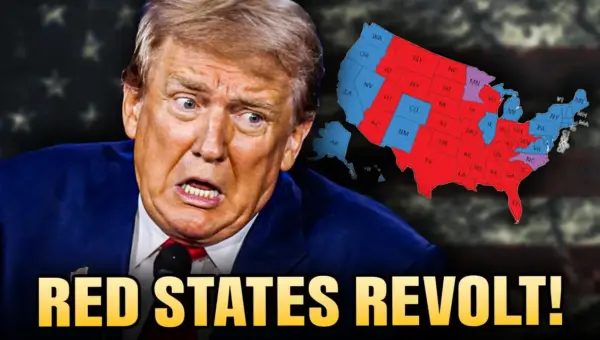
Red state Republican lawmakers are pushing back against Donald Trump's influence, particularly concerning redistricting. Indiana Republicans refused Trump's demands to redraw maps, fearing it would hurt their party. This signals a growing pragmatism among state GOP leaders prioritizing voter sentiment over loyalty to Trump.

Democrats Punch Back: Rigging Claims Ignite Fierce Retaliation
Republicans' attempt to redraw electoral maps mid-cycle has backfired, prompting a more assertive response from Democrats. Figures like Senator Eloise Lucas embody this new, aggressive political strategy, signaling a shift in how parties engage in power struggles.