Thune Rejects Trump’s Filibuster Demand for Voting Bill
Senate Majority Leader John Thune has rejected former President Trump's demand to eliminate the filibuster for the "Save America Act." Thune cited risks and political complexities, prioritizing institutional preservation and caucus protection over Trump's push for voting law changes. The segment also introduced Politico's new series, "On the Road with Jonathan Martin," featuring discussions on 2028 Republican contenders.

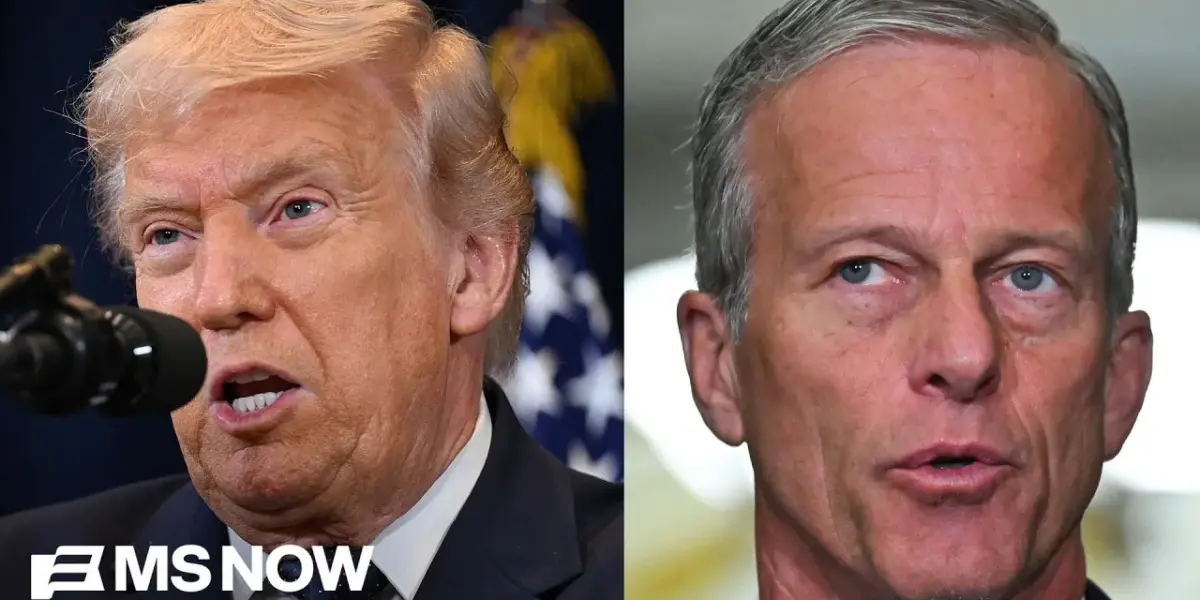
Thune Pushes Back Against Trump on Filibuster, Citing Risks
In a significant divergence from former President Donald Trump’s demands, Senate Majority Leader John Thune has firmly rejected calls to eliminate the legislative filibuster. Trump had urged Senate Republicans to use the filibuster’s abolition as a means to pass the “Save America Act,” a bill aimed at altering voter identification requirements ahead of the midterm elections. Thune, speaking to reporters yesterday, described the move as “much more complicated and riskier than many supporters would assume.”
The president’s push for the “Save America Act” intensified recently, with Trump advocating for substantial additions to the bill, including sweeping restrictions on mail-in voting. Adding further pressure, Trump has threatened to withhold his signature from any legislation until the “Save America Act” becomes law. This stance has created a complex political standoff, pitting the former president’s directives against the strategic considerations of the Senate Republican leadership.
Thune’s Strategic Concerns: Protecting the Filibuster and the Caucus
Jonathan Martin, Politico’s Bureau Chief and Senior Political Columnist, elaborated on the intricacies of this situation, highlighting Thune’s dual motivations for resisting Trump’s demands. “Thune has pushed back against the president, saying we’re not getting rid of the filibuster, it’s bad for us. It’ll come back to haunt us someday,” Martin explained.
He characterized Thune as an “institutionalist” who seeks to preserve the filibuster for future Senate operations. However, the decision is also rooted in pragmatic political calculations.
Martin detailed the potential pitfalls of attempting to break the filibuster, even through a “talking filibuster.” He noted that such an effort would inevitably open the floor to a multitude of amendments from Democrats. “This allows Democrats to bring up any number of amendments and votes on all kinds of questions that they don’t want to take votes on that are politically going to be difficult at a midterm year,” Martin stated. For Thune, protecting the institution of the Senate and safeguarding his caucus from politically damaging votes in a challenging midterm election cycle are paramount.
Historical Precedent and the Filibuster’s Resilience
The debate over the filibuster echoes past struggles, particularly when Democrats controlled the Senate. “Even in the craziest of times when Democrats held the Senate and everybody was hammering them to bring the filibuster down to 55 or get rid of it, it’s not going to happen,” Martin recalled, referencing Joe Manchin’s role in preserving the filibuster during those periods. He drew a parallel to Thune’s current stance, suggesting that the votes simply aren’t there to eliminate or significantly alter the filibuster.
Beyond Thune’s personal preference, Martin pointed to a “coterie of senators” who are fundamentally opposed to dismantling the filibuster. This opposition, he suggested, stems from a strategic concern about future political landscapes. “If Democrats take back the White House, House and Senate in 2029, guess what they are going to do?
Well, they are going to take steps like making Puerto Rico and D.C. A state to get four more senators that could fundamentally reshape the Senate,” Martin posited. This forward-looking concern about potentially empowering the opposing party is a significant factor in the reluctance to abolish the filibuster.
Introducing ‘On the Road with Jonathan Martin’
The discussion also served as a platform to introduce Politico’s new YouTube show and podcast series, “On the Road with Jonathan Martin.” The series features candid, sit-down interviews with newsmakers, offering in-depth conversations on significant issues and the shaping of future elections. The first episode prominently featured Arkansas Governor Sarah Huckabee Sanders, who discussed various topics, including Donald Trump’s influence on potential Republican presidential nominees for 2028.
Gauging 2028 Republican Contenders Amidst Trump’s Influence
During the interview with Governor Sanders, a key point of discussion was the potential field of Republican candidates for the 2028 presidential election. When asked about who the nominee might be, Sanders expressed uncertainty, indicating that many high-profile Republicans are withholding their support, seemingly waiting for signals from Donald Trump. “Not at all,” Sanders replied when asked if the nominee was known, suggesting that even figures like JD Vance, who might be assumed to have Trump’s backing, are not guaranteed frontrunners.
Martin noted the striking nature of Sanders’ response, interpreting it as a sign that leading Republicans are “keeping their powder dry” due to Trump’s own deliberative approach. This suggests that Trump may still be evaluating potential candidates, potentially leaving the door open for figures like Senator Marco Rubio, despite Rubio’s age and prior presidential campaign experience. The dynamic illustrates Trump’s continued, significant influence over the Republican Party’s future leadership.
The Shifting Landscape of Republican Ambition
Further insights into the evolving Republican landscape came from discussions about rising political figures. Martin shared anecdotal evidence of a “big MAGA family out of Texas” supporting Marco Rubio, a development he found surprising given Rubio’s past political profile. This observation highlights the unpredictable nature of political allegiances and the potential for unexpected candidates to gain traction.
The conversation touched upon the idea that while figures like JD Vance and Marco Rubio are prominent, the ultimate nominee might emerge from less expected quarters, possibly even someone like Tucker Carlson. However, Martin emphasized that “gravity still applies in American politics,” suggesting that established figures with proven track records, like Rubio, possess undeniable advantages. He highlighted Rubio’s consistent presence and performance in the national political arena, noting that Trump himself is a keen observer of political performances and would likely weigh such factors heavily.
Rubio’s Formidable Position and Trump’s Perceived Influence
The strategic advantages of Senator Marco Rubio were further analyzed. Martin described Rubio as having “real Rizz,” a colloquial term for charisma and appeal.
While acknowledging Vance’s potential claim as the former Vice President, Martin pointed out Rubio’s extensive experience and longer career in national politics. He suggested that Rubio’s consistent visibility and performance, whether in Senate hearings, speeches, or media appearances, are closely watched by Trump, who serves as the “biggest TV critic in chief.”
Privately, Republican senators reportedly view Rubio as a formidable contender. The potential for an “awkward” situation arises if the party must select its “best” candidate for a tough campaign, and Rubio’s qualifications make him a strong candidate.
Martin drew an analogy to baseball, where a player’s performance in lower leagues doesn’t guarantee success in the major leagues. Rubio, having experienced a presidential campaign in 2016, has already faced the intense scrutiny of a national contest, a common precursor to eventual presidential success for many politicians.
Looking Ahead: Political Tensions and Future Narratives
The ongoing tension between Senator Thune and former President Trump over the filibuster highlights a critical juncture for the Republican Party as it navigates the pre-midterm landscape and contemplates future leadership. The strategic decisions made in the coming weeks regarding legislative priorities and Senate rules could have significant implications for the party’s unity and electoral prospects. Simultaneously, the discussions surrounding potential 2028 presidential contenders, as explored in “On the Road with Jonathan Martin,” reveal the complex dynamics of ambition, influence, and strategic positioning within the party, all under the watchful eye of Donald Trump.
Source: Sen. Thune pushes back on Trump's filibuster demands (YouTube)

Related Articles
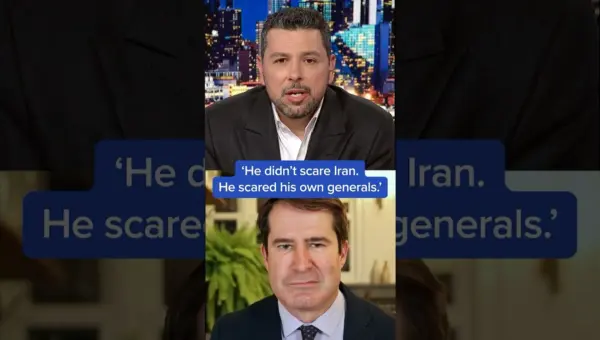
Generals Feared President’s Decisions, Not Iran, Says Ex-Lawmaker
Former Congressman Seth Moulton stated that President Trump's generals were more concerned about the president's reactions than Iran. He described them as trying to "hide the remote" and "clear the room." This suggests military leaders felt they needed to manage the president's decisions.
Judge Lets Trump Face Civil Lawsuits Over Jan. 6 Actions
A federal judge has ruled that Donald Trump can be sued for damages related to his actions on January 6th, finding he was not acting in his official presidential capacity. This decision opens the door for civil lawsuits from police and lawmakers, potentially leading to significant monetary judgments.


Crypto Scammer Sues Trump Admin After Being Scammed
Cryptobillionaire Justin Sun is suing the Trump administration, claiming extortion. However, the situation involves alleged scams on both sides. Sun, who invested millions in Trump's World Liberty Financial, claims the company froze his assets after he refused to invest more, costing him millions. This lawsuit highlights the complex and often shady dealings within the intersection of politics and cryptocurrency.