Jewish Family Fights Far-Right’s Use of Family Brand
The Jewish Balm family is locked in a battle to reclaim the Simpson motorbike brand, once a symbol of freedom in East Germany, from the far-right AfD party. The AfD has adopted the brand as a symbol of nationalistic pride, causing outrage for a family whose ancestors founded the company before fleeing Nazi persecution.

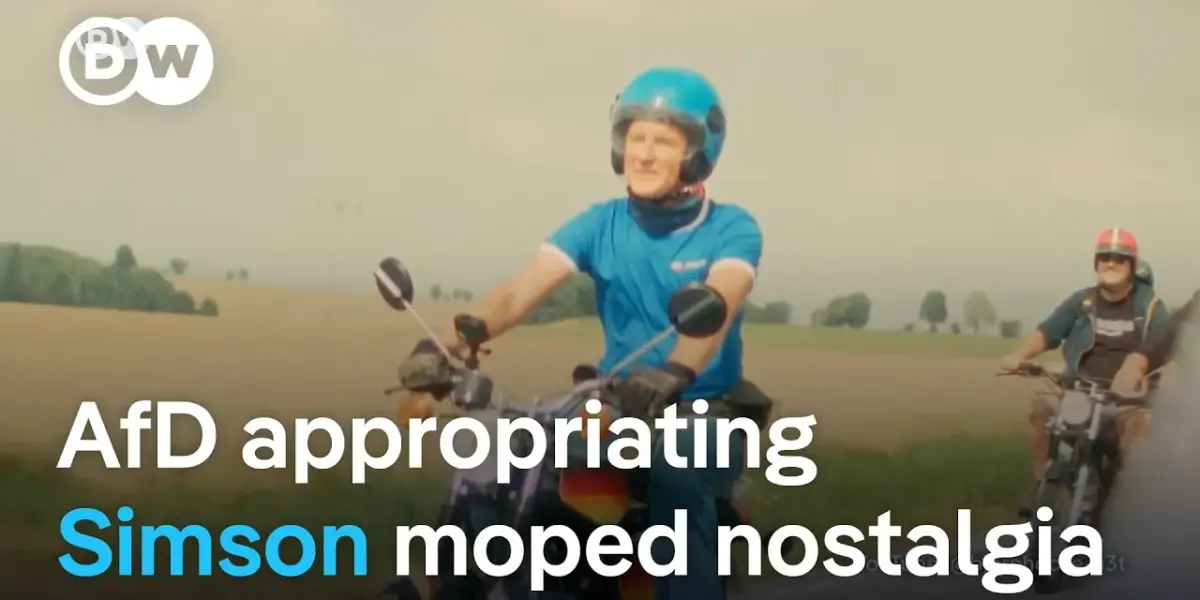
Jewish Family Fights Far-Right’s Use of Family Brand
In a surreal twist of historical irony, an iconic East German motorbike brand, once a symbol of freedom and a cherished family legacy, has become an unlikely political emblem for Germany’s far-right Alternative for Germany (AfD) party. The Simpson motorbike, deeply intertwined with the history of the Jewish Balm family, is now at the center of a contentious battle as the family fights to reclaim their heritage from a political movement they accuse of antisemitism.
A Brand’s Journey: From Jewish Heritage to Far-Right Symbol
The saga began when journalist Enis Pole received an email from a colleague detailing a peculiar situation: the AfD party was co-opting the Simpson motorbike brand, transforming it into a symbol of East German nationalistic pride. This resonated with a prior, off-the-record conversation a rabbi had with a reporter two years ago, who noted the AfD’s use of the local motorbike brand to stir nostalgia and link it to their political agenda.
Simpson mopeds were immensely popular in communist East Germany, offering young people a sense of freedom and mobility that was otherwise scarce. After reunification, they evolved into cult objects.
The pain of this appropriation is amplified by the brand’s origins. Simpson was founded by Jewish entrepreneurs, whose family history is marked by Nazi persecution. The Balm family, descendants of the original founders, discovered that their ancestors’ company was not only stolen by the Nazis, forcing them to flee, but is now being adopted by a party with a platform that many, including the Balm family, perceive as antisemitic.
Dennis Balm’s Personal Connection and Outrage
Dennis Balm, a descendant of the Simpson founders, recounted his shock upon seeing AfD merchandise featuring the Simpson name. “When I saw shirts that said AFD and Simpson, or shirts that said Hookah and Simpson, and posters that said the same thing and flags that said the same thing, I said, ‘This is too much.'” Balm described the situation as “infuriating” for his family, especially given the AfD’s history of controversial statements, including remarks by prominent figures like Bodo Ramelow (though the transcript mentions Bodo Ramelow, it is actually Björn Höcke who is a leading figure in the AfD and has made remarks about the Holocaust Memorial.
The article reflects the transcript’s content). Höcke, a leading AfD figure in the East, has previously described the Holocaust Memorial in Berlin as a “monument of shame” and called for a “turnaround in Germany’s culture of remembrance,” suggesting Germans should move past their wartime guilt.
Balm explained the deep personal and historical significance of the Simpson brand to his family. “It’s certainly historical, but it’s very personal history.
We take great pride in what the family did over the years, and certainly for the family’s name, a Jewish family’s name to be used by the AfD, a distinctly antisemitic party, anti-social, anti-everything. It seemed infuriating for us all.” The family, comprising five branches of Simpson heirs, united to fight this appropriation, regardless of the cost.
A Stolen Legacy and the Pursuit of Justice
The Simpson story is one of displacement and resilience. Balm’s great-grandparents owned the company before it was confiscated by the Nazis, compelling them to escape Germany. The factory later fell under Soviet control.
Following German reunification, Dennis Balm and his mother’s cousin, Dennis Palm, spearheaded efforts to reclaim the family’s assets. Balm vividly recalls his first visit to the Simpson Villa in the early 1990s, even sleeping in his great-grandmother’s room and feeling a spiritual message to recover what he could for the family.
He reflected on his upbringing, noting that while his parents rarely spoke of their past in Germany, the trauma of exile and persecution left a mark. He regrets not asking more questions about their experiences before they passed away.
The resurgence of the Simpson name in East Germany, particularly after the Berlin Wall fell, brought the family’s history into sharp focus. A chance encounter with an advertisement for Simpson on a bus in East Germany solidified for him the brand’s pervasive presence and the scale of his family’s original enterprise.
Why Simpson Resonates with the Far-Right
Balm speculates that the AfD leverages Simpson’s appeal as a potent political tool to revive nostalgia for the former East Germany (GDR). The Simpson moped held a special place in GDR culture, being one of the few vehicles capable of reaching 60 km/h and relatively accessible compared to cars, which had waiting lists of five years or more. For many East Germans, it represented their first taste of freedom and mobility in a tightly controlled society.
“That’s the nostalgia that they’ve been milking,” Balm stated. “The young generation likes it.
And I think there’s still unfortunately a lot of friction between the ‘Wessis’ and the ‘Osis’ [people from West and East Germany]. And it gave them an ability to shut out the Western mentality and focus on something purely East and something that had brought them a bit of freedom.”
The Family’s Response and Future Hopes
The Balm family has embarked on a comprehensive effort to combat the AfD’s appropriation of their name. They hired a communication consultant who advised them to educate the Western German press about the Simpson brand’s true history and its Jewish roots, as the name was far more recognized in the East. The family is united, agreeing to share all expenses in their fight.
Balm’s sole objective is clear: “Get our name out of the AfD-Höcke sphere. I don’t want it involved whatsoever.” He emphasizes that the Simpson motorbikes and clubs themselves are not the issue; he appreciates the nostalgia and the community they represent. The problem lies specifically with the AfD’s political association with the brand.
“Our name shouldn’t be involved in politics whatsoever. But it’s absolutely horrendous that, of all places, it gets hooked up to AfD thinking.”
Broader Implications: Nostalgia and Identity
The AfD has denied being antisemitic and has dismissed the Balm family’s criticism as “symbolic hysteria.” However, this conflict raises profound questions about how political movements exploit nostalgia, who controls the narrative of cultural symbols, and the emotional toll of seeing a family’s historically persecuted legacy repurposed as an identity marker for the far-right. For the Balm family, Simpson is more than a motorbike; it embodies heritage, memory, pride, and profound loss, all of which are now being reinterpreted within contemporary political struggles.
Looking ahead, the Balm family’s legal and public relations battle will be crucial in determining whether they can successfully detach their family name and brand from the AfD’s political agenda. The outcome will not only affect the family’s legacy but also clarify the broader implications of how historical symbols are wielded in the arena of far-right politics.
Source: How a Jewish family's motorbike became a German far-right symbol | DW News (YouTube)

Related Articles


Germany Pledges Deeper Ukraine Ties Amid Shifting Global Support
Germany and Ukraine have announced a new strategic partnership, signaling a deeper commitment beyond traditional aid. This move comes as Ukraine showcases its own defense industry and as global attention is divided by ongoing conflicts. Experts discuss the need for Europe to increase its own defense production and support Ukraine more robustly, especially amid concerns about shifting US priorities.


Germans Judge America: Stereotypes and Surprises Emerge
A YouTube creator asked Germans their opinions about America, uncovering a mix of familiar stereotypes and surprising insights. While some perceptions focused on common tropes like loudness and appearance, others highlighted America's diversity and the distinction between its government and people. The video reveals varied German views on American culture, food, and travel.


AfD Unveils Radical Plan for Germany’s Future
Germany's far-right AfD party is proposing a radical policy shift, including an end to compulsory schooling and increased deportations. The party aims to lead a government for the first time and is currently leading in polls for the upcoming September elections in Saxony. Church leaders have voiced concerns over the party's rhetoric on "remigration."