US Defense Stocks Surge Amid Escalating Iran Conflict
Escalating conflict in the Middle East, marked by drone attacks on U.S. interests, has prompted urgent discussions about U.S. munition supplies and defense production. The situation is impacting global markets and drawing international criticism.

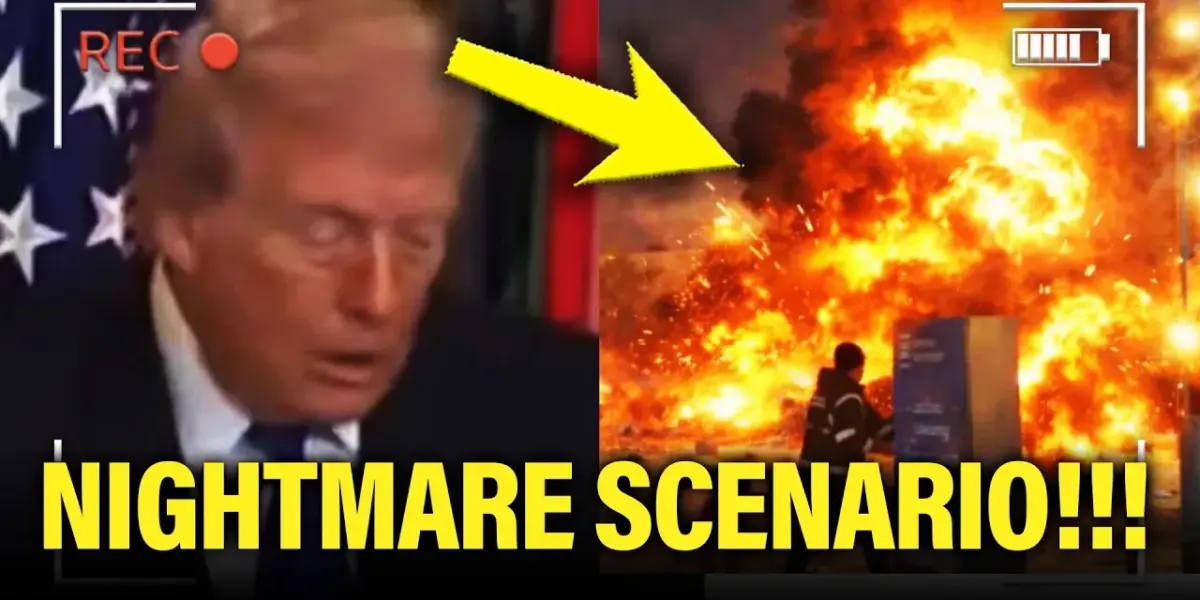
US Defense Stocks Surge Amid Escalating Iran Conflict
The geopolitical landscape is fraught with tension as reports emerge of escalating conflict in the Middle East, potentially triggered by an “unlawful invasion of Iran.” This volatile situation has led to significant attacks on U.S. Interests, including the U.S. Consulate in Dubai, a CIA building in Saudi Arabia, and a U.S. Airbase in Qatar, all reportedly hit by Iranian drones. The implications are far-reaching, impacting global markets and prompting urgent discussions within the U.S. Administration about defense capabilities and weapons production.
A Nation’s Munitions Under Strain
Amidst these events, a critical issue has surfaced: the United States’ munition stockpiles appear to be dwindling. This contradicts public statements by Donald Trump, who has claimed the U.S. Possesses “unlimited munitions.” However, the reality on the ground seems different, with Reuters reporting that the Trump administration plans to convene a meeting with top U.S. Defense contractors. The agenda?
To discuss accelerating weapons production to replenish supplies depleted by recent military actions, including strikes on Iran and other ongoing operations. Companies like Lockheed Martin and Raytheon are expected to be in attendance.
Economic Ripples and Global Markets
The conflict’s impact extends beyond military concerns, significantly affecting global economic stability. The Strait of Hormuz, a vital chokepoint for oil and gas transportation, is reportedly near a de facto closure, with only three oil and gas tankers having crossed in recent days. This disruption has sent shockwaves through international markets, with stock markets in South Korea and Japan experiencing sharp declines, triggering circuit breakers and highlighting the fragility of global supply chains in the face of geopolitical instability.
The Human Cost of Conflict
Tragically, the conflict has also resulted in confirmed fatalities among U.S. Service members. Reports indicate that personnel in Kuwait, whose leadership had previously requested assistance for inadequate anti-drone systems, were left unprotected. The requests were reportedly ignored, leading to the loss of life.
This raises serious questions about the preparedness and protective measures in place for U.S. forces operating in high-risk environments. A bipartisan briefing on Capitol Hill revealed that lawmakers were left horrified, with the Trump administration unable to articulate a coherent justification for the war. The briefing also suggested that the conflict could last for weeks or months, with the possibility of deploying U.S. troops on the ground not ruled out.
Shifting Alliances and Internal Dynamics
In parallel, Iran has announced the selection of Mojtaba Khamenei, son of the Supreme Leader, as the new Ayatollah. Described as a hardliner, his ascension comes at a critical juncture, potentially consolidating power within the clerical establishment.
The narrative suggests that the recent U.S. and Israeli strikes, which reportedly killed the previous Ayatollah, may have inadvertently turned him into a martyr, rallying support for the regime amidst economic hardship. The U.S. Response appears complex, with reports indicating plans to arm Kurdish militias to potentially provoke a civil war within Iran, a strategy that has drawn skepticism and concern.
Historical Context and Presidential Response
This escalation echoes past instances of U.S. Intervention in the Middle East. The invocation of a “shock and awe” campaign, described as potentially dwarfing that in Iraq, highlights the intensity of the military actions. However, the effectiveness of these strikes in crippling Iran’s drone and missile capabilities, while also facing retaliatory attacks, remains a subject of debate.
Meanwhile, President Trump’s public response has been characterized by the sharing of memes and seemingly disconnected social media posts, a stark contrast to the gravity of the unfolding events. His administration is also reportedly considering naval escorts for tankers through the Strait of Hormuz to stabilize energy prices, a move that could further entangle the U.S. In regional maritime security.
Broader Geopolitical Entanglements
The conflict in Iran is not occurring in a vacuum. The transcript also touches upon a U.S. military operation in Ecuador, ostensibly targeting narco-terrorism. This operation, involving Ecuadorian and U.S. forces, raises questions about the scope of U.S. military involvement in Latin America, particularly given allegations of corruption and family business ties.
The situation in Venezuela remains a point of contention, with reports of a drafted indictment against a key official, allegedly held by the U.S. As leverage. These complex engagements suggest a broader pattern of U.S. Foreign policy aimed at securing resources and influence, rather than solely promoting democracy or stability.
Why This Matters
The unfolding events in the Middle East represent a critical juncture with profound implications. The escalation of conflict, coupled with apparent strains on U.S. Munition supplies, raises serious concerns about national security and military readiness. The economic fallout, evidenced by global market volatility and rising energy prices, highlights the interconnectedness of global stability.
The lack of clear justification for the war and the potential for prolonged engagement, including the possibility of boots on the ground, demand greater transparency and public discourse. The administration’s strategic objectives, the human cost of conflict, and the long-term consequences for regional and global security all warrant careful consideration and scrutiny.
Implications, Trends, and Future Outlook
The current situation points to several emerging trends. Firstly, the increasing reliance on drone technology by actors like Iran, combined with the perceived vulnerability of U.S. Defense systems, suggests a shift in asymmetric warfare capabilities. Secondly, the economic repercussions highlight the fragility of global energy markets and the potential for geopolitical events to trigger widespread financial instability.
The U.S. Administration’s response, including the emergency meeting with defense contractors and potential maritime escorts, indicates a focus on both immediate military needs and economic stabilization. Looking ahead, the conflict’s trajectory will likely depend on a complex interplay of military actions, diplomatic efforts, internal Iranian dynamics, and the broader geopolitical alignment of regional and global powers. The potential for miscalculation and unintended escalation remains a significant concern, demanding a cautious and well-considered approach from all parties involved.
Historical Context and Background
The current tensions in the Middle East are rooted in a long and complex history of geopolitical rivalries, regional power struggles, and external interventions. The U.S. has had a significant presence and influence in the region for decades, driven by a combination of strategic interests, including energy security and regional stability. Past conflicts and interventions, such as the wars in Iraq and Afghanistan, have had lasting consequences and shaped the current security environment.
Understanding these historical precedents is crucial for contextualizing the current crisis and evaluating the potential long-term outcomes of U.S. policy in the region. The dynamics of the Iran-U.S. Relationship, in particular, have been marked by periods of intense hostility and proxy confrontations, making any escalation a matter of grave concern.
“Lawmakers are absolutely horrified at what they heard… The Trump regime was not able to articulate any coherent justification for the war of Iran.”
This sentiment, expressed following a bipartisan briefing on Capitol Hill, underscores a critical deficit in the administration’s communication and strategic clarity regarding the conflict. The lack of a clearly articulated rationale for the war, coupled with the potential for extended engagement and ground troop deployment, raises significant questions about accountability and public trust.
The Epstein Connection and Public Opinion
Adding another layer of complexity, the transcript mentions the ongoing release of Jeffrey Epstein-related documents, including allegations against Donald Trump. This, alongside a recent poll indicating a majority of Americans disapprove of Trump, suggests a growing public scrutiny of his leadership and past conduct, even as the nation grapples with foreign policy crises. The juxtaposition of these issues highlights the complex challenges facing the current administration, both domestically and internationally.
International Condemnation and Legal Scrutiny
The U.S. Involvement in the Iran conflict has also drawn criticism from international allies. Both the UK Prime Minister and the French President have reportedly condemned and criticized the U.S. For engaging in a war that they deem to be “outside international law.” This international condemnation adds a layer of diplomatic pressure and raises questions about the legal underpinnings of the U.S. military actions.
Source: Trump PANICS as WAR Gets OUT OF CONTROL!! (YouTube)

Related Articles
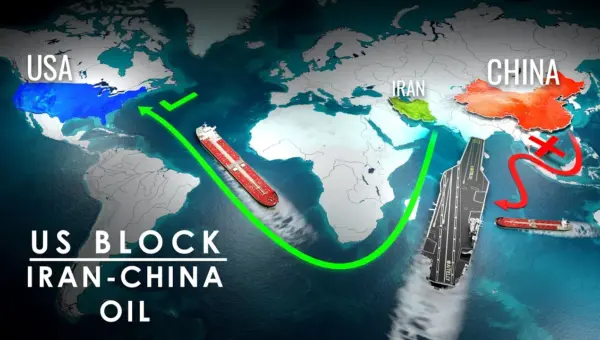
AI Tracks Oil Tankers, Aiding US Strategy Against China
The US is employing advanced AI to track oil tankers, aiming to counter China's reliance on foreign oil. This strategy uses AI to monitor ships, identify sanctioned cargo, and influence global energy markets by disrupting supply chains. The goal is to assert energy dominance and shape international economic outcomes.
China’s Economy Faces Strain as Trump Prepares for Beijing Visit
China's economy shows signs of strain with weak retail sales and exports, despite strong industrial output figures. Experts question the official growth numbers, pointing to a growing inventory glut and thin factory margins that limit price cuts. Geopolitical factors, including President Trump's upcoming potential visit to Beijing, add another layer of uncertainty.
Markets Surge on Iran Deal Hopes, Netflix Falls
Stock markets surged on hopes of a de-escalation in Iran following President Trump's claims of a breakthrough deal. Meanwhile, Netflix shares dropped amid uncertainty over leadership changes and content concerns. Investors are closely watching economic indicators for signs of sustained growth.