Nation’s Doubts: Polls Expose Growing Concerns Over Trump’s Fitness
Three recent polls reveal a growing majority of Americans, including Republicans, are questioning Donald Trump's mental and physical health. This widespread doubt could significantly impact his political future.

The Unsettling Numbers: A Majority Questions Trump’s Capacity
Recent weeks have seen a trifecta of polling data emerge, each pointing to a significant and growing segment of the American populace, including a notable portion of Republicans, expressing serious doubts about Donald Trump’s mental and physical fitness for office. These surveys, conducted by reputable organizations like Reuters/Ipsos, CNN, and The Washington Post/ABC News, collectively paint a picture of widespread unease regarding the former president’s cognitive and physical health as he navigates the complexities of a potential presidential campaign.
Key Findings Emerge from Major Polls
- A Reuters/Ipsos poll, released shortly before the State of the Union address, revealed that a substantial 61% of Americans, a figure that includes 30% of Republicans, believe Trump has become “erratic with age.”
- A CNN survey indicated a decline in confidence regarding Trump’s stamina and sharpness. The percentage of those confident in his ability to serve effectively as president has dropped from 53% in late 2023 to 46% in the latest findings.
- The Washington Post/ABC News poll offered even starker figures, with 56% of respondents doubting Trump’s mental sharpness and 51% questioning his physical health. These numbers represent significant increases, with doubts about mental sharpness rising by 13 points and about physical health by a substantial 23 points.
These statistics suggest a growing perception among a majority of Americans that concerns about Trump’s health are not merely partisan talking points but are shared across a broader political spectrum. The sheer magnitude of the increase in doubts, particularly regarding physical health, is striking and warrants closer examination.
Historical Context: Age and the Presidency
The issue of presidential age and health is not a new one in American politics. Throughout history, the physical and mental acuity of leaders has been a subject of public scrutiny, especially as they age. From Woodrow Wilson’s debilitating stroke in office to the concerns surrounding Ronald Reagan’s cognitive decline in his second term, voters have often grappled with the question of whether their leaders possess the necessary vigor to handle the immense pressures of the presidency.
However, the current discourse surrounding Donald Trump’s health appears to be amplified by several factors. His age, coupled with his often unconventional public appearances and rhetoric, seems to be a focal point for many voters. Unlike previous eras where information about a president’s health might have been more tightly controlled or less readily disseminated, the modern media landscape, including social media, allows for immediate and widespread commentary and analysis of a public figure’s condition.
Analyzing the Polls: Beyond Partisan Lines
While it is tempting to dismiss these poll numbers as purely a reflection of partisan opposition to Donald Trump, the inclusion of significant numbers of Republicans within these critical findings suggests a more complex reality. The fact that 30% of Republicans in the Reuters/Ipsos poll believe Trump has become erratic with age, and that a majority in the Washington Post/ABC News poll question his physical health, indicates that these concerns may be resonating beyond the typical opposition base.
Several factors could contribute to this broader unease:
- Observable Behavior: Trump’s public appearances, speeches, and social media posts have often been characterized by what some perceive as rambling, repetitive, or unscripted moments. These instances, widely shared and discussed, can contribute to perceptions of cognitive decline or erratic behavior, regardless of political affiliation.
- Age as a Factor: At 77 years old, Donald Trump is one of the oldest major presidential candidates in American history. Age inevitably brings with it potential health considerations, and voters are increasingly attuned to this reality, especially when assessing a candidate’s capacity for the demanding role of the presidency.
- Media Scrutiny: The intense media focus on Trump’s every utterance and action means that any perceived slip-up or moment of confusion is likely to be amplified and dissected, contributing to a narrative about his fitness.
These polls measure public *perception* and *doubt*, not definitive medical diagnoses. However, public perception is a powerful force in electoral politics. Candidates are ultimately judged not just on their policies but on their perceived ability to lead and govern effectively.
Why This Matters
The collective findings of these polls are significant because they highlight a growing public sentiment that could have a tangible impact on the upcoming electoral landscape. The presidency is arguably the most demanding job in the world, requiring immense physical stamina, sharp cognitive function, and sound judgment. When a substantial portion of the electorate, including members of a candidate’s own party, questions these fundamental capacities, it raises legitimate concerns about the future leadership of the country.
For Donald Trump, these numbers present a significant challenge. While he has consistently maintained his own vigor and dismissed any concerns about his health, the persistent drumbeat of public doubt, now quantified by multiple polls, could erode support among undecided voters or even sway some of his base.
Implications, Trends, and Future Outlook
The trend indicated by these polls suggests that concerns about the age and health of political leaders are becoming a more prominent factor in voter decision-making. As the average age of the electorate and political figures continues to rise, issues of stamina, cognitive function, and overall well-being are likely to be scrutinized more intensely.
This trend has several potential implications:
- Increased Focus on Health Disclosure: Candidates may face greater pressure to be transparent about their health records and undergo more rigorous public health assessments.
- Shifting Campaign Strategies: Campaigns might need to adapt by focusing more on policy and less on the candidate’s personal energy levels, or conversely, by proactively addressing concerns about age and health.
- Potential for Unforeseen Events: The possibility of a candidate’s health deteriorating during a campaign or in office remains a significant concern for voters, potentially leading to increased volatility in public opinion.
Looking ahead, it is clear that Donald Trump’s perceived fitness will remain a central theme in the political discourse. How he and his campaign address these persistent doubts, and how voters ultimately weigh these concerns against other factors like policy and ideology, will be a critical determinant of his electoral prospects. The polls suggest that a significant portion of America is watching, and they are asking questions about his capacity to lead.
Source: America KNOWS Trump's brain is fried (YouTube)

Related Articles

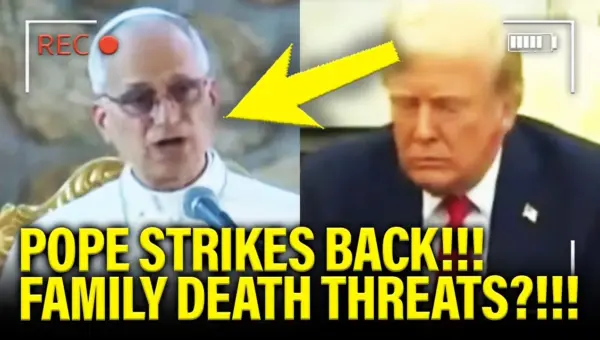
Pope Leo XIV Rebukes Trump’s ‘War Criminals’ Regime
Pope Leo XIV has directly challenged Donald Trump's administration, labeling it a "regime of war criminals." The Pope's strong words, delivered from Cameroon, come amid reports of death threats against his brother and accusations of intimidation from Trump's circle. This spiritual leader's stance ignites a debate on faith, politics, and moral authority.
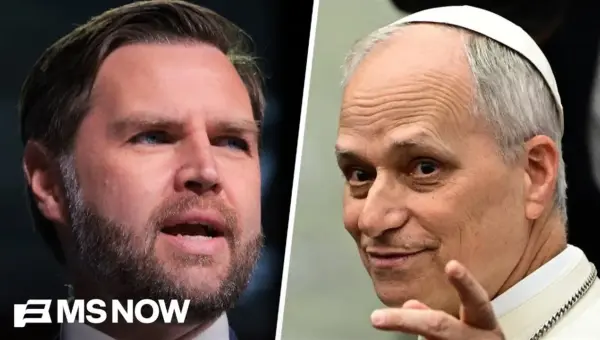
Columnist Blasts Vance’s ‘Arrogant’ Attack on Pope’s Theology
Columnist Eugene Robinson criticized Senator J.D. Vance for his "arrogant" remarks questioning the Pope's theological knowledge. Robinson stated it's "insane" for politicians to debate theology with the Pope, whose authority is rooted in centuries of tradition. Analysts advise Republicans to focus on economic issues rather than engaging in potentially damaging disputes with the Vatican.
Trump’s ‘Unhinged’ Actions Spark Backlash, Divide MAGA Base
Donald Trump's AI-generated image of himself as a healer has caused a stir, drawing criticism from the Pope and even some within his own MAGA base. Meanwhile, Democrats are urged to plan for future political power, and the disconnect between cultural events like Coachella and real-world crises is noted.