Trump’s Jesus Meme Sparks Outrage, Divides Religious Leaders
Donald Trump's AI-generated meme depicting him as Jesus Christ has ignited a firestorm of controversy, drawing condemnation from religious leaders like Reverend Kyle Paisley as "blasphemous." Trump defended the post as a depiction of a doctor, a claim met with widespread skepticism.

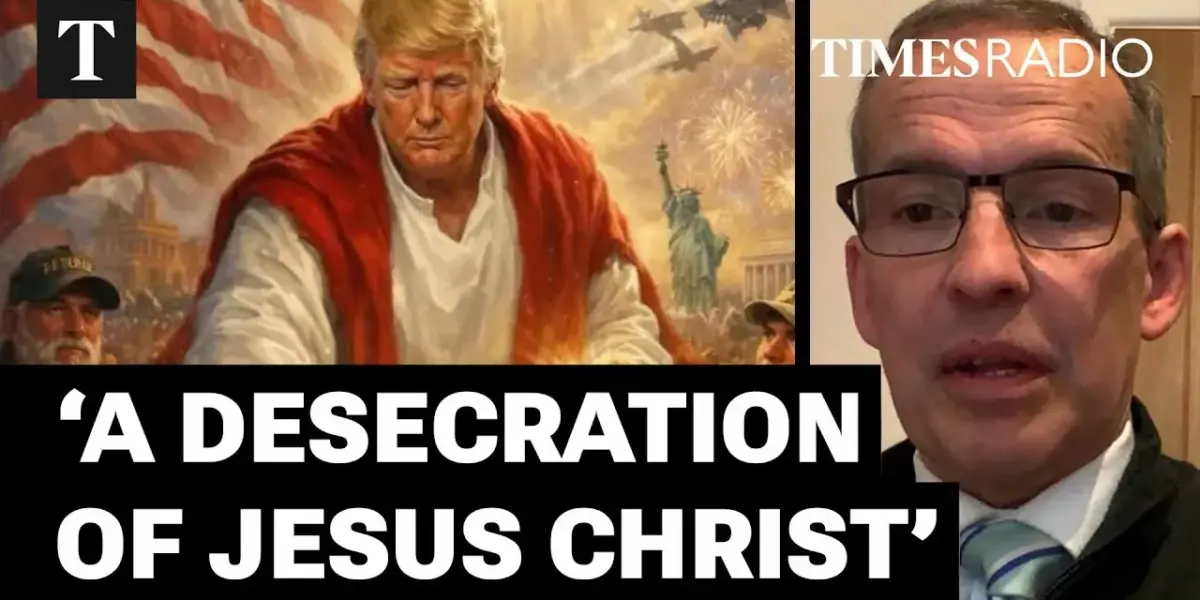
Trump’s Controversial AI Meme Ignites Religious Debate
An AI-generated image depicting Donald Trump as Jesus Christ has sparked widespread criticism and ignited a fierce debate among religious figures and political commentators. The meme, which appeared on Trump’s Truth Social platform, has drawn sharp reactions, with some calling it blasphemous and others dismissing it as harmless humor. The controversy highlights the complex relationship between faith, politics, and social media in the modern era.
Reverend Paisley Condemns “Ignorant and Blasphemous Conceit”
Reverend Kyle Paisley, from the Alton Broad Free Presbyterian Church and son of the late Ian Paisley, has been particularly vocal in his condemnation. He described the post as an “ignorant and blasphemous conceit” in a letter to the press. Paisley expressed surprise at the muted response from some Christian leaders, suggesting a lack of reverence for Christ among those who claim to follow him.
Paisley’s views contrast with those of some other figures, including Senator JD Vance, who, despite being a devout Catholic, characterized the post as a joke that was misunderstood. Paisley argued that the President of Iran’s assessment of the tweet as a “desecration of Jesus” was closer to the truth than Vance’s interpretation.
Trump’s Defense: “A Doctor Healing People”
Donald Trump himself attempted to downplay the image, claiming he posted it as a doctor healing people, not as Jesus. He attributed the criticism to the “fake news media,” stating he believed the image represented a doctor associated with the Red Cross, an organization he supports. This explanation was met with skepticism by many, including Paisley, who noted the incongruity of a Red Cross doctor wearing white robes and being depicted with halos and angelic figures.
“His attempt… he would have been far better saying nothing, just taking it down and saying nothing,” Paisley commented on Trump’s explanation. “It became more embarrassing as time rolled on.”
Skepticism Over Trump’s Christian Faith
The incident has also fueled questions about Donald Trump’s personal faith. When asked about his favorite Bible passage in the past, Trump was reportedly unable to name one. Reverend Paisley shared his perspective on what constitutes a Christian, stating, “A person who is a Christian is not a Christian because they hang around in the company of Christians.”
Paisley elaborated, “The person has we should expect a Christian, a man who is a Christian to have reverence for Christ if he believes what the Bible says about Christ, that Christ is the son of God, that he died an atoning death for sinners, that he rose bodily from the tomb.” By this standard, Paisley suggested, Trump could be considered at best a “nominal Christian,” potentially using faith for political gain.
Broader Implications: The “Cult of Personality”
Commentators discussed the broader phenomenon of the MAGA movement, with some describing it as a “cult of personality.” This perspective suggests that Trump’s core base is unlikely to abandon him, regardless of his actions or statements. The idea that Trump could “shoot someone dead in the middle of New York and no one would abandon him” was referenced as a testament to this unwavering loyalty.
The discussion also touched upon Trump’s criticisms of Pope Francis, whom he called “weak.” This move, alongside the Jesus meme, has caused a backlash, even among some of his religious supporters. However, the resilience of Trump’s base suggests that such controversies may not significantly impact his political standing.
The Pope and “Tough on Crime” Rhetoric
Adding another layer to the religious discourse, Trump’s criticism of the Pope extended to accusing him of being weak on crime. This statement was met with a peculiar analysis by some, who pointed out that the Vatican actually has the highest per capita crime rate in the world due to its large number of visitors and a small resident population, leading to frequent petty crimes like pickpocketing.
This detail, while perhaps obscure, led to speculation about whether Trump was aware of these statistics or if his criticism was simply a rhetorical tactic. The broader question remains whether followers can hold seemingly contradictory beliefs, such as loyalty to both the Pope and Donald Trump, especially when Trump’s actions and statements challenge traditional religious authority.
Looking Ahead: Can Trump Cross Any Lines?
The persistent loyalty of Trump’s base raises questions about the limits of his actions and rhetoric. As the political landscape continues to evolve, observers will be watching closely to see if any future event could potentially alienate his core supporters. The intersection of faith and politics, particularly within the context of social media, remains a potent and often unpredictable force.
Source: Trump’s Self-Depiction As Jesus Christ Is An ‘Embarrassing’ Offence | Reverend Kyle Paisley (YouTube)

Related Articles
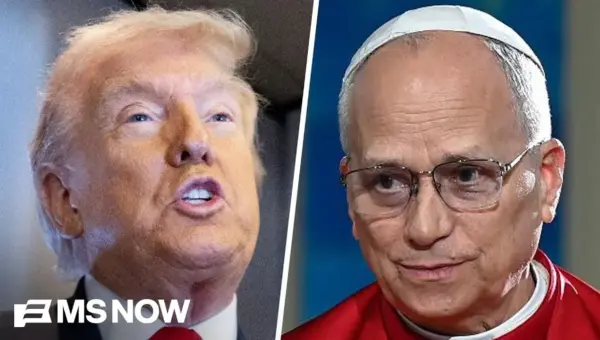
Pope Francis Condemns ‘Delusional Omnipotence,’ Challenging Trump
Pope Francis has sharply criticized "delusional omnipotence" and the misuse of faith for political ends. His remarks come amid controversy over a blasphemous image of Donald Trump, with religious figures urging focus on core moral issues over distractions. The Pope's stance positions him as a moral counterweight in global discourse.
Trump’s Iran Talks Collapse: MAGA Movement Faces Crisis
Reports from April 14, 2026, indicate a significant setback for Donald Trump's foreign policy efforts as Iran talks appear to have failed. This development raises concerns about regional stability and could impact the core of the MAGA movement.
Trump’s Puppets Dance: Vance’s Fear Amidst Leader’s Fury
A report suggests Senator J.D. Vance feels he's walking on eggshells around Donald Trump. Vance's recent mission to Pakistan for Iran talks is seen by some as a setup for potential failure. This, combined with Trump's reported strategy of pitting rivals against each other, could lead to Vance being pressured to resign.