US Policy Shift on Hormuz Stirs Global Economic Fears
A significant shift in U.S. policy regarding the Strait of Hormuz has triggered global economic concerns, impacting energy prices worldwide. The move, alongside ongoing conflicts and domestic political challenges, raises questions about America's international influence and economic stability.

US Policy Shift on Hormuz Stirs Global Economic Fears
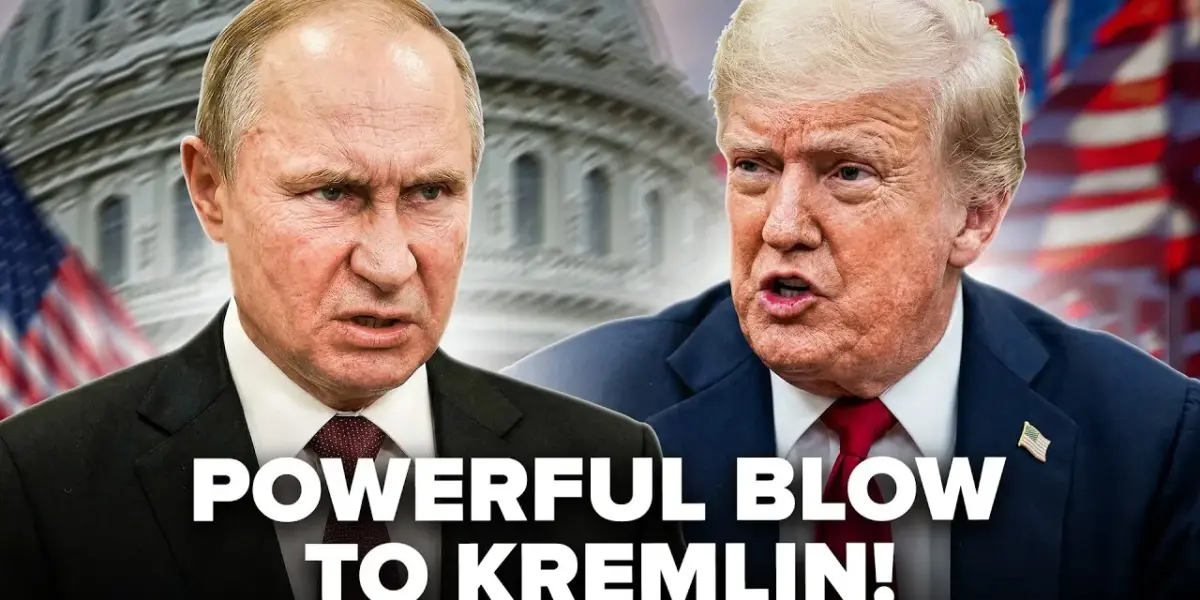
The United States has recently altered its stance regarding the Strait of Hormuz, a critical global oil chokepoint. This change in policy, announced just before a planned blockade was set to begin, has raised concerns about America’s diplomatic standing and the global economic fallout. For weeks, President Trump had publicly pushed for the strait’s reopening. Now, reversing course, the decision to close it weakens the U.S. diplomatic position, signaling a shift from demanding openness to imposing restrictions.
Global Economic Fallout Intensifies
This policy shift occurs against the backdrop of an ongoing conflict with Iran, which analysts describe as an offensive war initiated by the U.S. administration. The aftermath of this conflict has triggered a worldwide economic crisis, leading to the most significant disruption of energy flow in modern history. While the United States may not feel the immediate impact as severely, Europe and major Asian nations are experiencing considerable strain. Furthermore, over 200 other countries, including Sri Lanka, South Africa, and nations across Southeast Asia, Africa, and South America, are facing vastly higher prices for energy and petroleum-based goods. These nations, uninvolved in the conflict, will likely remember this economic hardship for decades, potentially impacting U.S. foreign relations.
Diplomatic Challenges and Strategic Missteps
The situation highlights a perceived lack of strong diplomatic cards for the U.S. in its dealings with Iran. While President Trump has asserted that Iran has no leverage, critics argue that the U.S. itself struggles to play its hand effectively. A recent diplomatic mission to Islamabad, involving figures like Jared Kushner and Steve Witkoff, failed to initiate meaningful peace talks. This approach, characterized by a transactional style of diplomacy focused on high-level agreements, is seen as counterproductive. Experts suggest that effective diplomacy requires deploying administrators and bureaucrats with expertise in commerce and international law to build coexistence, especially between nations recently at odds.
This process of messing things up and turning it upside down has been seen before. We saw what happened in Islamabad; it did not bring results.
The strategy mirrors President Trump’s approach to legal disputes, where he often bypasses lower courts to engage directly with the Supreme Court. This method of seeking immediate, high-level resolution, rather than a step-by-step process, has yielded limited success. Observers suggest that figures like Senator Marco Rubio, who was not part of the Islamabad delegation, might offer a more traditional diplomatic approach through the State Department.
Domestic Economic Strain and Political Uncertainty
The rising energy prices are disproportionately affecting Americans, especially in rural areas and smaller towns where small businesses form the economic backbone. These businesses face increased costs for transportation and, critically, for domestic energy, such as electricity. With summer’s high temperatures approaching, the cost of air conditioning poses a significant threat to business operations, particularly for those handling perishable goods. Many businesses are reportedly considering closing now to avoid bankruptcy, a trend that could have long-lasting consequences for the American economy. Economists warn that recovering from such a global energy shutdown is a lengthy process, measured in years, not weeks or months. President Trump himself has acknowledged that gas prices are unlikely to decrease before the upcoming election.
Internal Political Divisions and Election Outlook
Within the Republican political sphere, particularly the MAGA movement, there are signs of division. As President Trump approaches the end of his potential political career, some commentators are exploring alternative narratives. However, open discussion about a post-Trump Republican party is largely confined to certain right-wing media personalities. Mainstream Republicans remain hesitant to speak out, which could impact the party’s performance in upcoming elections. Current polling suggests significant losses for Republicans in both the House of Representatives and the Senate. A record 37 Republican members of Congress have decided not to seek reelection, indicating a lack of confidence in the party’s prospects.
Ukraine Aid and Hungarian Politics
In Eastern Europe, the recent political changes in Hungary offer a glimmer of hope for Ukraine. The new Hungarian Prime Minister has signaled a willingness to release crucial EU loans for Ukraine, a move that has been stalled for months. This development provides immediate relief for Kyiv. However, Hungary faces its own internal challenges, including potential constitutional reforms and the need to address alleged Russian influence. While relations with Ukraine are expected to improve, Hungary’s center-right government remains focused on domestic issues, including its continued reliance on Russian oil. Efforts are underway to support Hungary’s economic recovery and foster better relations with its neighbors and the EU.
U.S.-China Relations and Xi Jinping Meeting
A highly anticipated meeting between President Trump and Chinese President Xi Jinping is reportedly scheduled for May 15th, though its occurrence remains uncertain. The U.S. enters this meeting with diminished leverage, particularly after the Supreme Court ruling that limited President Trump’s ability to impose tariffs. This reduces his primary economic bargaining chip against China. Furthermore, the ongoing conflict with Iran has weakened the U.S. global standing. President Trump’s initial demands for Iran’s unconditional surrender and his public calls to open the Strait of Hormuz, which Iran defied, have undermined perceptions of American power. China, conversely, has strategically positioned itself as a central player in a bloc that includes Russia, North Korea, and Iran. Despite providing some resources to Russia and Iran, China has maintained significant economic strength and is increasingly asserting its diplomatic influence globally, as seen in its mediation efforts in Pakistan.
China’s Strategic Advantage
China appears to be in a stronger position than the United States heading into potential negotiations. The U.S. failed to adequately prepare for the consequences of the Iran conflict, such as building strategic petroleum reserves or diversifying agricultural trade. China, however, had proactively filled its strategic petroleum reserves and secured alternative trade partners for agricultural goods, anticipating potential U.S. protectionist measures. This foresight has left China better prepared for global economic disruptions and less vulnerable than its regional allies, such as Japan and South Korea, who rely heavily on international trade without similar strategic reserves. Even allies like Canada are reportedly exploring closer trade ties with China, a shift driven partly by past U.S. trade disputes.
Source: ⚡️This failure could cost Putin position! Trump urgently issues an order. Everything changing in EU (YouTube)

Related Articles

Strait of Hormuz Traffic Collapses Amid Blockade
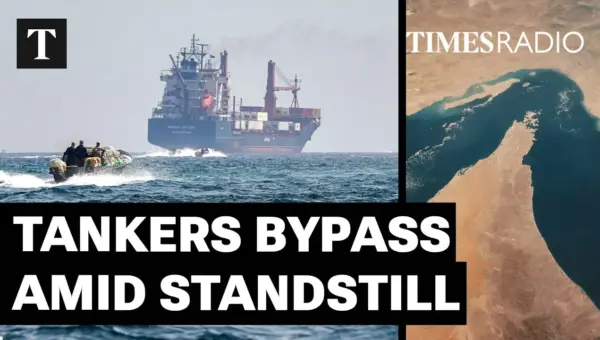
The Strait of Hormuz has become a no-go zone due to a US naval blockade, causing global shipping traffic to collapse. A sanctioned tanker's attempt to transit the strait highlights the growing crisis, which threatens severe oil shortages and broader economic disruptions worldwide.

US Blockades Strait of Hormuz, Iran Nuclear Talks Stall
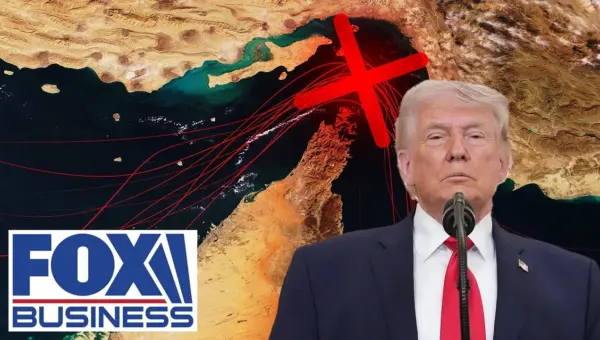
The U.S. has enforced a blockade on the Strait of Hormuz, emphasizing that Iran will not be allowed to acquire nuclear weapons. Talks between the U.S. and Iran are stalled, with Pakistan reportedly offering to host future negotiations. Senator Ron Johnson voiced concerns over proposed nuclear enrichment suspensions, advocating for complete program dismantling.


Ukraine Unveils Advanced Defense Tech, Seeks Global Partnerships
Ukraine is showcasing its rapidly expanding defense industry, highlighting advanced domestic missile systems, drones, and robotic platforms. President Zelenskyy announced new international security partnerships, positioning Ukraine as a global provider of defense technology and expertise.