US Tightens Grip: Iran Blockade Shifts to Economic Warfare
The U.S. has shifted its strategy, imposing a selective blockade on Iran's oil exports via the Strait of Hormuz. This economic pressure aims to avoid military conflict, but faces challenges in enforcement and international support. Markets remain cautiously calm, anticipating diplomacy.

US Shifts Strategy: Economic Pressure on Iran Mounts
The United States has initiated a significant shift in its approach to pressuring Iran, moving from potential military confrontation to targeted economic warfare. This new strategy centers on a selective blockade of the Strait of Hormuz, a vital global trade route. The goal is to cripple Iran’s oil export revenue without triggering a full-blown military conflict.
Strait of Hormuz: A Global Economic Lifeline
The Strait of Hormuz is an incredibly narrow but crucial waterway. Approximately 20% of the world’s daily oil supply passes through this chokepoint. Iran’s strategic location gives it significant influence over this critical passage. Any disruption here sends immediate ripples through global energy markets, impacting oil prices, inflation, and overall economic growth.
Selective Blockade: Targeted Economic Pressure
Instead of a complete military shutdown, the U.S. Navy is focusing on specific vessels. These are ships that have docked at Iranian ports, loaded Iranian oil, or are suspected of carrying sanctioned goods. The operation involves stopping ships, inspecting their cargo and paperwork, and threatening to seize them if they violate sanctions. This approach aims to prevent Iran from earning income through oil sales.
Mixed Enforcement Signals Early On
Initial reports suggest that the enforcement of this selective blockade is not yet fully consistent. Some tankers linked to Iran have reportedly passed through the strait without issue. In one instance, a vessel reportedly on a U.S. sanctions list managed to transit the waterway. This suggests a phased approach, possibly designed to test the strategy and avoid immediate panic in global markets or a strong retaliatory response from Iran.
A Move Towards Economic Warfare
This strategy represents a clear pivot from traditional military escalation, such as missile strikes, towards economic warfare. By targeting Iran’s primary source of revenue – its oil exports – the U.S. aims to squeeze the Iranian economy over time. While economic pressure may build more slowly than military action, it can be more sustained and potentially more damaging in the long run.
Challenges and International Support
The effectiveness of this economic strategy faces several hurdles. Enforcement is complex, and some countries may continue to purchase Iranian oil despite U.S. actions. There is also the risk that seizing ships could provoke retaliation from Iran. Furthermore, the U.S. appears to be acting largely alone, as several NATO allies are reportedly not participating in the blockade. This lack of broad international cooperation creates potential loopholes and weakens the overall impact.
Market Reaction: Cautious Calm
Surprisingly, financial markets have remained relatively calm despite the escalating tensions. Oil prices have dipped below $100 per barrel, and equity markets are holding steady. This market behavior suggests that investors are anticipating potential diplomatic solutions and renewed negotiations. The hope is that a truce or a diplomatic breakthrough could still be reached, preventing a worst-case scenario from unfolding.
What Investors Should Know
While markets are currently stable, the situation carries significant risks. Even a partial disruption in the Strait of Hormuz could lead to higher shipping costs, increased insurance premiums, and supply chain disruptions. Over an extended period, these factors could translate into higher energy prices and become a substantial headwind for the global economy, potentially impacting growth in 2026. The ongoing tensions involving Israel and Lebanon add further complexity to the already fragile geopolitical landscape.
Potential Scenarios Ahead
Several outcomes could emerge from the current situation:
- Strategy Works: Controlled pressure leads Iran to negotiate due to economic strain. This could result in gradual de-escalation, more talks, and positive market reactions like falling oil prices and rallying stocks.
- Prolonged Uncertainty: Inconsistent enforcement allows some trade to continue, making the situation a long-term stalemate. This creates prolonged uncertainty, which can dampen business investment and economic activity.
- Escalation: An incident at sea, a miscalculation, or a deliberate response could lead to direct military conflict, moving away from economic pressure and introducing significant new risks.
The current situation is delicate. The U.S. strategy might succeed, but its outcome is far from guaranteed. The coming days and weeks will be crucial in determining whether the situation de-escalates, drags on with economic consequences, or escalates into military conflict, with major implications for the global economy.
Source: World on Edge (YouTube)

Related Articles

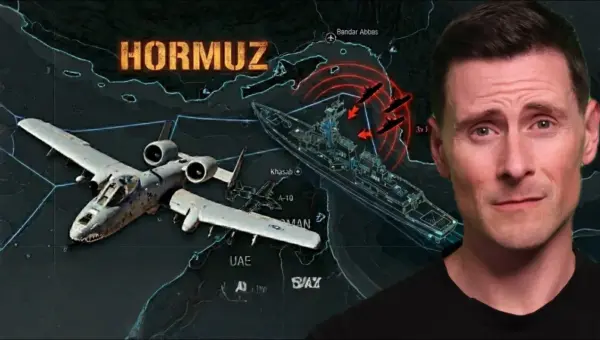
US Navy Blockades Hormuz, Threatens Elimination
The U.S. Navy has imposed a full blockade on the Strait of Hormuz, aiming to halt Iran's oil exports and choke off funding for the IRGC. President Trump warned that Iranian ships approaching the blockade will be "immediately eliminated." This strategic move targets Iran's economic lifeline and escalates tensions in the region.

US-Iran Talks Hinted Despite Vance’s ‘All Over’ Claim
Rumors suggest new talks between the US and Iran may be imminent, despite recent claims of negotiation failure. Meanwhile, direct talks between Lebanon and Israel are set to occur in the US, aiming for pragmatic solutions amid ongoing conflict. Italy has also suspended its defense agreement with Israel, signaling shifting international pressure.
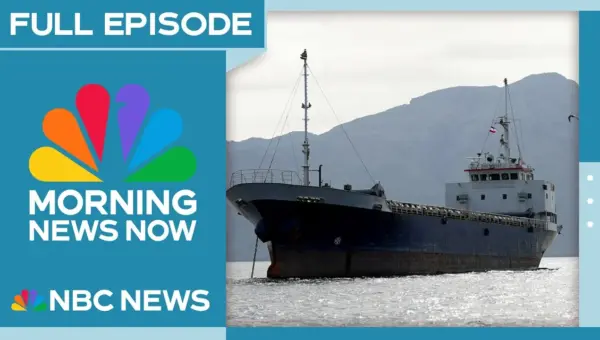
US Warships Blockade Iran, Triggering Global Economic Fears
U.S. warships have initiated a partial blockade of Iranian ports near the Strait of Hormuz, aiming to pressure Iran by cutting off oil exports. This action has drawn strong criticism from China and sparked protests in Tehran, with Iran calling it piracy. The blockade is creating global economic concerns, affecting oil prices and Wall Street, while also fueling an unlikely feud between President Trump and the Pope over war stances. Meanwhile, two U.S. lawmakers are resigning amid misconduct allegations, and the nation braces for severe weather and record heat.