Trump Extends Iran Ceasefire Amidst Growing Criticism
President Donald Trump has extended a ceasefire with Iran, a move that has drawn criticism for its chaotic nature. Amidst concerns over rising gas prices and a perceived U.S. withdrawal from global engagement, public confidence in the administration's foreign policy is low. A recent Virginia referendum to reform redistricting is seen as a victory for Democrats, reflecting growing voter dissatisfaction.

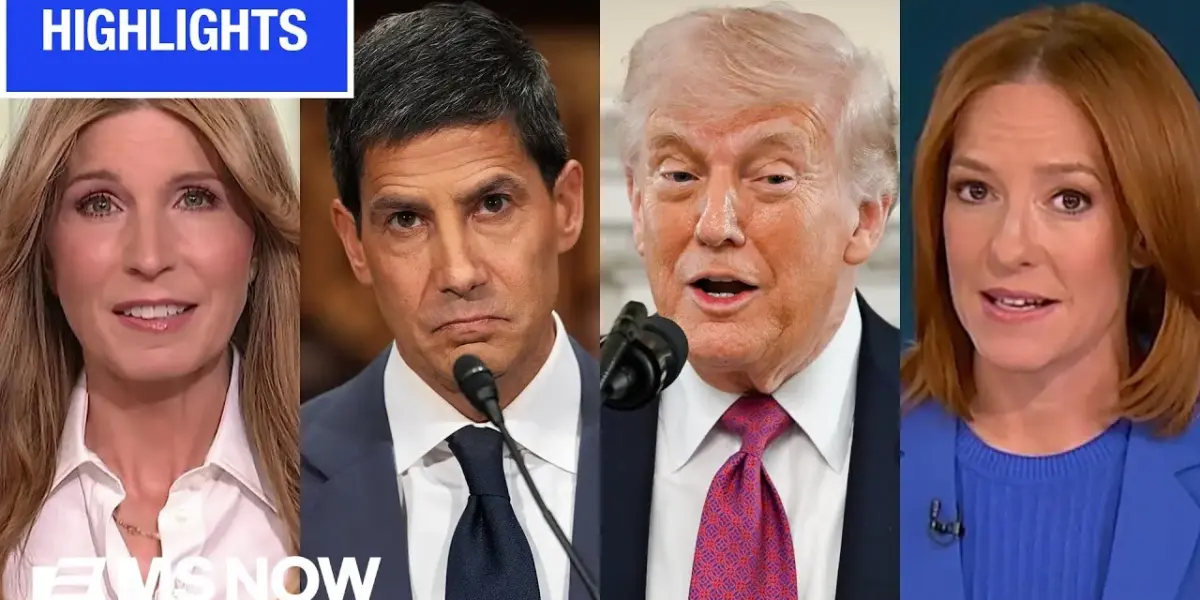
Trump Extends Iran Ceasefire, Sparks Confusion
In a surprising move, President Donald Trump extended a ceasefire with Iran just one day before it was set to expire. This decision, announced within the last hour, follows a period of intense back-and-forth regarding Vice President JD Vance’s potential travel to Pakistan for negotiations. The extension offers a potential window for more peace talks, but critics point to it as another example of the chaotic and confusing approach to foreign policy under the Trump administration.
Just this morning, President Trump stated on a television show, “I expect to be bombing because I think that’s a better attitude to go in with.” He added that the military was “raring to go.” Hours later, the ceasefire was extended, leaving many observers bewildered by the sudden shift in strategy.
Concerns Over Gas Prices and Global Relations
The uncertainty surrounding foreign policy extends to domestic concerns, particularly gas prices. President Trump predicted prices would remain the same or slightly increase by the November midterms. This comes after he reportedly criticized his own energy secretary for suggesting prices would not drop below $3 per gallon until 2027.
The situation in the Strait of Hormuz has also seen fluctuating reports, with its status being described as closed, then open, then closed again. Politico described this as an acceleration of a perceived U.S. withdrawal from global engagement. Thomas Wright, a former National Security Council official, noted that Trump’s inconsistent stance on Iran has eroded confidence among allies and adversaries alike, leaving them unsure of U.S. intentions.
“The long-term prognosis isn’t terminal, but the question is what China, Russia, North Korea, and Iran do with the next 2 years and 9 months if this drift continues.”
Thomas Wright, Former National Security Council Official
Public Confidence and Domestic Priorities
A recent Pew poll indicates a significant lack of public confidence in President Trump’s ability to manage U.S. policy toward Iran, with 64% of Americans expressing no confidence. Senator Alyssa Slacken of Michigan highlighted constituent concerns about the high cost of foreign operations and a desire to focus on domestic issues like schools and healthcare.
Senator Slacken stated, “People at home say well why can’t we focus that here and you know figure out our schools or health care or whatever.” She also pointed out that rising gas prices serve as a constant reminder to Americans of the financial impact of the confusion in the Middle East. Many feel that the administration is not prioritizing their everyday concerns.
Political Climate and Midterm Elections
With the midterm elections approaching, the political climate is a key focus. Senator Slacken observed internal party conflicts and noted that heading into the midterms, it is often a referendum on the party in power. She suggested that even some Republican colleagues are preparing for potential losses.
“We have to see that through. But I think that’s where the mood of the country is,” Senator Slacken commented. She cautioned that a midterm victory does not guarantee success in a general election, emphasizing the need for continued strategic thinking and communication.
Shifting Global Dynamics
Canadian Prime Minister Mark Carney recently delivered a speech highlighting a more dangerous and divided world, noting the U.S. has fundamentally altered its trade approach. He suggested that relying on past strengths tied to America has become a weakness, and that hope and nostalgia are not viable strategies for the future.
Senator Slacken found Carney’s remarks particularly poignant, stating, “This is to me a result of the strategy that President Trump uses which is kick allies and friends in the teeth and cozy up to adversaries.” This sentiment reflects a broader concern about the impact of current U.S. foreign policy on international relationships.
Virginia Redistricting Vote
In a significant development, Virginia voters approved a referendum to allow for the redistricting of federal House districts. This vote is expected to help Democrats gain three to four seats in the upcoming midterm elections.
The referendum passed with 50.28% of the vote, with early results from some counties showing strong support for the change. This outcome is seen as a setback for Republican efforts to manipulate electoral maps, a strategy that President Trump had reportedly pushed for in other states like Texas.
Analysis of Trump’s Strategy and Public Opinion
The analysis suggests that President Trump’s strategy often involves underestimating the responses of others, similar to his approach to the Iran situation and the redistricting battle. His focus on immediate gains without fully considering the consequences has led to unexpected pushback.
A recent AP poll shows President Trump’s approval rating at a low of 33%, with 67% disapproving. His handling of the economy is particularly unpopular, with 70% disapproval. This widespread dissatisfaction suggests a more favorable environment for Democrats heading into the midterms.
Republican Tactics and Voter Energy
The report details aggressive and sometimes misleading tactics used by Republicans in campaigns, including in Virginia’s redistricting vote. Mailers and advertisements have been used to muddy the waters and misrepresent candidates’ positions, often funded by dark money groups.
Despite these efforts, the energy and will of voters are proving to be a powerful force. The success in Virginia and other states indicates that public sentiment can overcome attempts to manipulate the political process, offering a positive sign for those advocating for democracy.
Economic Concerns and Public Perception
President Trump’s recent comments dismissing rising gas prices as “peanuts” have drawn sharp criticism. Many Americans struggling with inflation and the cost of living find such remarks out of touch with their financial realities.
Senator Slacken emphasized, “The American people feel it. It doesn’t it’s not fake to them. It’s money that they don’t have in their pocket.
It’s very real. It’s not peanuts.” This disconnect between the administration’s messaging and the public’s experience is a significant factor in current political sentiment.
Looking Ahead to the Midterms and Beyond
With six months remaining until the midterm elections, the president is on the defensive regarding the war, gas prices, and the economy. The public’s perception is that these issues are being mishandled, creating an opening for Democrats.
The political landscape appears to be shifting, with Democrats seeing opportunities in districts previously considered safe Republican territory. The ongoing analysis of public opinion and electoral trends will be crucial in understanding the outcomes of the upcoming elections and the future direction of U.S. policy.
Source: MS NOW Highlights – April 21 (YouTube)

Related Articles

US Oil Blockade Targets China’s Economy
The U.S. has blockaded Iranian oil, aiming to curb China's economic growth by limiting its access to discounted energy. This move highlights the ongoing economic competition between the two global powers. Investors should understand how inflation and geopolitical events create market opportunities.

Iran Ceasefire Boosts Stocks, But Fed Chair Pick Faces Scrutiny
Wall Street is seeing a rebound as a ceasefire with Iran is extended, easing geopolitical fears. However, President Trump's Federal Reserve nominee faces tough questions about independence, raising concerns about potential political influence on interest rates.

Trump Extends Iran Ceasefire Amid Strait of Hormuz Clashes
President Trump has extended the ceasefire with Iran, but tensions remain high in the Strait of Hormuz following attacks on cargo ships. Meanwhile, a Federal Reserve nominee faces scrutiny on Capitol Hill, and voters in Virginia have approved a new congressional map that could shift the balance of power.