Iran’s Bold Stance: Regime Survival Fuels Regional Power Play
Iran's regime has survived immense pressure, now controlling the Strait of Hormuz. Despite U.S. demands and air strikes, Iran's missile program and regional proxies remain strong, suggesting a resilient, albeit wounded, power.


Iran’s Bold Stance: Regime Survival Fuels Regional Power Play
The fragile peace between the United States and Iran is currently hanging by a thread. With no peace talks on the horizon and former President Trump showing little interest in further negotiations, tensions are rising. This situation begs the question: who truly holds the power in this complex relationship right now?
Iran’s Claim to Strength
From Iran’s perspective, simply surviving the recent onslaught has been a victory. The regime has not collapsed, a significant achievement given the immense pressure.
Iran now controls the Strait of Hormuz, a vital waterway for global oil transport. This wasn’t the case at the start of the recent conflict.
US Demands vs. Iranian Reality
The United States has laid out clear demands. These include stopping uranium enrichment, shutting down all nuclear facilities, and ending support for regional proxy groups. These groups, like Hezbollah in Lebanon and Hamas, along with Iraqi Shia militias, are essentially arms of Iran’s Islamic Revolutionary Guard Corps (IRGC).
Iran is unlikely to agree to these terms. Their ability to project power across the Middle East relies heavily on these militias and paramilitary organizations.
A Wounded Tiger’s Resilience
The United States has launched thousands of air strikes. These have significantly weakened Iran’s leadership, decimating its top ranks. However, Iran’s missile program has not been completely destroyed.
Early reports suggested that many missile launchers and medium-range missiles were taken out. Yet, U.S. Intelligence now indicates that Iran still possesses a substantial number of these weapons. This suggests a resilience that surprises many observers.
Historical Context: A Long Game
The current standoff is not new. For decades, Iran and the United States have engaged in a complex dance of diplomacy and confrontation.
Iran’s strategy often involves leveraging its regional influence through proxy forces. This allows it to project power without direct military engagement, a tactic that has proven effective in deterring full-scale conflict.
The U.S., on the other hand, has historically sought to contain Iran’s nuclear ambitions and its regional influence. Sanctions and military posturing have been key tools.
However, the effectiveness of these measures is often debated. Iran’s ability to adapt and continue its activities suggests a deep understanding of geopolitical pressures.
Why This Matters
The balance of power between the U.S. And Iran has significant global implications. The Strait of Hormuz is a critical chokepoint for oil shipments.
Any disruption there can cause global energy prices to spike. Iran’s support for various groups also fuels conflicts across the Middle East, impacting regional stability and international security.
The future outlook remains uncertain. Iran’s continued defiance, coupled with its ability to maintain its proxy networks, suggests a long-term challenge for U.S. Foreign policy.
The U.S. Faces the difficult task of countering Iran’s influence without triggering a wider war. The survival of the Iranian regime, despite intense pressure, highlights the resilience of authoritarian systems in the face of external challenges.
Future Outlook: An Unstable Equilibrium
The current situation points to an unstable equilibrium. Iran has shown it can withstand significant pressure, while the U.S. Continues to seek concessions.
The reliance on proxy groups means that conflicts can simmer for years, flaring up periodically. As long as Iran views these groups as essential to its security and regional standing, it will likely continue to support them.
The U.S. Must weigh the costs and benefits of further military action against the potential for escalation. Diplomacy, while stalled, remains a crucial avenue.
However, without a willingness from both sides to compromise, the current state of heightened tension is likely to persist. The world watches closely, hoping for a de-escalation that seems increasingly distant.
Source: Who really has the upper hand right now — the US or Iran? (YouTube)

Related Articles


North Korea Eyes Iran Attack: A Nuclear Deterrent Boost
An attack on Iran may be reinforcing North Korea's belief that nuclear weapons are essential for its survival. The perceived failure of allies to fully support Iran, combined with South Korea's preemptive strike capabilities, strengthens Pyongyang's resolve to maintain its arsenal. This highlights the challenges in future denuclearization efforts.

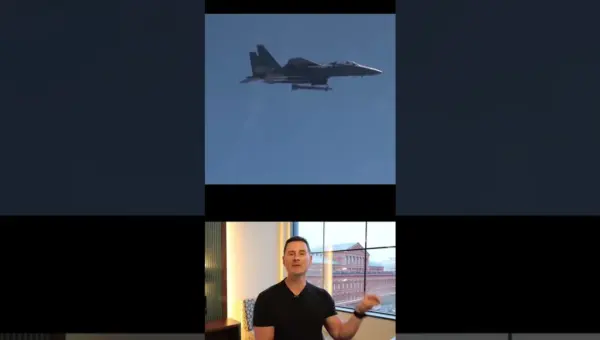
US Air Power Strikes Iranian Missile Sites
U.S. F-15E Strike Eagles deployed 5,000-pound GBU-72 bombs on hardened Iranian missile sites near the Strait of Hormuz. CENTCOM confirmed anti-ship threats were neutralized, securing vital oil shipping lanes. The strikes precede the arrival of 2,500 U.S. Marines, indicating preparatory battlefield actions.

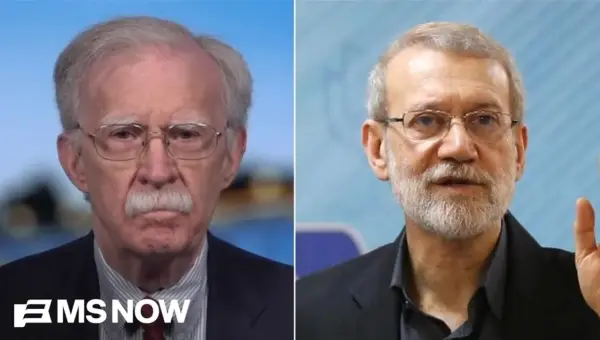
Bolton Slams Trump’s Iran Policy as ‘Snake-Like’
John Bolton, former National Security Advisor, has strongly criticized former President Trump's Iran policy as "snake-like" and lacking a clear strategy. Bolton stated that Trump's decisions were often impulsive, undermining U.S. credibility and creating instability in the Middle East. He called for a more consistent and strategically grounded approach to foreign policy.