North Korea Eyes Iran Attack: A Nuclear Deterrent Boost
An attack on Iran may be reinforcing North Korea's belief that nuclear weapons are essential for its survival. The perceived failure of allies to fully support Iran, combined with South Korea's preemptive strike capabilities, strengthens Pyongyang's resolve to maintain its arsenal. This highlights the challenges in future denuclearization efforts.


North Korea Studies Iran Strike, Sees Nuclear Weapons as Essential
An attack on Iran, though occurring in a different region, offers striking parallels to North Korea’s own security concerns. Experts suggest that this event may reinforce North Korea’s belief that nuclear weapons are its ultimate safeguard. The situation highlights a perceived unreliability of allies, pushing Pyongyang to rely solely on its own military strength.
The strike on Iran happened while the country was engaged in what it believed were serious negotiations with the Trump administration. For North Korea, this is a stark warning, a scenario it wishes to avoid at all costs. This perceived betrayal of trust during talks likely strengthens Pyongyang’s resolve to never give up its nuclear arsenal.
Allies’ Limited Support Fuels North Korean Distrust
The international response, or lack thereof, to the attack on Iran has not gone unnoticed in Pyongyang. Russia and China, key allies for many nations, did not provide strong support for Iran. This mirrors similar situations involving Syria and Venezuela, where perceived allies offered limited assistance.
North Korean leaders likely see this pattern and conclude that even with mutual defense treaties, their allies might not fully defend them in a crisis. The calculations made by leaders like Russia’s Putin and China’s Xi Jinping, while providing short-term benefits, cannot be counted on for complete security. This reinforces a sense of strategic isolation for North Korea.
South Korea’s ‘Kill Chain’ and North Korea’s Strategic Dilemma
South Korea’s current government has a clear policy regarding any potential aggression from the North. They will not launch a first strike against North Korea unless there is a clear and immediate sign of a massive attack from Pyongyang. This policy is designed to prevent preemptive war.
However, if such an imminent threat is detected, South Korea has a strategy called the ‘kill chain.’ This would allow them to preemptively strike the source of the potential attack. This strategy acts as a deterrent, but it requires reliable intelligence about North Korea’s intentions.
North Korea’s Current Position and Avoidance of Conflict
Currently, there is no indication that North Korea is planning an imminent attack on South Korea. The country is facing significant internal challenges, making the idea of fighting a war on two fronts highly improbable. Their soldiers are already dealing with difficult conditions.
The ongoing geopolitical events, particularly the situation in Iran, serve as a constant reminder for North Korea. The perceived inability of allies to provide robust defense and the existence of preemptive strike capabilities like South Korea’s ‘kill chain’ likely solidify the belief that nuclear weapons are the only true guarantee of survival. This makes any diplomatic efforts to denuclearize North Korea even more challenging.
Expert Analysis
“From North Korea’s perspective, what happened in Iran is a scenario it does not really want to see happen to themselves. This is yet another reason for North Korea to believe that nuclear weapons is something it should not give up on.”
This statement from a news analyst highlights the core concern for Pyongyang. The perceived vulnerability during negotiations and the subsequent strike in Iran reinforce the idea that nuclear deterrence is paramount. It suggests that any future diplomatic overtures from North Korea will be heavily influenced by this recent event.
Broader Implications
The situation in Iran and North Korea’s reaction to it have broader implications for international security. It suggests that nations feeling threatened may accelerate their pursuit of nuclear weapons if they believe international alliances are insufficient for their protection. This could lead to a more unstable global environment with increased proliferation risks.
The reliance on nuclear weapons as a primary defense strategy, as observed in North Korea’s potential reaction to the Iran incident, poses significant challenges for global non-proliferation efforts. It raises questions about the effectiveness of international sanctions and diplomatic pressure when nations feel existentially threatened.
Looking Ahead
As North Korea continues to monitor international events, its strategic calculations will undoubtedly be influenced by the perceived success of nuclear deterrence. Future diplomatic engagements will likely be shaped by this reinforced belief in self-reliance and military strength. The international community will need to consider these dynamics when formulating policies towards Pyongyang.
Source: Why North Korea may be worried about the attack on Iran | DW News (YouTube)

Related Articles

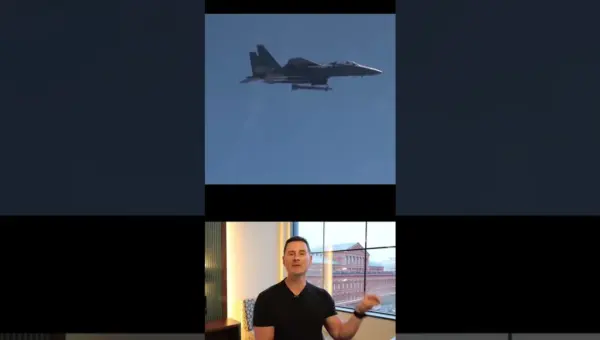
US Air Power Strikes Iranian Missile Sites
U.S. F-15E Strike Eagles deployed 5,000-pound GBU-72 bombs on hardened Iranian missile sites near the Strait of Hormuz. CENTCOM confirmed anti-ship threats were neutralized, securing vital oil shipping lanes. The strikes precede the arrival of 2,500 U.S. Marines, indicating preparatory battlefield actions.


Maddow Questions Silence on Kushner-Saudi Ties Amid Iran Tensions
Rachel Maddow is questioning why the financial ties between Jared Kushner's business and Saudi Arabia are not a bigger scandal. She highlights the potential conflict between Kushner's personal financial interests and U.S. national interests, especially in light of recent actions concerning Iran. The lack of significant public outcry over these connections is what Maddow finds most puzzling.


Israel Strikes Key Iran Leaders, Boosts Regional Security
Israel has eliminated key Iranian militant leaders, including Lar Johnny, a potential successor to the Ayatollah, and Solommani, head of the repressive Beiji militia. The operation, based on extensive intelligence, also killed hundreds of militia members. This significant strike aims to disrupt militant operations and enhance regional security.