Ossoff Presses Intelligence Chief on Iran Nuclear Threat Claims
Senator Jon Ossoff questioned a top intelligence official during a hearing about the White House's claim of an "imminent nuclear threat" from Iran. The official repeatedly avoided a direct yes or no answer, stating the President determines what constitutes an imminent threat. Ossoff argued that assessing threats is the intelligence community's core responsibility.


Senator Questions Intelligence Assessment of Iran’s Nuclear Program
Senator Jon Ossoff pressed a top intelligence official on Tuesday regarding the White House’s characterization of Iran posing an “imminent nuclear threat.” The exchange occurred during a Worldwide Threats Hearing, where intelligence leaders present their findings to Congress.
Ossoff specifically questioned the intelligence community’s assessment of Iran’s nuclear capabilities. He referenced a March 1st White House statement that described the war launched as a military campaign to “eliminate the imminent nuclear threat posed by the Iranian regime.” Ossoff sought a clear “yes or no” answer on whether this assessment was shared by the intelligence community.
Intelligence Official Sidesteps Direct Answer
The intelligence official, whose name is not fully transcribed but is referred to as “Senator” by Ossoff, repeatedly avoided giving a direct confirmation. When asked if the intelligence community assessed an “imminent nuclear threat” from Iran, the official stated that the intelligence community assessed Iran’s intention to grow its nuclear enrichment capabilities.
However, when pressed again for a simple yes or no, the official responded, “The only person who can determine what is and is not an imminent threat is the President.” This response drew further questioning from Ossoff.
Ossoff Argues Intelligence Community’s Role
Senator Ossoff pushed back, emphasizing the purpose of the Worldwide Threats Hearing. He stated that the hearing is where the intelligence community presents “national intelligence, timely, objective and independent of political considerations.” Ossoff reminded the official that their role is to represent the intelligence community’s (IC) assessment of threats.
Ossoff highlighted previous testimony from the official stating that Iran’s nuclear enrichment program was “obliterated” and that there had been no efforts to rebuild it. He reiterated his question: despite this assessment, was it still the intelligence community’s view that there was an “imminent nuclear threat”?
Evasion and the Definition of ‘Threat’
The intelligence official again deflected, stating, “It is not the intelligence community’s responsibility to determine what is and is not an imminent threat.” The official continued, explaining that the President makes that determination based on collected intelligence. This exchange suggested a disagreement on the scope of the intelligence community’s mandate.
Ossoff countered that determining what constitutes a threat to the United States is precisely the intelligence community’s responsibility, especially in the context of this hearing. He quoted the official’s own opening statement, which said they were there to represent the IC’s assessment of threats. Ossoff accused the official of evading a direct response.
Focus on Iran’s Nuclear Intentions
The core of the disagreement appears to center on the interpretation of intelligence regarding Iran’s nuclear program. While the intelligence community may have assessed Iran’s intentions and capabilities for enrichment, the specific determination of an “imminent threat” seems to be a distinction the official reserves for the President.
This distinction is crucial, as it impacts how public statements about national security are framed. Ossoff’s questioning aimed to clarify whether public claims of an imminent threat aligned with the intelligence community’s objective assessments, free from political influence.
Broader Implications for Public Trust
The exchange raises important questions about transparency and accountability in intelligence matters. When the White House publicly declares an “imminent threat,” the public and lawmakers expect that declaration to be directly supported by the intelligence community’s findings.
Failure to provide clear, direct answers in such forums can erode trust. It can lead to speculation about whether intelligence assessments are being accurately represented or if political considerations are influencing official statements about national security risks.
What’s Next in Monitoring Iran’s Nuclear Program
Moving forward, continued scrutiny of Iran’s nuclear activities will be essential. Congress and the public will likely look for clearer communication from the intelligence community regarding its assessments of Iran’s nuclear program and any potential threats.
Future Worldwide Threats Hearings will be key to observing whether intelligence officials provide more direct answers to questions about national security threats. The clarity of these assessments directly impacts policy decisions and public understanding of global risks.
Source: Ossoff questions Gabbard about Iran posing an 'imminent nuclear threat' (YouTube)

Related Articles
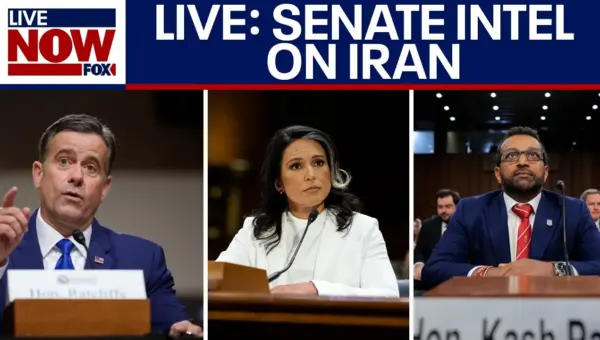
Intelligence Chiefs Detail Iran War, Terror Threats in Senate Hearing
Top intelligence officials testified before the Senate on global threats, detailing actions against Iran and ongoing risks from China, North Korea, and Russia. Concerns were also raised about potential misuse of intelligence powers and internal challenges within agencies like the FBI.


Hegseth’s Briefings Expose Deep Incompetence
Reports indicate Pete Hegseth struggles in classified briefings, unable to answer detailed questions beyond reading scripts. This raises serious concerns about competence in handling sensitive national security information. The situation highlights the need for proven expertise over public profile in critical government roles.


Putin’s Internet Shutdown: Paranoia or Precaution?
Russia's recent internet restrictions fuel speculation about President Putin's paranoia, potentially driven by fears of a coup and the weaponization of digital information by adversaries. Actions like buffer zones and dismissals suggest a leader under pressure.