Iran War Fuels Global Economic Fears: Experts Warn of Lasting Impact
The conflict involving Iran is creating significant global economic concerns, with experts warning of lasting impacts. Disruptions near the Strait of Hormuz, a crucial oil shipping route, are raising fears of price spikes and supply chain instability. This situation adds considerable uncertainty to the international economic outlook.


Global Economy Reels as Iran Conflict Escalates
The ongoing conflict involving Iran is sending shockwaves through the global economy, with experts warning that the consequences will be felt long after the fighting stops. This widening conflict, particularly its impact on vital shipping lanes, has ignited fears of a widespread economic downturn that could affect nations worldwide. The situation is complex, touching on everything from oil prices to the stability of international trade.
Strait of Hormuz: A Critical Chokepoint
A key concern is the Strait of Hormuz, a narrow waterway through which a significant portion of the world’s oil supply passes. Any disruption here, whether through direct conflict or increased security risks, can immediately cause oil prices to spike. This isn’t just a theoretical problem; recent events have shown how quickly tensions in the region can translate into real-world economic pain for consumers and businesses.
Experts Sound Alarm on Economic Fallout
During a recent discussion on ‘The 11th Hour Nightcap,’ journalists Chris Jansing, Peter Goodman, and Susan Glasser, along with comedian Paul Mecurio, joined host Stephanie Ruhle to discuss the economic implications. They highlighted that the war’s effects are not confined to the immediate region but are spreading globally. The panel emphasized that the economic repercussions could be far-reaching and persistent, posing a challenge for policymakers and citizens alike.
“The war in Iran is having an enormous impact on the global economy, and it seems like the effects will last long after the war ends.” – Stephanie Ruhle
Oil Prices and Inflationary Pressures
The most immediate economic effect of heightened tensions in the Middle East is often seen in oil prices. Crude oil is a fundamental commodity, and its price affects transportation costs, manufacturing expenses, and ultimately, the price of nearly everything consumers buy.
When the supply of oil is threatened or perceived to be threatened, prices tend to climb, contributing to inflation. This can reduce people’s purchasing power and slow down economic growth.
Supply Chain Disruptions Loom
Beyond oil, the conflict raises concerns about broader supply chain stability. Many goods are transported by sea, and shipping routes passing near conflict zones become riskier.
Companies may face higher insurance costs for vessels, delays in deliveries, or even rerouting, which adds expense and time. Such disruptions can lead to shortages of goods and further fuel inflationary pressures, creating a difficult environment for businesses trying to plan and operate.
Broader Geopolitical and Economic Uncertainty
The war also introduces a significant layer of geopolitical uncertainty. Investors and businesses dislike uncertainty, as it makes long-term planning difficult and can lead to reduced investment. This can slow job creation and economic expansion.
The instability in a major global region can also affect international relations and trade agreements, adding further complexity to the global economic picture. The interconnectedness of the modern world means that a conflict in one region can quickly create ripples felt everywhere.
What’s Next?
Attention will remain focused on the Strait of Hormuz and any developments that could affect oil shipments. Economic indicators, particularly inflation rates and energy prices, will be closely watched for signs of sustained impact. Policymakers in various countries will likely be assessing strategies to mitigate potential economic fallout and ensure energy security in the coming weeks and months.
Source: Has the Iran war already sparked a global economic crisis? (YouTube)

Related Articles
Fuel Prices Spike, Driving Inflation Amid Iran War
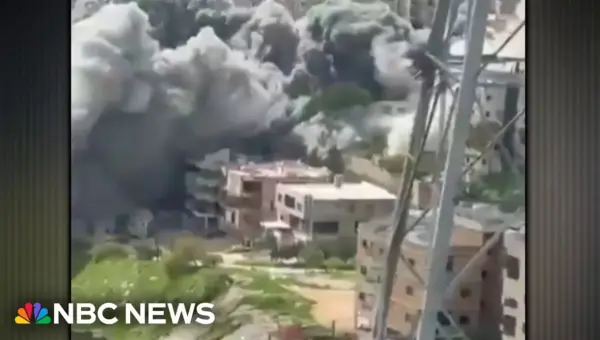
Soaring fuel prices, driven by the conflict in Iran and disruptions in the Strait of Hormuz, have caused a record 21% jump in gas costs and pushed inflation to 3.3%. As peace talks begin in Pakistan, the White House signals a readiness for dialogue while vowing action to ensure open shipping lanes.

Trump: Iran’s Military Defeated, Strait Will Reopen
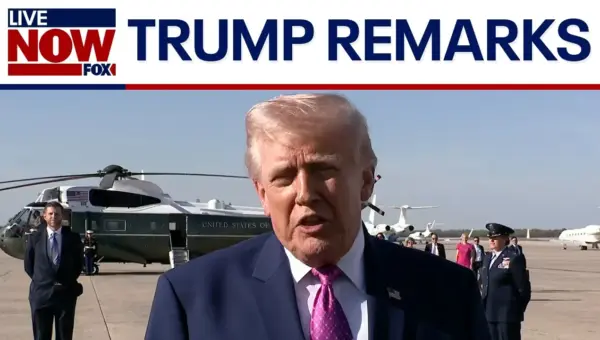
President Trump declared Iran's military defeated and the Strait of Hormuz will reopen, a key shipping lane. He stressed Iran must not acquire nuclear weapons as the primary goal of any deal. The U.S. is prepared to ensure the strait remains open for international trade.


Iran’s Strait of Hormuz Fee Threatens Europe’s Economy
Iran's proposal to charge a significant fee for passage through the Strait of Hormuz could trigger major economic problems for Europe, potentially generating billions of dollars monthly. The move is seen as an attempt to solidify control over the vital waterway, but it directly challenges international maritime law and threatens freedom of navigation. European nations, especially shipping-reliant Greece, face substantial economic risks, as do the continent's energy supplies.