Iran Ships Evade US Blockade Using ‘Zombie’ Tactics
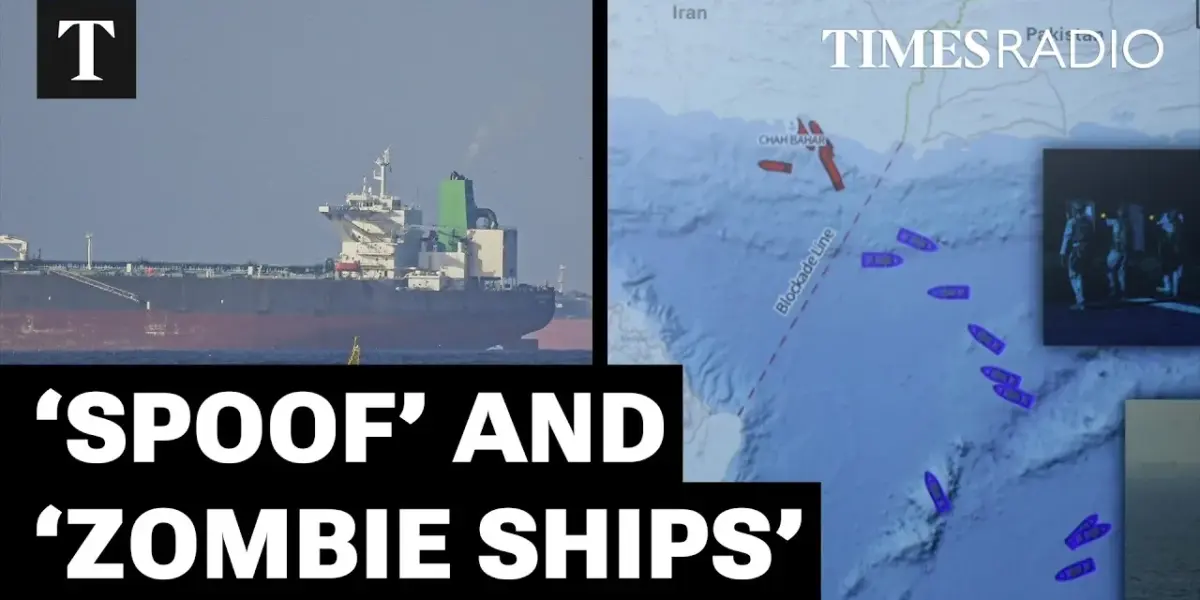
Iranian-linked ships are reportedly bypassing a U.S. naval blockade using sophisticated tactics like 'spoofing' their location and adopting the identities of 'zombie vessels.' Despite international tracking requirements, these methods allow ships to move through critical areas like the Strait of Hormuz, complicating enforcement efforts. While the blockade is impacting Iran's economy, the situation remains dynamic with potential for expanded measures.

Iran Ships Evade US Blockade Using ‘Zombie’ Tactics
In a complex game of maritime cat and mouse, ships linked to Iran are reportedly finding ways to bypass a U.S. blockade. These vessels are using advanced techniques to hide their true location and identity.
This strategy allows them to move through crucial waterways, like the Strait of Hormuz, despite international sanctions. The situation highlights the challenges in enforcing naval blockades in today’s interconnected world.
The Art of Deception at Sea
Maritime intelligence experts have identified several methods used by these ships to become digitally invisible or misleading. One common tactic is ‘spoofing,’ where a ship broadcasts a false location.
For instance, a vessel might appear to be in Iraq while actually being in the Strait of Hormuz. This makes it difficult for authorities to track their actual movements and enforce sanctions.
Another method involves using ‘zombie vessels.’ This means a ship adopts the identity of a vessel that has already been scrapped or destroyed. It’s like using an old, invalid ID to get through security.
Other ships simply turn off their transmitters altogether. Some transmit a completely different identity, making them hard to pinpoint.
Why Tracking Ships Matters
According to international law, every ship is required to transmit its location continuously. This is for safety reasons and has been monitored by satellites for about 15 years.
This tracking data helps enforce sanctions, ensure compliance with regulations, and maintain security on the seas. However, countries facing sanctions, like Iran, Russia, and Venezuela, are actively working to circumvent these tracking systems.
Ami Daniel, chief executive of Windward, a company that provides maritime intelligence, explained the situation. “They’re also playing the cat and mouse game,” Daniel said. “Their next move is to spoof their location, which means transmit a location which is false.” He noted that all these deceptive tactics are currently being used.
The Strait of Hormuz: A Critical Chokepoint
The Strait of Hormuz is a vital waterway, serving as a major chokepoint for global oil shipments. The U.S. has imposed a blockade on Iranian ports to prevent ships from entering or leaving.
However, Iran’s extensive coastline, stretching over 2,000 kilometers, presents a significant challenge for monitoring. The waterways are vast, making it hard to keep track of every vessel’s activity.
Daniel pointed out that the U.S. naval presence is concentrated east of the Strait. This leaves the western side less monitored, creating an opportunity for ships to slip through.
“Effectively, you have a bottleneck and you’re trying to see what’s going out of the bottleneck,” he stated. The situation is complicated further by ships that may be owned by one country, leased to another, and sailing under a third country’s flag.
Enforcing the Blockade: Challenges and Effectiveness
The U.S. blockade aims to stop ships leaving or entering Iranian ports, and specifically targets vessels carrying Iranian oil. However, enforcing these rules can be tricky.
A ship could be carrying what appears to be Iraqi oil, but it might actually be Iranian oil. Verifying the origin of the cargo requires physically inspecting the ship, which is not always possible.
Despite these challenges, Daniel believes the blockade is having a significant economic impact on Iran. “The blockade is absolutely making Iran suffer 100%,” he affirmed. He noted that oil loading at Kharg Island, a major Iranian oil terminal, has slowed dramatically.
Previously, six to seven tankers would be loading at any given time; now, only one or two are seen. Tankers that have loaded oil are also lingering offshore, unable to depart freely.
Looking Ahead
While the blockade is causing economic pain, discussions are underway to potentially expand its reach. U.S. officials are considering going after Iranian oil already on the water, estimated to be around 150 million barrels.
This move could further tighten the economic pressure on Iran. The effectiveness of these expanded measures and Iran’s response will be closely watched in the coming weeks.
Source: How ‘Zombie Ships’ Are Getting Around The Strait of Hormuz Blockade (YouTube)

Related Articles
Oil Prices Plunge, Stocks Soar as Strait of Hormuz Reopens
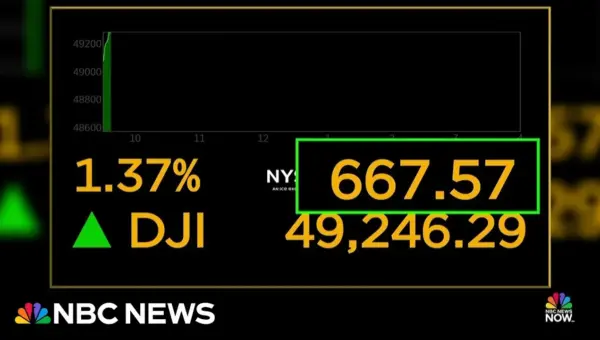
The Strait of Hormuz has reopened, causing oil prices to plummet by over 10% and sending major stock market indices soaring. Analysts predict gas prices could fall below $4 a gallon this weekend, offering relief to consumers. The positive economic news also impacts other commodities and interest rates, boosting overall market confidence.
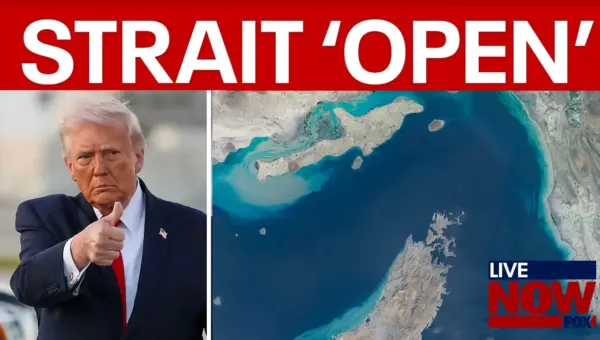
Iran Reopens Strait of Hormuz to Commercial Ships
Iran's foreign minister announced the Strait of Hormuz is now fully open to commercial vessels, following a ceasefire in Lebanon. This vital shipping lane, through which a fifth of the world's oil passes, had been closed since February 28th. The move comes amid international efforts to ensure maritime security and ease economic disruptions.
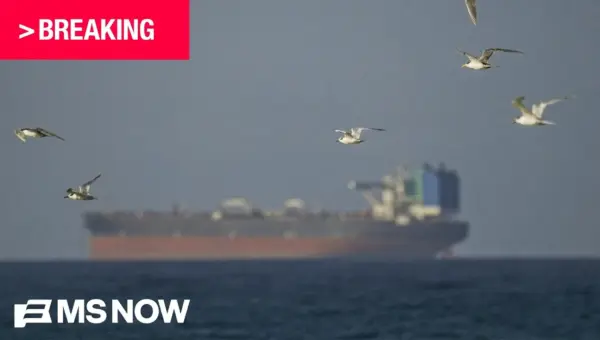
Iran Reopens Strait of Hormuz After Cease-Fire
Iran announced the reopening of the Strait of Hormuz, a critical global oil chokepoint, following a cease-fire in the Israel-Lebanon conflict. The move is seen as a significant de-escalation, with markets rallying and oil prices falling. Questions remain about the U.S. Navy's blockade, which is expected to be lifted.