History Solved: 10 Mysteries Finally Uncovered by Science
From the fate of the Franklin expedition to the construction of the Egyptian pyramids, science and archaeology are finally answering history's most enduring questions. Discover how modern research has debunked myths and revealed the truth behind long-standing historical mysteries.

History Solved: 10 Mysteries Finally Uncovered by Science
For centuries, history has been a tapestry woven with unanswered questions, sparking endless debate and fueling imaginative theories. From the fate of lost expeditions to the true origins of monumental structures, these historical enigmas have captivated minds.
But in the modern era, science, archaeology, and meticulous research have begun to unravel these ancient puzzles, replacing speculation with concrete answers. Watch Mojo’s latest deep dive reveals 10 long-standing historical questions that have finally been laid to rest.
The Tragic Fate of the Franklin Expedition
In 1845, 129 British sailors embarked on a quest to find the Northwest Passage, a fabled sea route connecting the Atlantic and Pacific oceans. Their disappearance in the Arctic became one of exploration’s greatest tragedies and most enduring mysteries. Theories ranged from ice entrapment to outright madness.
However, in 2013, underwater archaeologists pieced together the grim reality. After being trapped in ice for two brutal winters, the crew faced dire shortages of food and supplies.
The survivors abandoned their ships, attempting a desperate trek south. Poor health, extreme cold, and malnutrition ultimately claimed them all, providing a heartbreaking, human explanation for their vanishing.
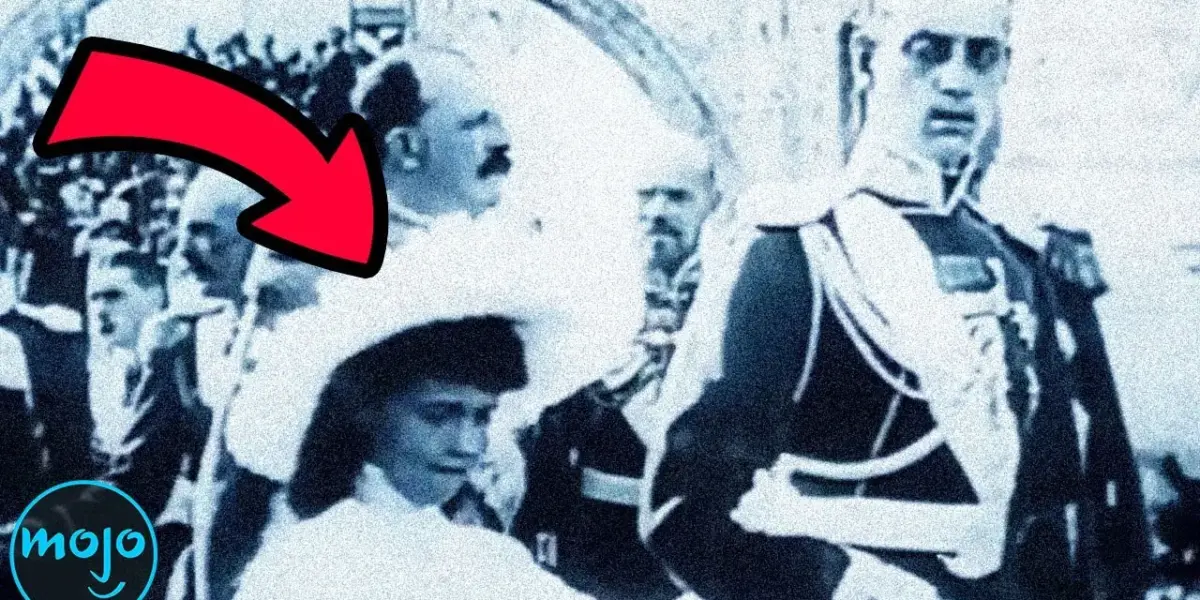
Anastasia Romanov: The Legend Debunked
For nearly a century, rumors swirled that Anastasia Romanov, the youngest daughter of Tsar Nicholas II, had survived her family’s execution by the Bolsheviks in 1918. Her legend grew, fueled by imposters and the public’s fascination with the idea of a surviving royal. While the remains of the Tsar, Tsarina, three daughters, and four attendants were identified, two younger children were unaccounted for, leaving a sliver of hope.
This hope was extinguished in 2007 with the discovery of a second burial site containing the remains of the missing children. DNA testing conclusively matched them to the royal family, confirming that Anastasia did not escape and died alongside her family, replacing enduring legend with scientific certainty.
The Death of King Richard III Revealed
The demise of King Richard III at the Battle of Bosworth Field in 1485 marked the end of the Wars of the Roses, but the exact circumstances of his death remained shrouded in mystery, largely reliant on historical accounts and dramatic portrayals. The story gained a definitive chapter in 2012 when archaeologists unearthed skeletal remains beneath a Leicester parking lot.
DNA analysis confirmed the identity of the king, and further examination revealed multiple fatal battle injuries, including blows to the skull. These wounds corroborated historical narratives that he died fighting on foot after losing his horse, grounding a legendary figure’s violent end in tangible archaeological evidence.
The Lost City of Ubar Found
Long believed to be a mythical desert mirage akin to Atlantis, the city of Ubar was a legend whispered in Bedouin songs. Amateur archaeologist Nicholas Clapp, in partnership with NASA, used satellite imagery and radar data to trace ancient trade routes in South Oman. Excavations uncovered a fortified settlement with towers and walls, confirming Ubar’s existence.
The mystery of its disappearance was solved: the city didn’t vanish mysteriously but collapsed into a massive sinkhole, with the desert sands subsequently burying its remains. Ubar transformed from a legend into a documented archaeological site with a surprisingly straightforward, albeit catastrophic, end.
Napoleon’s Army: More Than Just Winter
Napoleon’s 1812 invasion of Russia, which began with over 500,000 soldiers, ended in a catastrophic retreat, traditionally attributed to the harsh winter, combat, and starvation. Modern science has added a critical new layer to this historical disaster. Genetic analysis of soldiers’ remains has revealed the presence of pathogens like Salmonella enterica and Borrelia recurrentis.
These bacteria, causing paratyphoid and relapsing fever, would have severely weakened soldiers already battling the elements and logistical failures, accelerating the army’s collapse. Napoleon’s defeat was not solely due to the environment but a lethal combination of factors, including microscopic enemies.
The Real Location of Troy
The legendary city of Troy and the epic Trojan War, immortalized in Homer’s epics, were long dismissed as pure myth. However, in the 19th century, archaeologists Heinrich Schliemann and Frank Calvert began excavations at Hisarlik in modern-day Turkey. Their digs uncovered nine distinct layers of settlement, proving Troy was a real city that had been repeatedly destroyed and rebuilt over 5,000 years.
While debates about the historical accuracy of the Trojan War continue, the physical reality and location of Troy are no longer in question. Scholars now believe Troy VI most closely matches the city described in Homer’s works.
The Purpose of the Moai on Easter Island
The colossal monolithic human figures, or Moai, on Easter Island have puzzled researchers for generations. While the method of their transportation remains debated, a 2019 study clarify their purpose.
Researchers discovered that the locations of the Ahu (stone platforms where the Moai stand) consistently align with sources of fresh drinking water. This groundbreaking finding reframed the Moai not just as ceremonial objects but as vital markers for community resources and survival, offering insights into how the Rapa Nui people organized themselves around limited island resources.
Stonehenge’s Stones Finally Traced
The massive stones of Stonehenge have inspired centuries of speculation, from supernatural theories to distant origins. In 2020, geochemical analysis finally pinpointed the source of the largest stones, known as Sarsens.
Scientists traced them to West Woods in Wiltshire, England, approximately 15 miles from the monument. While this discovery doesn’t explain the exact method of transportation, it grounds the iconic prehistoric monument firmly in its local landscape and highlights the remarkable coordination required to move stones weighing up to 25 tons, a feat that took nearly 400 years of study to confirm.
The Collapse of the Maya Civilization
The decline of the Maya civilization around 900 AD, despite their advanced achievements in mathematics and astronomy, has long been a baffling mystery. Theories included warfare and volcanic eruptions, but the most compelling explanation emerged in 2012. Researchers determined that environmental mismanagement played a key role.
Extensive deforestation led to the land’s reduced ability to regulate heat and moisture, intensifying natural droughts and causing soil erosion. This unsustainable agricultural practice led to food shortages, forcing populations to abandon their cities and resulting in a slow unraveling rather than a sudden catastrophe.
How the Pyramids Were Built
The construction of the Egyptian pyramids has long been attributed to advanced technology or supernatural aid. However, physics provided a surprisingly simple answer in 2014. Experiments demonstrated that dragging heavy stone blocks on sleds across sand becomes significantly easier when the sand is slightly wet.
This reduces friction and prevents sand piles from forming in front of the sled. Ancient Egyptian wall paintings depicting workers pouring water ahead of sleds reinforce this theory. The pyramids were built not by aliens or magic, but through clever engineering, teamwork, and a deep understanding of materials, with workers mobilized like an army for construction.
Source: 10 Historical Questions We FINALLY Have Answers To (YouTube)

Related Articles

TV’s Most Accurate History Scenes Revealed!
From the intense argument between John F. Kennedy Jr. and Carolyn Bessette to the gritty chaos of the Brécourt Manor assault, these TV scenes are hailed for their historical accuracy. A new list reveals the top 10 moments that meticulously recreated the past, bringing history to life with stunning detail.


Nativist Rhetoric Echoes Dangerous Past
Shocking rhetoric echoing the dangerous nativist sentiments of the past claims certain groups are 'poisoning the blood of the country.' This viewpoint dismisses the progress made in civil rights and advocates for a leadership structure based on race and religion, contradicting democratic ideals.


Snyder: Trump’s ‘Genocide’ Talk Sullies US, Leads to Losing
Historian Timothy Snyder warns that Donald Trump's rhetoric about destroying civilizations, regardless of intent, carries grave consequences. He argues such language normalizes dehumanization and echoes tactics used in past genocides, ultimately sullying the nation and leading to strategic failures.