Iran Rejects Trump Ceasefire Offer Amid Escalating Regional Conflict
Iran has rejected a ceasefire offer from the Trump administration, escalating regional tensions and leading to U.S. casualties. The conflict, dubbed 'Operation Epic Fury,' has seen Iranian retaliatory strikes across the Middle East and disruption in the Strait of Hormuz.

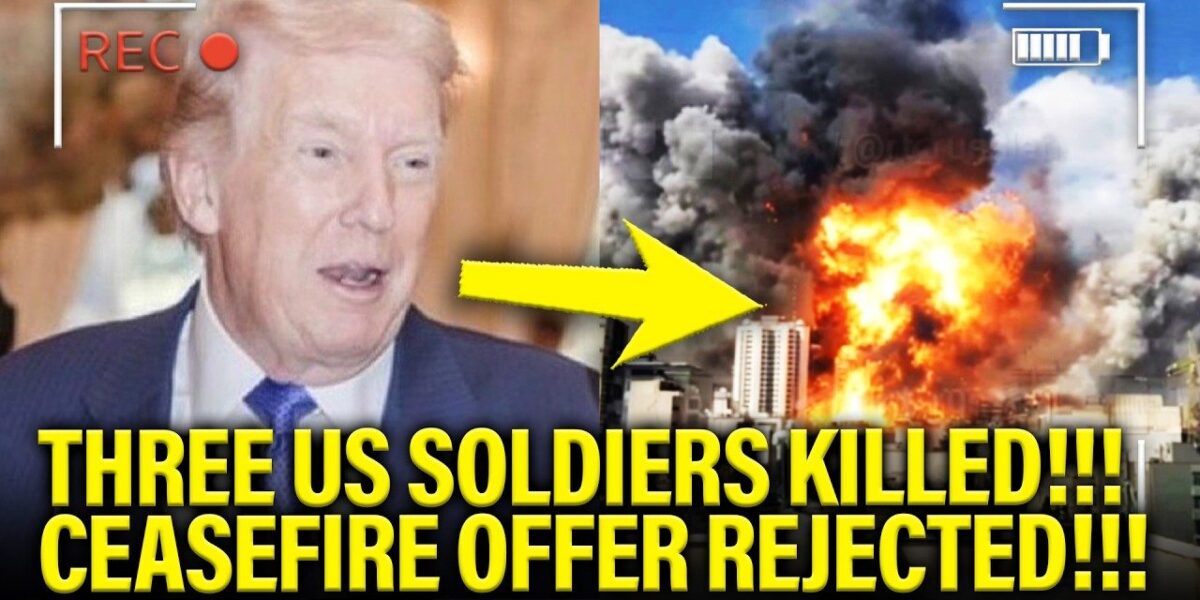
Iran Rejects Ceasefire Offer, Escalating Regional Tensions
In a significant development that has dramatically escalated regional tensions, Iran has reportedly rejected a ceasefire offer from the Trump administration. The move signals a deepening conflict that has already resulted in American casualties and widespread disruption across the Middle East.
The Trump administration had apparently anticipated a swift resolution to the conflict, with initial plans for a war lasting only four to five days, predicated on the assumption that neutralizing key Iranian leadership would lead to an immediate ceasefire and a declaration of victory. However, these assumptions have proven to be incorrect, as Iran has signaled its intent to continue retaliatory actions on its own terms.
US Casualties Mount in Operation Epic Fury
The conflict, which the Trump administration has dubbed “Operation Epic Fury,” has already claimed the lives of three U.S. Service members, with five others sustaining serious injuries. U.S. Central Command (Centcom) confirmed these casualties, though the source transcript suggests these numbers may be conservative and could rise.
Open-source intelligence indicates that these casualties are likely the result of Iranian ballistic missile and drone attacks targeting U.S. Bases in Bahrain, Kuwait, and the United Arab Emirates. Some of these bases have reportedly suffered more significant damage than initially disclosed by U.S. Officials, raising concerns about the transparency of information being released by the administration.
“Donald Trump is panicking as Iran has rejected his ceasefire offer… He was warned that his personal views that that’s what would take place were wrong and he was indeed wrong.”
Iran’s Retaliation and Regional Impact
Iran’s response has been swift and far-reaching. The Islamic Revolutionary Guard Corps (IRGC) has announced the continuation of “Operation True Promise,” with seventh and eighth waves of attacks targeting U.S. Bases across the region. The IRGC claims to have disabled the Ali al-S Salam air base in Kuwait, reporting significant American casualties, although these figures are disputed by U.S. Central Command.
Beyond direct attacks on U.S. Interests, Iran has also launched strikes in central Israel, resulting in multiple fatalities and missing persons. Attacks have also been reported in Bahrain, and a French naval base and a UAE oil platform in Abu Dhabi were reportedly hit by Iranian drones.
Strait of Hormuz Disruption
A critical chokepoint for global energy supplies, the Strait of Hormuz, is now at a standstill. Reports indicate that Iran has begun firing on oil tankers in the vicinity, leading to significant congestion on both sides of the strait.
Shipping data confirms that at least 150 tankers, including crude and LNG vessels, have been forced to drop anchor in open Gulf waters, with dozens more stationary on the other side. This disruption has severe implications for global energy markets, threatening supply chains and potentially driving up prices.
Domestic Political Divide and Scrutiny
The escalating conflict and the administration’s handling of it have become a focal point of domestic political debate. Critics, including Democratic Senator Chris Murphy, argue that the president is intentionally escalating conflicts overseas while neglecting domestic crises and that such military actions require explicit authorization from Congress. Murphy stated, “This president is intentionally tanking our economy.
He’s the most corrupt president in the history of our nation, and Americans want him to focus on the crisis here at home. Instead, he is busy getting us involved in quagmires overseas that already are becoming deadly to American soldiers.”
Conversely, some Republican figures, like Senator Tom Cotton, have defended the administration’s actions, framing the operation as a necessary response to decades of Iranian aggression. Cotton stated, “The mothership of terrorism is sinking. The captain is dead.” However, this stance is not universally held within the Republican party, with some, like Tucker Carlson, condemning the strikes as “absolutely disgusting and evil,” arguing that it contradicts the “no more wars” promise made during Trump’s campaign.
Concerns Over Munitions and Long-Term Strategy
A significant concern emerging from the conflict is the United States’ capacity for a prolonged war. Questions are being raised about the nation’s ammunition stockpiles and its ability to sustain a long-term military engagement if the conflict drags on for many months. The rejection of the ceasefire offer by Iran suggests that a swift resolution is unlikely, placing further strain on military resources and potentially necessitating a re-evaluation of the U.S. Strategy in the region.
Broader Implications and Future Outlook
The current situation highlights the complex geopolitical landscape of the Middle East and the potential for miscalculation in foreign policy. The death of Ayatollah Kmeni, rather than leading to de-escalation, appears to have galvanized Iran and its allies, prompting widespread calls for revenge and further retaliation against U.S. Interests.
The conflict also raises concerns about the potential for terrorist attacks, with intelligence agencies warning of Iran activating sleeper cells. The situation highlights the importance of comprehensive intelligence, clear strategic objectives, and robust congressional oversight in matters of war and peace.
Moving forward, the focus will be on whether diplomatic channels can be reopened, the extent of further Iranian retaliation, and the U.S. Response. The potential for a protracted conflict, coupled with concerns about U.S. Military readiness and the political ramifications at home, makes this a critical juncture. The coming days and weeks will likely reveal the true trajectory of this escalating crisis.
Source: Trump PANICS as Iran REJECTS CEASEFIRE OFFER (YouTube)

Related Articles

US Policies Are ‘Ballast’ Amid Global Uncertainty
American policies are acting as a crucial stabilizing force, or 'ballast,' amidst heightened global geopolitical uncertainty. Efforts to prevent Iran from acquiring nuclear weapons are highlighted as vital for future economic and energy security, especially concerning the Strait of Hormuz.

Trump’s Iran Claims Spark Outrage as Gas Prices Soar
Jen Psaki has accused Donald Trump of gaslighting the public on Iran policy and economic issues, stating Americans are aware of their financial struggles. Meanwhile, a controversial nominee favored by Trump for Homeland Security has suggested bringing back dueling for Senate disputes, and Texas primaries are marked by intense, "dirty" campaign ads.


Middle East Stability Faces New Risk as Iran Escalates Tensions
Tensions are rising in the Middle East as Iran's neighbors signal a shift away from friendly relations due to recent missile launches. This could impact regional stability and the crucial Strait of Hormuz.