Democrats Fight Back Against Gerrymandering, Warn Florida Governor
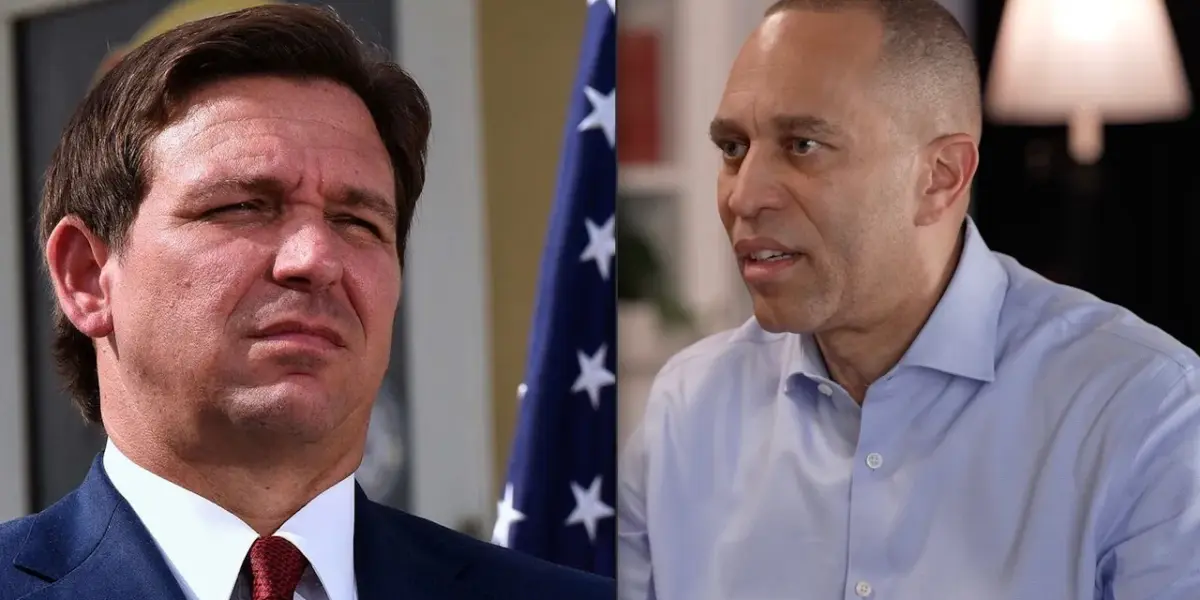
Democrats are signaling a new, aggressive strategy against gerrymandering, warning Florida Governor Ron DeSantis against redrawing congressional maps. Following recent victories, the party is prepared to fight back harder than ever to ensure fair elections.

Democrats Fight Back Against Gerrymandering, Warn Florida Governor
In the wake of significant Democratic victories, including a recent win in Virginia, a prominent Democratic leader is issuing a strong warning to Florida Governor Ron DeSantis. The message is clear: attempts to redraw Florida’s congressional map to favor Republicans will be met with fierce opposition. This warning comes as Democrats celebrate a string of electoral successes across the country, signaling a shift in their approach to political battles.
A New Strategy: Fighting Fire with Fire
The Democratic party is no longer content with simply protesting unfair practices. Recent wins in states like Wisconsin, Texas, and Louisiana show a renewed commitment to aggressive campaigning and strategic political action. These victories, often in traditionally Republican areas, demonstrate a growing ability to connect with voters and challenge established political norms.
The leader emphasized that this new approach is a direct response to Republican efforts to gerrymander electoral maps, aiming to secure permanent majorities. Democrats, he stated, will no longer engage in “unilateral disarmament.” Instead, they are prepared to fight back forcefully, mirroring the tactics used by their opponents.
The Florida Challenge
Florida’s current congressional map, already drawn to benefit Republicans in 2022, is once again at the center of a political storm. Governor DeSantis is reportedly considering further changes, a move that could put additional Republican incumbents at risk. This strategy mirrors a similar attempt in Texas, which is expected to yield fewer seats than initially predicted and could even cost Republicans a seat.
Many Florida Republicans are reportedly urging Governor DeSantis against this path, fearing it could backfire. The fear is that a heavily gerrymandered map will only highlight the party’s lack of positive policy achievements and create more opportunities for Democratic victories.
DeSantis Responds to Criticism
In response to the warnings, Governor DeSantis has publicly criticized the Democratic leader, resorting to personal attacks. However, the Democratic leader dismissed these attacks as posturing from a politician who is struggling. He characterized DeSantis as a “failed public servant” whose presidential ambitions are over and who is now facing internal opposition within his own state.
A Broader Political Landscape
This redistricting fight is seen as a microcosm of a larger political struggle. For years, Democrats have been criticized for not fighting back effectively against Republican strategies. Now, with a string of electoral wins, they feel empowered to challenge what they see as an unfair system.
The upcoming Supreme Court decision on Section 2 of the Voting Rights Act could significantly impact future elections, potentially gutting protections for minority voting districts. The 2030 census is expected to shift congressional seats, likely favoring Republican-leaning states. These factors add urgency to the current political battles.
Looking Ahead: The 2026 and 2028 Cycles
Democrats are focused on the 2026 elections, aiming to build on their recent successes. They believe Republicans have lost ground in the redistricting wars, and they expect this trend to continue. The strategy for the 2028 cycle is already taking shape, with a focus on states like New York, New Jersey, and Colorado.
The party is preparing for what they anticipate will be continued Republican efforts to suppress votes. To counter this, they are launching a large-scale voter protection effort involving various Democratic organizations, civil rights groups, and community leaders. This initiative aims to ensure free and fair elections across the country.
The Fight for Fair Elections
The conversation also touched on the broader issue of election integrity and Republican strategies to undermine it. Concerns were raised about efforts to seize ballots, ban mail-in voting, and implement stricter voter ID laws, such as the proposed “Save America Act.” Democrats view these as attempts to suppress votes rather than address the real concerns of the American people.
The Democratic leader stressed the importance of leveling the playing field and ensuring free and fair elections. He stated that Democrats are committed to fighting for policies that improve the lives of working and middle-class Americans while simultaneously working to protect the democratic process.
A Call for National Standards
While fighting current battles, Democrats remain committed to the idea of national standards for redistricting. They advocate for prohibiting partisan gerrymandering in every state, not just those with Democratic majorities. This commitment is reflected in their support for legislation that would ban such practices nationwide, even though it has historically lacked Republican support.
The hope is that recent electoral defeats will lead Republicans to reconsider their approach. The Democratic party is ready to work towards national legislation that ensures fair representation for all citizens, regardless of their state or political affiliation.
Why This Matters
This analysis highlights a critical moment in American politics. The Democratic party, energized by recent wins, is adopting a more aggressive stance against what they perceive as unfair political tactics, particularly gerrymandering. The warning to Florida Governor Ron DeSantis is a clear signal that the era of Democrats conceding ground in these battles may be over.
The stakes are high, involving the fundamental fairness of elections and the balance of power in Congress. As the country heads towards future election cycles, the strategies employed by both parties in drawing electoral maps and protecting voting rights will have a profound impact on American democracy.
Future Outlook
The focus is now on the upcoming election cycles, with a clear intention from Democrats to continue fighting for fair representation. The legal and political battles over redistricting and voting rights are far from over. The actions taken in the coming months and years will shape the future of American elections and the composition of its government.
The Democratic party is preparing for a sustained effort to counter Republican strategies, aiming to secure a more equitable political landscape. The fight for fair elections is ongoing, and the outcomes will be determined by continued engagement and vigilance from all sides.
Historical Context
Gerrymandering, the practice of drawing electoral district boundaries to favor one party, has a long history in the United States, dating back to the early 19th century. It has often been used to disenfranchise certain groups or solidify political power. The Voting Rights Act of 1965 was a landmark piece of legislation aimed at combating such discriminatory practices, particularly in the South.
However, recent court decisions and political maneuvering have raised concerns about the erosion of these protections. The current push and pull over redistricting reflects an ongoing tension between partisan advantage and the principle of fair representation, a debate that has shaped American politics for centuries.
Looking to the Next Battlefield
The next major confrontation is expected in Florida, where Democrats have vowed to fight any attempts to manipulate the congressional map. This commitment signals a new era of political engagement, where Democrats are prepared to contest every inch of the electoral battlefield to ensure a level playing field for all.
Source: Hakeem Jeffries issues THREAT to Ron DeSantis amid Virginia blowout (YouTube)

Related Articles

Virginia Dems Vow to Fight GOP ‘Fire With Fire’ After Election Wins
Virginia Democrats are adopting a more aggressive political strategy, vowing to "fight fire with fire" against Republican tactics following recent election victories. Speaker Don Scott declared that the party will no longer shy away from direct confrontation, believing voters want their representatives to defend democracy with equal force. The wins in Virginia are seen as a crucial bellwether for national trends and a potential blueprint for future pro-democracy movements.


Trump’s Approval Dips Amid Election Fraud Claims, Experts Question Leadership
Concerns are mounting over Donald Trump's declining approval ratings and his challenges to election results. Experts question his leadership and fitness for office, pointing to potential national security risks and a focus on personal gain over public service. The upcoming elections will be crucial in addressing these deeply rooted issues.


Virginia Vote Signals Democracy’s Resilience Amidst Political Turmoil
Recent events in Virginia show a growing resilience of democratic processes, with a key vote signaling a pushback against gerrymandering. This, alongside broader electoral trends, suggests a public desire for fair representation and strong leadership. The upcoming elections are highlighted as a critical moment to ensure checks and balances within the government.