Virginia Voters Back Temporary Redistricting Map
Virginia voters have approved a constitutional amendment allowing the state legislature to redraw congressional district maps. Governor Abigail Spanberger highlighted the plan's temporary and responsive nature, contrasting it with partisan efforts in other states. The measure passed by a narrow margin, with voters having the final say.


Virginia Voters Approve Redistricting Overhaul
Virginia voters have approved a significant change to how congressional districts are drawn. A constitutional amendment passed by voters will allow the state’s legislature to redraw district maps. This new process will be in place until 2030.
The change could greatly benefit Democrats, potentially helping them win 10 out of Virginia’s 11 congressional seats. Currently, Democrats hold six of those seats.
Governor Explains Support for the Amendment
Democratic Governor Abigail Spanberger explained her support for the redistricting change. She noted that individual voters in Virginia ultimately decided the issue through a referendum.
The movement for this change began after former President Trump suggested he was entitled to certain congressional seats. This prompted actions in other states, like Texas, where redistricting occurred without public input to favor specific outcomes.
A Responsive and Temporary Measure
Governor Spanberger emphasized that Virginia’s plan was designed to be responsive to actions in other states and temporary in nature. The plan also explicitly preserves the state’s bipartisan redistricting commission for the future.
This legislation had to pass the General Assembly twice before appearing on the ballot for voters to decide. This process ensured transparency, with the public understanding the maps they were voting on.
Voters Knew What They Were Approving
The governor stressed that voters understood the temporary and responsive nature of the redistricting plan. Millions of Virginians chose to support this step.
The referendum passed because people understood the current situation and wanted to take this action. While the state aims to preserve its bipartisan commission long-term, this measure was seen as a necessary responsive step for the present moment.
Concerns About a Redistricting ‘Arms Race’
The discussion touched on concerns about a potential ‘arms race’ among states regarding redistricting. Every ten years, after the census, district maps are redrawn.
There’s a worry that states might engage in tit-for-tat redistricting whenever they feel it’s needed, rather than sticking to the decennial schedule. Governor Spanberger acknowledged this as a valid concern.
Hopes for Federal Redistricting Reform
Governor Spanberger expressed her hope that when Democrats gain a majority in the House of Representatives, serious discussions about redistricting reforms will take place nationwide. She believes this is essential for how all 50 states approach the redistricting process. The commitment to Virginia’s bipartisan commission was highlighted as a key element of their approach.
Virginia’s Approach Contrasted with Texas
Virginia’s process was contrasted with actions taken in Texas. In Texas, after the President expressed entitlement to seats, the legislature redrew maps without voter input to appease him. Virginia’s approach involved drawing legislation carefully for the referendum.
The goal was to be responsive to the people and ensure the maps were temporary, explicitly preserving the bipartisan commission. The legislation then went to the people for a vote.
Transparency and Public Input
The General Assembly crafted legislation for the referendum that was carefully tailored. It was designed to be temporary and responsive, explicitly preserving the bipartisan commission for the future. This plan then went to the people for a vote.
Virginia held a special referendum in April, an unusual time for such a vote. The administration made it a mission to ensure people understood the referendum and the proposed maps.
Voters Made the Final Choice
The public was informed about the maps well in advance, allowing them to know what they were voting for. The final decision rested with the voters, a constitutionally required step in Virginia’s system.
This was seen as vital for ensuring the process was fair. The outcome in Virginia was presented as very different from the partisan effort in Texas, where the people were not given the final say.
Campaigning for the ‘Yes’ Vote
Governor Spanberger and her allies encouraged voters to approve the measure. However, there was a strong ‘no’ campaign, funded by millions of dollars in ads and mailers.
These campaigns aimed to misrepresent the governor’s and President Obama’s positions, attempting to mislead voters. Despite these efforts, the voters of Virginia made what the governor believes was the right choice.
A Narrow Victory
The referendum passed by a narrow margin of just three points. This outcome allows the legislature to implement the new map.
The next task for the party is to secure victories in the upcoming November elections. Governor Spanberger thanked the interviewer for their time.
Source: 'Responsive and temporary': Virginia's governor weighs in on voters approving redistricting overhaul (YouTube)

Related Articles

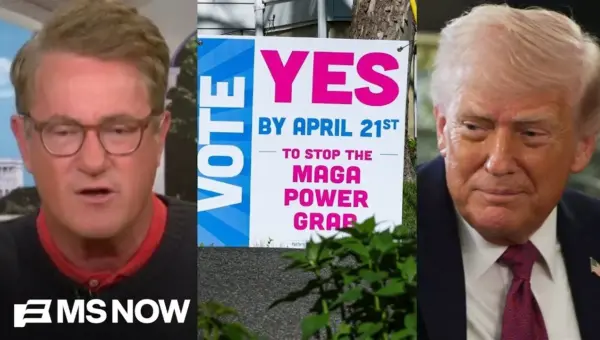
Virginia Redistricting Vote Fuels GOP Blame Game
Voters in Virginia have approved a constitutional amendment to redraw congressional districts, a move that has intensified criticism within the Republican party. Analysts suggest this decision, influenced by former President Donald Trump's strategies, could lead to significant losses for the GOP in the upcoming midterm elections.

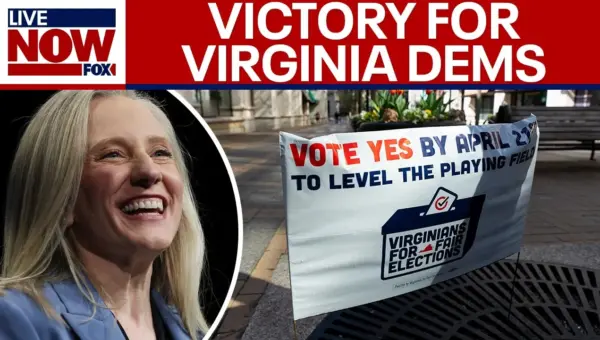
Virginia Voters Back Democrats in Redistricting Vote
Virginia voters have approved a redistricting amendment, giving Democrats a significant victory ahead of the midterm elections. The measure shifts redistricting power to the legislature, potentially creating a 10-1 Democratic advantage in congressional seats. The vote suggests sustained Democratic voter energy and highlights ongoing battles over fair representation.


Virginia Votes for Fairer Maps, Shaking Up Political Power
Virginia voters have approved a new redistricting measure, aiming for fairer electoral maps by 2026. Despite Republican legal challenges, proponents see this as a win for democracy. The decision highlights a broader debate about partisan gerrymandering and the need for Democrats to actively pursue fair representation.