Trump’s Memory Lapse Fuels Dementia Fears
Donald Trump's recent Fox News interview featured comments about Justice Ruth Bader Ginsburg's death that suggest he may not recall being president at the time. This "dementia moment" has reignited concerns about his cognitive health and ability to lead. Experts and social media users are debating the implications of these apparent memory lapses.

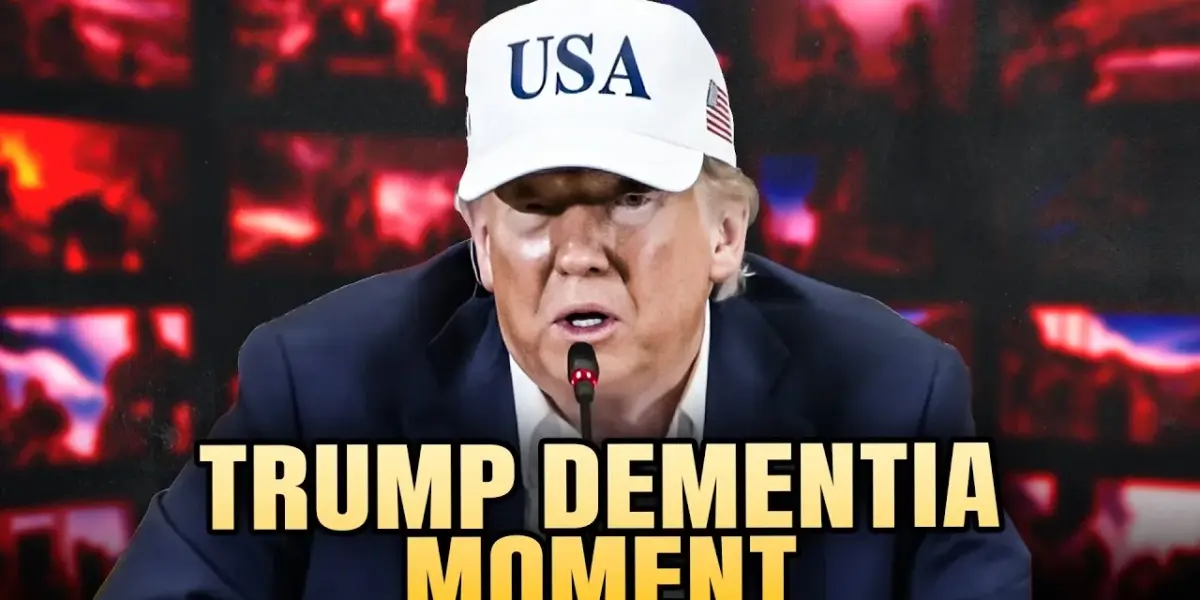
Trump’s Memory Lapse Fuels Dementia Fears
During a recent interview with Maria Bartiromo on Fox News, former President Donald Trump made comments about Justice Ruth Bader Ginsburg that have raised new concerns about his cognitive health. Trump appeared to suggest he was not president when Ginsburg passed away, a moment that has been widely described as a “dementia moment.” This gaffe has sparked renewed debate about his mental fitness for public office.
Trump’s exact words were, “Look what happened to Justice Ginsburg. She was not exactly a young woman. You had a Democrat with the liberal justice and the liberals to stick together.
They stick together like glue, not like the Republicans. She decided she would live forever and two minutes after the election, she went out and I got to appoint somebody.” This statement has left many confused, as it seems to disregard the clear timeline of events.
The Unmistakable Timeline
Justice Ginsburg passed away in September 2020. Donald Trump was the sitting President of the United States for the entirety of that year, including the period before and after the election.
He was not a new president who had just taken office; he was the incumbent president throughout 2020. This fact makes his comment about appointing someone “two minutes after the election” particularly perplexing.
The confusion in Trump’s statement is stark. He seemed to imply that he was not president during the period when Ginsburg died and when he made the appointment.
This creates a puzzling contradiction, as he was indeed president for all of 2020, a leap year with 366 days. Some have humorously labeled this the “Schrodinger administration,” where he was somehow both president and not president at the same time.
Public and Expert Reactions
Social media quickly lit up with reactions to Trump’s interview. Many users pointed to this as evidence of cognitive decline, with some calling it a “dementia moment.” Harper’s reporter Scott Horton noted that Trump “has nothing but grandpa moments.” Others drew comparisons to how President Biden is often held responsible for events during his term.
A user on Blue Sky, gluten-free Sitan, questioned the double standard, asking, “Hey, everyone else acts like Biden was president in 2020 and responsible for everything that happened. Then why not pretend Biden nominated Amy Coney Barrett, too?” Child psychologist Ellen Bratton commented on the difficulty some people have in facing such issues, stating, “The pathology is so malignant, malignant, and preposterous, it’s not hard to understand why some people look away and ignore.” Another user, Jennifer Lee, bluntly asked, “How much longer can Republicans pretend he’s not batshit crazy?”
A Pattern of Memory Lapses
This is not the first time Donald Trump has appeared to forget when his presidency occurred. In fact, it’s not even the first time in recent months that he has seemed unsure about his term in office. These repeated instances suggest a potential worsening of his memory or cognitive abilities.
Adding to the concerns, Trump’s voice during the interview was hoarse. When asked by Bartiromo about his voice, he admitted he had been “screaming at stupid people earlier in the day” until he lost it.
He described screaming so badly at his administration that his voice was gone. This outburst, he claimed, was due to his frustration with his staff.
Agitation as a Symptom
Dementia can sometimes lead to changes in personality, including increased agitation. While not everyone with dementia experiences this, it is a common enough symptom that it has a name and even specific medications. Trump’s frequent outbursts on Truth Social, his public statements, and his interactions with reporters could be seen as manifestations of this agitation.
If Trump spent his morning screaming at staff, as he admitted, this should not be viewed as a sign of strong leadership or a commitment to accountability. Instead, it should be considered a potential symptom of his underlying health condition. His own admission during the interview brings this potential symptom to light for public scrutiny.
Why This Matters
The cognitive health of any political leader is a matter of public interest, especially for someone seeking or holding the highest office in a nation. When a candidate or former president displays apparent memory lapses or signs of agitation, it raises serious questions about their ability to perform the demanding duties of leadership. These duties require clear thinking, sound judgment, and consistent recall of facts and events.
The public has a right to assess the mental fitness of those who wish to lead. The comments made during the Fox News interview, coupled with past instances, provide fodder for this assessment. Voters and observers are left to weigh these concerns against other aspects of a candidate’s platform and record.
Implications and Future Outlook
These kinds of public moments can influence public perception and voter sentiment. For those already concerned about Trump’s cognitive state, these incidents confirm their worries. For his supporters, they may be dismissed as minor gaffes or unfair attacks by the media.
The trend of repeated memory issues, if it continues, could become a more significant factor in political discussions. It also highlights the broader challenge of discussing aging and cognitive health in the public sphere without resorting to disrespectful or stigmatizing language, while still acknowledging the legitimate concerns about a leader’s capacity.
Historical Context
Concerns about the health and age of presidents are not new. Throughout history, leaders have faced scrutiny over their physical and mental well-being. However, the widespread availability of video and social media today means that every word and gesture is amplified and scrutinized in near real-time, making such moments far more impactful.
The discussion around Justice Ginsburg’s death and subsequent appointment of Justice Amy Coney Barrett was a major event in the 2020 election cycle. Trump’s misremembering of his role in this significant event is notable given its recency and political importance.
The ongoing discussions about Donald Trump’s cognitive state will likely continue, especially as he remains a prominent figure in politics. His upcoming public appearances and interviews will be closely watched for any further signs or statements that could inform these ongoing debates about his fitness for office.
Source: Trump’s Fox Interview Prompts New Dementia Concerns (YouTube)

Related Articles
Trump’s Iran Deal Sparks GOP Division, Fuels Democratic Fire
Donald Trump's Iran strategy is creating significant division, with some Republicans praising his actions while Democrats and others criticize a perceived strengthening of Iran. The debate extends to domestic policies, with Democrats highlighting economic struggles and conditions at immigration detention centers. These contrasting viewpoints are shaping the political discourse leading up to upcoming elections.

Trump’s ‘Corner Store’ Remark Sparks Out-of-Touch Fears
Donald Trump's recent questioning of the term "corner store" has sparked debate about his connection to everyday Americans. Critics argue the remark, along with past comments about groceries and affordability, shows a disconnect from ordinary people's lives. This raises questions about the long-term effectiveness of his relatability strategy.

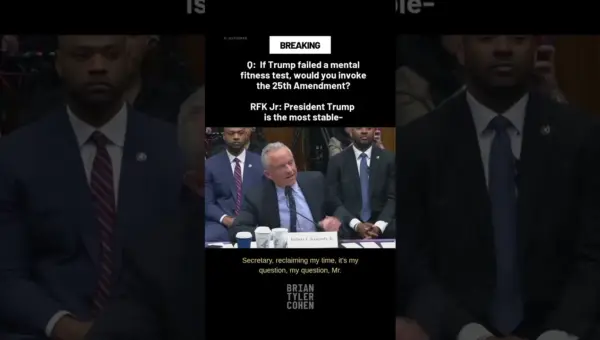
RFK Jr. Declares Trump ‘Most Stable’ Amidst Fitness Debate
Robert F. Kennedy Jr. has called Donald Trump the "most stable" president, sparking debate. This statement contrasts with concerns raised about Trump's mental fitness for office. The discussion touches on the 25th Amendment and the importance of a leader's stability.