UK Govt Faces Global Crises, Aid Cuts Spark Outcry
Former UK Foreign Secretary David Miliband warns that governing is tougher than ever amidst escalating global conflicts and significant humanitarian needs. He highlights the widening gap between aid requirements and global funding, citing IRC's "New World Disorder" report. Miliband also discusses the geopolitical implications of the Iran conflict and draws historical lessons for effective governance.

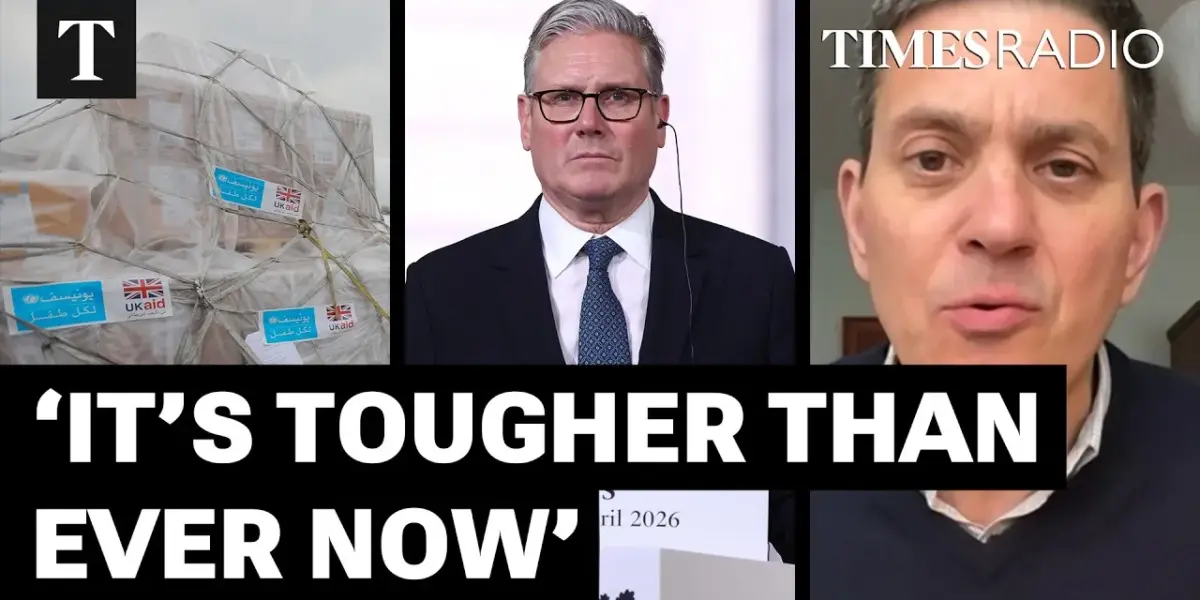
Global Instability Strains UK Governance, Says Ex-Foreign Secretary
Former British Foreign Secretary David Miliband stated that governing the UK, both at home and abroad, is currently “tougher than ever.” Speaking from his role as president of the International Rescue Committee (IRC), Miliband highlighted the escalating global conflicts and humanitarian needs. He noted that the IRC, founded by Albert Einstein in the 1930s, is now operating in over 40 war-affected countries.
Humanitarian Crisis Deepens Amidst Aid Cuts
Miliband described the current situation as deeply traumatic for aid workers on the ground, citing personal experiences in Syria and Lebanon. He revealed that 60 conflicts are active globally, leading to an unprecedented rise in civilian casualties.
Miliband pointed out that more civilians are now killed in conflicts than soldiers, a significant and disturbing trend. He also lamented the timing of aid budget cuts, particularly from the US and UK, calling such actions “very short-sighted” given the overwhelming humanitarian needs.
“New World Disorder” Report Highlights Aid Gap
The IRC’s recent report, “New World Disorder,” illustrates a widening gap between global humanitarian needs and the available aid. Miliband explained that the global humanitarian budget has been cut by approximately 50% in the last year, with total aid and development budgets reduced by 25%.
This trend contrasts with the European Union, which is planning to increase its aid budget and views itself as a crucial player in global development and humanitarian efforts. Norway also remains committed to its target of allocating 1% of its national income to overseas aid.
Effectiveness and Value of Overseas Aid
Miliband stressed the importance of discussing the effectiveness and value of aid, not just the needs. He provided an example of the IRC delivering 30 million vaccine doses in war-torn countries over three years, at a low cost per dose.
He argued that this represents remarkable value for money and is an insurance policy for both the recipients and the wider world. Miliband also touched upon the argument that defense spending and aid spending are interconnected, with aid potentially fostering stability and reducing migration.
Defense Spending Dwarfs Aid, Yet Impacts Intertwined
While acknowledging the argument that aid can support security goals, Miliband noted the vast difference in scale between defense and aid spending. In the UK, defense spending accounts for about 2.3-2.4% of national income, while aid spending is around 0.3%.
He cited former US Defense Secretary Jim Mattis, who famously stated that without development aid, even more bullets would not be enough to solve security problems. Miliband also highlighted a report by the Center for Global Development, which suggested that aid cuts in 2025 directly contributed to a 5% increase in civilian fatalities.
Iran Conflict’s Ripple Effects and Geopolitical Gains
Turning to the conflict involving Iran, Miliband described the situation as going “badly for everyone,” with numerous losers and no clear winners. He suggested that the Trump administration now wishes to conclude the conflict, while Iran feels it has made its point, particularly regarding control over the Strait of Hormuz. Miliband emphasized the critical importance of a ceasefire in Lebanon, where 1.2 million people have been displaced.
He noted that the Israeli invasion of Lebanon in 1982 led to the creation of Hezbollah. The potential opening of the Strait of Hormuz is significant, with widespread consequences for fertilizer deliveries, humanitarian supplies, inflation, and interest rates. Vladimir Putin and Russia are seen as major beneficiaries of the ongoing conflict.
Lessons from History for Governing
Reflecting on an essay he wrote for the New Statesman, Miliband discussed the challenges facing all governments globally, exacerbated by economic pressures, social changes, and social media. He believes successful governments are built on a clear cause, signature policies with appropriate resources, and a strong mission to explain their actions. Drawing parallels with the first Labour government in the 1920s, Miliband stressed that while current circumstances differ, the core lessons about having a mission, implementing key policies, and communicating effectively remain crucial for making history and scoring political goals.
Controversy Over Mandelson Appointment
Addressing a recent controversy regarding Peter Mandelson’s potential appointment to a key role in the Foreign Office after failing vetting, Miliband urged caution. He stated that commenting on such matters requires having all the facts.
Miliband emphasized the need for rigorous and serious vetting processes for significant appointments, noting that he was unsure of the specific circumstances surrounding this case. He indicated that clarity on the facts is essential before making judgments.
Source: Governing The UK At Home And Abroad Is 'Tougher Than Ever' | David Miliband (YouTube)

Related Articles

PM’s Ambassador Row Derails “Good Week” Momentum
Prime Minister Keir Starmer faces calls to resign after a scandal involving the vetting of Peter Mandelson for the US ambassador role. The controversy has derailed a week previously seen as a success for Starmer, raising questions about government transparency and the Prime Minister's credibility.


19-Year-Old Leads UK Council, Joins Elite Young Power List
George Finch, a 19-year-old representing Reform UK, has been appointed leader of Warwickshire County Council and recognized on the Sunday Times Young Power List. He discussed the responsibilities of his role and his views on public service, drawing parallels to other demanding professions for young people. Finch also shared his perspective on handling public service disputes, emphasizing the need to support the majority of residents.
PM Faces Incompetence Claims Amid Envoy Vetting Scandal
Prime Minister Rishi Sunak faces accusations of incompetence and misleading Parliament after the Foreign Office reportedly overruled security vetting for Peter Mandelson's appointment as US ambassador. Opposition leaders are calling for his resignation. Analyst Adam Boulton compares the situation to Liz Truss's tenure, citing a pattern of poor judgment in appointments.