New Alzheimer’s Drugs Show Effect But Fail Patients
New drugs designed to combat Alzheimer's show a measurable effect on the disease, but this impact is too small to significantly help patients, according to a recent analysis. Scientists are now exploring more complex causes and combination therapies, drawing parallels to successful treatments for conditions like HIV.

New Alzheimer’s Drugs Show Effect But Fail Patients
Recent reports on new Alzheimer’s drugs have caused confusion. These medications were once seen as breakthroughs. They were thought to slow down the disease’s progress.
However, a new analysis of drug trials suggests a different story. The drugs do have a measurable effect on the disease. But this effect is too small to make a real difference for most people with Alzheimer’s.
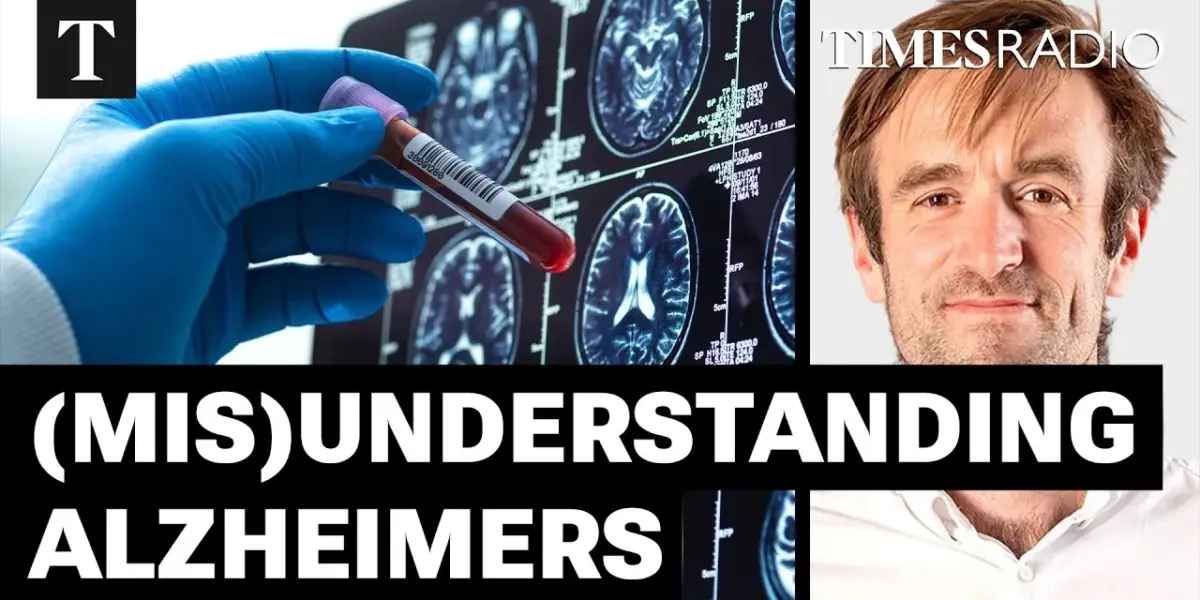
Tom Whipple, a science writer, discussed these findings in a recent interview. He explained that the drugs work by removing a protein called amyloid from the brain. This protein has been linked to Alzheimer’s for decades.
Scientists first noticed these sticky proteins in the brain of a woman named Augusta in the early 1900s. This led to the “amyloid cascade hypothesis,” which suggested that amyloid buildup causes Alzheimer’s.
Decades of Research Focused on Amyloid
For 30 years, researchers have focused on developing drugs to target amyloid. The new drugs discussed are a result of this long-term effort.
They have shown statistically significant results. This means that when looking at large groups of people, the drugs do appear to be doing something to the disease process.
However, the new report concludes that the effect is not clinically significant. This means that for any one person taking the drug, the change is too small to be noticed in their daily life.
Whipple described this situation as a confusing twist in the scientific journey to understand and treat Alzheimer’s. He noted that while these drugs are scientifically active, they are not very effective for patients.
Three Possible Explanations for the Results
Whipple outlined three main theories to explain why these amyloid-targeting drugs aren’t working as well as hoped:
- Timing is Everything: One possibility is that the drugs are not given early enough. Amyloid builds up in the brain for years, even decades, before symptoms appear. If these drugs are only effective when given very early, perhaps in a person’s 50s before symptoms start, then the amyloid hypothesis might still hold true.
- It’s More Complex Than We Thought: Another theory suggests that scientists were too focused on amyloid alone. The disease might be more complex, involving other factors like another protein called tau and inflammation. Future treatments might need to combine therapies, similar to how HIV is treated with multiple drugs. This approach could target amyloid, tau, and inflammation all at once.
- The Wrong Target: A third, more challenging idea is that amyloid was never the true cause of Alzheimer’s. It might have been just a symptom or a byproduct of another underlying issue. If this is the case, then 30 years of research and billions of dollars spent on amyloid-focused drugs may have been a waste.
Lifestyle Factors Play a Role
While the focus has been on drugs, lifestyle choices also impact Alzheimer’s risk. Whipple confirmed that things like eating well, exercising, and not smoking are linked to a lower risk of developing the disease.
However, he also stressed that genetics play a significant role. If someone is predisposed to Alzheimer’s, they have a much higher chance of getting it.
Ultimately, Whipple suggested that for many, a “cure” might be indistinguishable from a significant delay. If treatments can postpone the onset of Alzheimer’s until after a person has died from other causes, that would be a major victory. This perspective highlights the ongoing challenge and the need for continued research into the complex nature of Alzheimer’s disease.
The scientific community is still working to unravel the mysteries of Alzheimer’s. While the current amyloid-targeting drugs have fallen short of expectations, they have provided valuable data. This information is crucial for guiding future research.
Scientists are now exploring more complex approaches and looking beyond amyloid alone. The hope is to find treatments that can truly make a difference for those affected by this devastating condition.
Source: Why New 'Wonder Drugs' Don't Solve The Mystery Of Alzheimers | Tom Whipple (YouTube)

Related Articles
New Brain Tech Offers Hope for Parkinson’s Patients
A new adaptive Deep Brain Stimulation (DBS) technology is transforming the lives of Parkinson's patients. This advanced system adjusts electrical pulses in real-time to better manage symptoms. Early results show significant improvements in daily function and quality of life, offering renewed hope for many.


Parkinson’s Cases Surge, New Treatments Emerge
Parkinson's disease cases have surged 50% in 30 years, with experts predicting a doubling by 2040. Actor Terry Crews' wife, Rebecca King Crews, revealed her diagnosis and recent non-invasive brain surgery. Doctors point to lifestyle factors like diet, sleep, and exercise as key prevention strategies.


Parkinson’s Cases Surge, New Hope Emerges
Parkinson's disease cases have surged by 50% in 30 years, with predictions of doubling by 2040. Rebecca King Crews's recent non-invasive surgery offers new hope. Experts stress lifestyle changes for prevention amidst rising global health concerns.