Rollins: “Painful” Shield Breakup Led to WWE’s Top Stars
Seth Rollins reflects on the "painful" decision to break up The Shield, revealing the WWE's sudden announcement and how the split ultimately propelled him, Roman Reigns, and Jon Moxley to the top of the industry. He also discusses the audience's role in character development and the ease of playing a heel.

Rollins: “Painful” Shield Breakup Led to WWE’s Top Stars
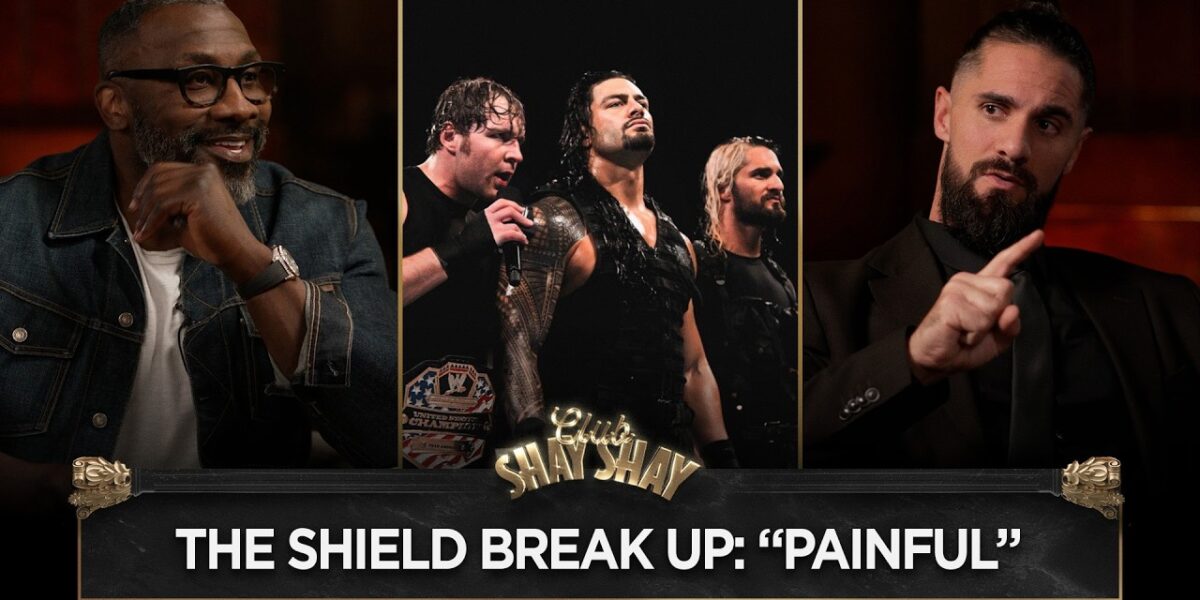
In a candid reflection on one of the most seismic shifts in modern WWE history, Seth Rollins described the moment he was tasked with breaking up The Shield as “painful.” The iconic faction, comprised of Rollins, Roman Reigns, and Dean Ambrose (now Jon Moxley), was a dominant force, but their reign was always destined for a dramatic conclusion. However, the timing and execution of their split proved to be a difficult pill to swallow for all involved.
Speaking on Club Shay Shay, Rollins revealed that the initial pitches to break up The Shield came months earlier, but the trio resisted. “We were like, ‘No, man. We’re not ready.
We’re not ready for that,'” Rollins explained. “We felt like we had a lot more in the tank.” The group was enjoying a successful run as fan favorites, culminating in a series of matches against Evolution after WrestleMania. They were “on cloud nine,” feeling great about their momentum as a unit.
An Unexpected Turn of Events
The plan, however, was irrevocably set in motion. “They brought us into the office and they just said, ‘Here’s what we’re going to do tonight,'” Rollins recounted. The WWE creative team knew that if the members of The Shield were given advance notice, they would try to fight the decision.
“Seth is going to be the one to pull the trigger,” they were told. The revelation left a palpable silence in the room.
“I remember like in the room just the silence and when we walked out of the room it was like what do we what do we do you know like do do we can we stop this like are we doing the right thing?”
The decision, while difficult, ultimately paved the way for unprecedented individual success. Rollins acknowledged the profound impact of that moment, stating, “what it set in motion… Has been a complete paradigm shift in our industry.” He pointed to himself, Roman Reigns, and Jon Moxley as currently being at the “very tippy top” of the wrestling world, a status he believes would not have been possible had The Shield remained intact.
The Audience as the Ultimate Arbiter
The conversation then shifted to the intricate dance between WWE creative and the audience, particularly regarding character alignments. “Ultimately, the audience.
Ultimately, the audience does,” Rollins asserted when asked who determines whether a performer is a good guy or a heel. While creative may suggest directions, it’s the crowd’s reaction that truly dictates a performer’s standing.
Rollins cited Roman Reigns as a prime example. “Roman Reigns is a guy that they wanted to be a baby face, the top baby face for a long, long time,” he said. Despite persistent efforts to push Reigns as a hero, the audience resistance was evident.
It wasn’t until his heel turn in 2020-2021 that Reigns truly found his footing and ascended to superstardom. “He became more comfortable. He became, you know, an honest version of his character and of himself,” Rollins noted, adding that Reigns’ success as a heel ultimately allowed him to become the massive babyface star he is today.
Another compelling case was Brian Danielson (Daniel Bryan), whose journey was heavily influenced by fan sentiment. Rollins also touched upon his wife, Becky Lynch, and how the audience propelled her into becoming a top female babyface after a key moment at SummerSlam 2018 where she slapped Charlotte Flair. “The audience took her into, you know, the biggest female baby face that’s ever lived in this company.”
Heel vs. Babyface: The Easier Path
When questioned about the difficulty of switching between heel and babyface roles, Rollins suggested that neither is inherently difficult if the transition occurs at the right time. However, he believes maintaining a babyface persona long-term presents a greater challenge.
“I find I just think it’s easier to be a heel. It’s people people naturally…
They just naturally want to hate. You know, the world’s just full of haters.”
He elaborated that heels have more freedom to make mistakes, as missteps can often be spun into further heat from the audience. Babyfaces, conversely, must adhere to a stricter code, and any slip-up can quickly erode fan support. “It’s hard for you to screw up, you know, because you screw up and they laugh at you and then you get mad that they laugh at you and then they get mad at then they hate you more.”
The Importance of Signature Moves and Audience Connection
The discussion also highlighted the critical role of signature moves and catchphrases in connecting with the audience. Rollins emphasized their importance in storytelling, allowing fans to feel like active participants rather than passive observers.
“Your audience gets like they get clued into it. You know, it’s that’s one of the things about our thing, our business is the audience being a having a key role in the storytelling,” he stated.
He referenced iconic examples like The Rock’s “Finally, The Rock has come back to…” and John Cena’s “You can’t see me,” which signal the imminent end of a match. Rollins also acknowledged his own signature elements, like “I am a visionary” and the crowd’s rendition of his theme song, as crucial for fan engagement.
Navigating the Ring with Giants
The conversation briefly touched upon the physical demands of wrestling, particularly when facing larger opponents. Rollins recalled the immense strength required to work with giants like Big Show and Mark Henry.
“When I was getting Big Show up off the ground… You still got to be, you know, strong enough to hold hold a man that size up and and put down his back.”
He underscored the necessity of cooperation from these larger performers. “You just hope that you catch him on a good day,” Rollins said, referring to the unpredictability of working with Superstars of that magnitude.
The success of a match often hinged on their willingness to cooperate, especially given their immense power. “If they don’t, you’re is over.”
The interview concluded with an invitation to join Club Shay Shay, promising more intimate conversations with a variety of guests.
Source: Seth Rollins Reflects on Breaking Up The Shield: “That Was Painful” I CLUB SHAY SHAY (YouTube)

Related Articles
Ripley Brings Brutality to WrestleMania 42 Stage
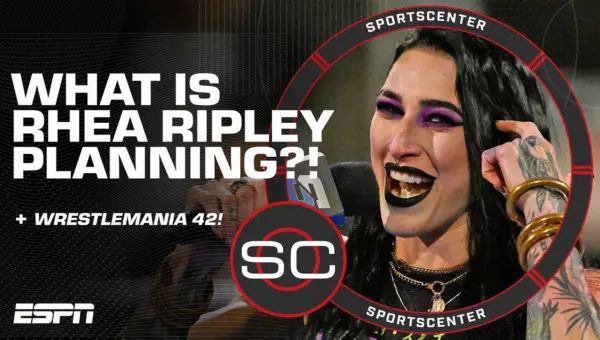
Rhea Ripley is ready to bring 'brutality' to Jade Cargill at WrestleMania 42. With seven WrestleManias under her belt, Ripley feels physically and mentally prepared for the championship match. She also discussed her ongoing issues with Asuka and Kairi Sane, alongside her former tag team partner Io Shirai.

Finn Balor Unleashes Demon for WrestleMania Revenge
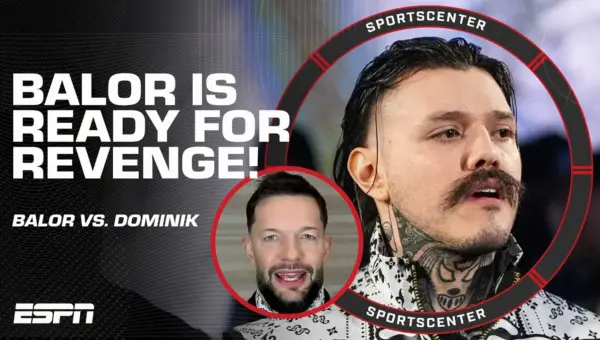
Finn Balor is bringing back his legendary 'Demon' persona to face Dominik Mysterio at WrestleMania. After being kicked out of The Judgment Day, Balor seeks revenge for a past loss and promises a painful encounter for Mysterio. Dominik, however, dismisses Balor's threats, asserting his own importance within the faction.

WrestleMania 42: Key Questions Answered in Vegas!
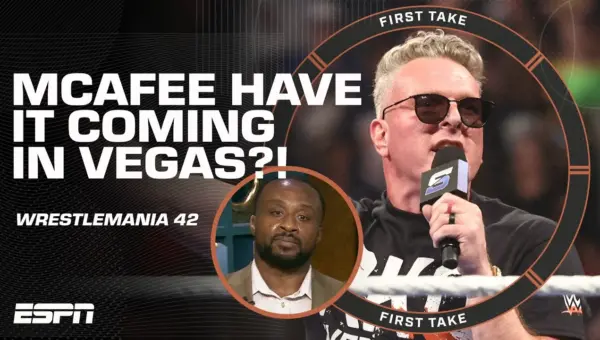
As WrestleMania 42 approaches, First Take discusses the burning questions surrounding the event. From Rhea Ripley's potential comeback to Jade Cargill's big test and the rise of Omos, key rivalries and potential breakout stars are in focus.