Asteroid Secrets Revealed by Light Curve Analysis
New analysis of asteroid light curves is revealing unprecedented details about their rotation, shape, composition, and density. This technique allows scientists to understand these celestial bodies without direct contact, offering vital insights for planetary defense and understanding solar system origins.

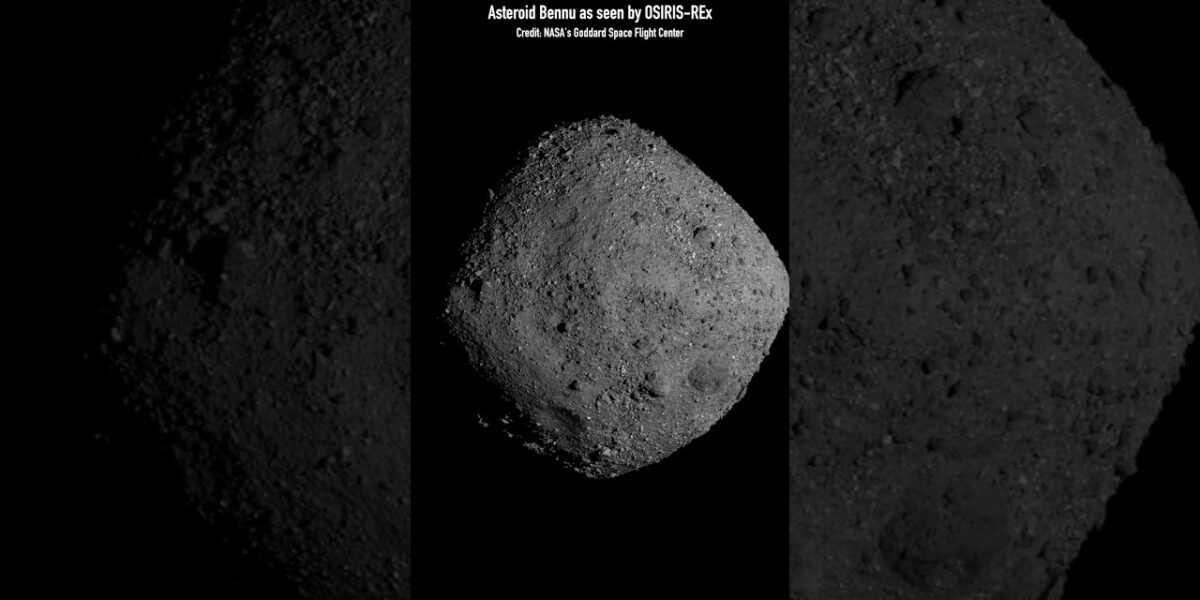
Asteroid Secrets Revealed by Light Curve Analysis
Our solar system is a cosmic junkyard, populated by billions of asteroids, remnants from the formation of the planets. For centuries, these rocky and metallic bodies have captivated scientists, offering clues to our solar system’s chaotic past. Now, innovative analysis of asteroid ‘light curves’ – the way their brightness changes over time – is unlocking unprecedented details about their rotation, shape, composition, and even density, painting a more vivid picture of these celestial wanderers.
Decoding Asteroid Personalities Through Light
A recent study by Green Street and collaborators has delved deep into the light curves of approximately 2,000 asteroids, revealing a wealth of information previously hidden in plain sight. This technique, akin to a cosmic fingerprint, allows astronomers to understand individual asteroids without the need for direct physical contact or costly sample return missions.
Rotation Speed: The Heartbeat of an Asteroid
One of the most significant pieces of information gleaned from light curves is an asteroid’s rotation period. As an asteroid tumbles through space, different facets of its surface, with varying reflectivity, catch the Sun’s light. These fluctuations in observed brightness, when tracked over time, reveal how quickly the asteroid completes one full spin.
For instance, the study highlighted an asteroid with a rotation period of just 1.1 hours, meaning it completes a full rotation in less time than it takes to boil an egg. This rapid spin is a crucial indicator of the asteroid’s structural integrity.
Shape and Roundness: From Spheres to Spuds
The amplitude of the light curve variation – the difference between the brightest and dimmest points observed – provides insights into an asteroid’s shape. A small amplitude suggests a nearly spherical object, while a large swing indicates a more elongated or irregular form. This allows scientists to distinguish between asteroids that are relatively round and those that are more potato-shaped, offering a visual approximation of their morphology.
Density Clues from Spin Rate
Perhaps one of the most surprising revelations is how rotation speed relates to an asteroid’s density and internal structure. Asteroids are typically thought of as loose agglomerations of rocks held together by gravity. However, if such a loosely bound object spins too rapidly, the centrifugal force would overcome gravity, causing it to break apart.
Therefore, asteroids that rotate faster than approximately every two hours are likely to be solid, monolithic bodies, rather than rubble piles. This gives scientists a crucial way to infer internal strength and composition.
Color: A Window into Composition
The color of an asteroid, determined by measuring its brightness across different wavelengths of light (like red, green, and blue), offers a direct link to its surface composition. Different minerals and materials reflect light differently.
By analyzing the spectrum of reflected light, astronomers can identify the presence of key elements and compounds. The study identified one asteroid as likely being rich in carbon, based on its specific color signature derived from observations through different colored filters.
A Case Study: The Carbon-Rich Wanderer
The Green Street study provided a concrete example: an asteroid approximately 200 meters in diameter. Its light curve revealed a rapid rotation of 1.1 hours and a significant amplitude, indicating an elongated shape, roughly twice as long as it is wide.
The color analysis, comparing brightness through red, green, and blue filters, strongly suggested a carbon-rich composition. This single analysis provided a comprehensive profile of a specific asteroid, showcasing the power of light curve studies.
Historical Context and Future Prospects
The study of asteroids has a long and rich history, dating back to the discovery of Ceres in 1801. Early astronomical observations relied on simple telescopes to detect these faint objects.
Over time, techniques have evolved, from photographic plates to sophisticated digital detectors and automated sky surveys like Pan-STARRS and the Catalina Sky Survey, which are crucial for discovering and tracking near-Earth objects. Light curve analysis has been a fundamental tool in this evolution, enabling astronomers to characterize asteroids discovered by these surveys.
The implications of this research are far-reaching. Understanding asteroid composition and structure is vital for planetary defense. By accurately characterizing potentially hazardous asteroids, we can better predict their trajectories and develop strategies for deflection if necessary.
Asteroids are pristine relics from the early solar system, holding clues to the conditions under which our planets formed. Studying their composition can clarify the delivery of water and organic molecules to early Earth, potentially informing our understanding of the origins of life.
What Comes Next?
The ongoing analysis of light curves, empowered by increasingly sensitive telescopes and advanced computational methods, promises to reveal even more about the asteroid population. Future missions, such as NASA’s Psyche mission to a metal-rich asteroid, will provide direct ground truth for these remote sensing techniques. As we gather more data, we can refine our models of asteroid formation, evolution, and distribution, contributing to a more complete understanding of our cosmic neighborhood and our place within it.
Source: How we know stuff about asteroids (YouTube)

Related Articles

Gravitational Waves Reveal Universe’s Deepest Secrets
Humanity's ability to detect gravitational waves has advanced dramatically, with observatories now capturing nearly one black hole merger daily. These cosmic events are not only spectacular but also crucial for testing Einstein's theories and understanding the universe's fundamental nature. Future upgrades promise even greater insights.

Cosmic Hum Hints at Gigantic Black Hole Mergers
Astronomers are using networks of rapidly spinning pulsars, nature's precise cosmic clocks, to detect the faint hum of merging supermassive black holes. New research is now focusing on pinpointing individual merger events, moving beyond the general background noise to understand these colossal cosmic collisions.

Artemis II Astronauts Set New Human Distance Record
The Artemis II mission set a new human distance record, reaching 413,145 km from Earth. The mission also established a record for the greatest distance between two groups of humans, with astronauts on China's Tiangong space station being 419,656 km away from the Artemis II crew.