Trump’s Iran Policy Aids Russia, Hurts Europe, Expert Warns
A leading Russian finance expert warns that President Trump's actions regarding Iran and Russia are a "gift" to Vladimir Putin, enabling Moscow's war in Ukraine while harming Europe's energy security. The expert suggests Trump's policies prioritize business over geopolitical stability.

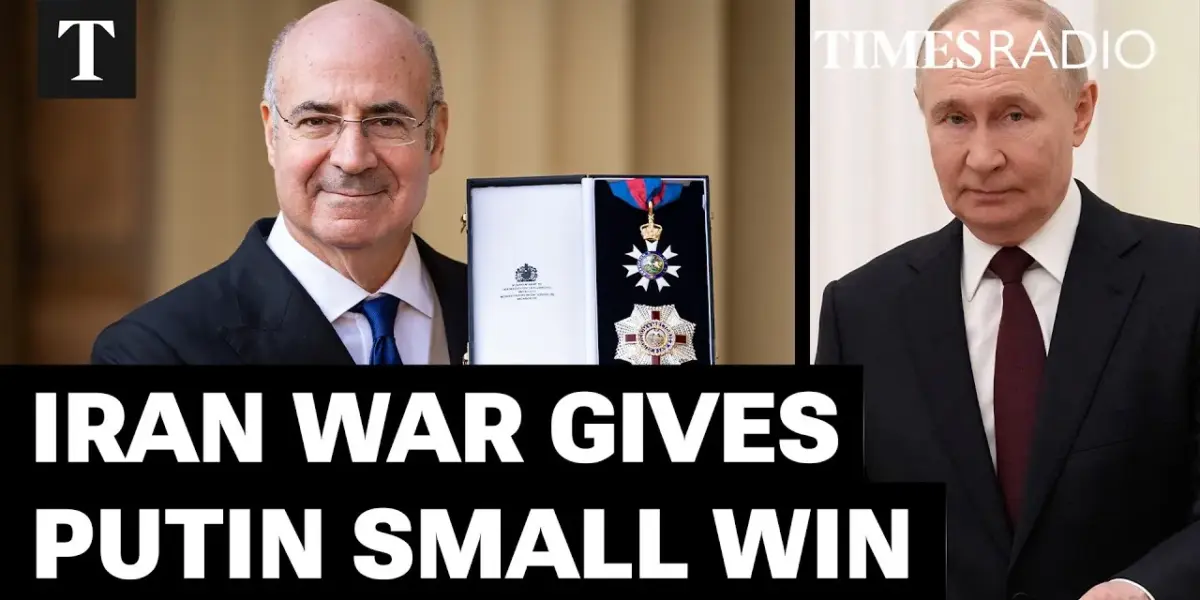
Global Geopolitics Shift as Trump’s Actions Benefit Russia
In a stark assessment of the current geopolitical landscape, a prominent Russian finance expert and head of the Global Magnitsky Justice Campaign, Sir Bill Browder, has warned that President Trump’s policies regarding Iran and Russia are inadvertently strengthening Moscow’s war efforts in Ukraine while severely disadvantaging Europe.
Browder’s comments, made in a recent interview, center on the implications of President Trump’s suggestion to Vladimir Putin about potentially lifting sanctions on Russian oil. According to Browder, such a move would provide a critical lifeline to Russia, enabling it to sustain its protracted conflict in Ukraine.
Sanctions Relief: A “Biggest Gift” to Putin
“This is absolutely the worst thing that could possibly happen,” Browder stated, referring to the prospect of lifting sanctions on Russian oil. He explained that the four-year-long war in Ukraine has been sustainable for Russia primarily because President Putin can afford to finance it.
“He was starting to get weakened as the oil price was down and as the Russian oil price in particular was down,” Browder noted. “And all of a sudden, sort of completely out of left field, he’s been given this total reprieve.”
The lifting of sanctions, coupled with rising oil prices, would allow Russia to sell its oil at market rates to any willing buyer, a scenario Browder described as “the biggest gift he could ever get. It’s an absolute abomination.”
“If the sanctions are lifted, the fact that the oil price is up, and the fact that he can now sell his oil at the market price to whoever he wants is the biggest gift he could ever get.”
— Sir Bill Browder
Trump’s Russia Policy: A Business-Centric View?
Browder expressed bewilderment at President Trump’s approach to Russia, questioning the rationale behind actions such as suspending military aid to Ukraine and seemingly pushing for Ukraine’s surrender. “His entire approach to Putin and to Russia doesn’t make any sense.
And except if you look at it in the prism of business,” Browder posited. He suggested that Trump and his associates prioritize business dealings and financial gain, viewing Ukraine as an obstacle to these plans.
Putin’s War Aims: Power and Survival
Addressing the stalled peace talks between Russia and Ukraine, Browder asserted that Vladimir Putin has no genuine interest in peace. “He needs the war in order to stay in power,” Browder explained, drawing parallels to Machiavellian strategy. “If he didn’t have a war, the Russian people would say, ‘Why are we so badly off after 25 years of dictatorship?'” Creating a foreign enemy and engaging in war, Browder argued, is Putin’s method to distract from domestic issues and maintain his grip on power.
Browder clarified that Putin’s definition of peace would involve the collapse and surrender of Ukraine, a condition that is unacceptable to Ukrainian leadership. He views the narrative of ongoing peace talks as a tactic by Putin to gain time, wear down international resolve, and await opportune moments, such as the potential lifting of sanctions, to continue the war.
Europe’s Energy Dilemma Amidst Middle East Tensions
The conflict in the Middle East adds another layer of complexity, potentially pushing Europe back towards Russian energy supplies. Browder highlighted the vulnerability of global oil markets, particularly if the Strait of Hormuz is closed. “If the Middle East can’t supply oil, they…
Are responsible for 20% of the oil going through the Strait of Hormuz. If that 20% of the oil is off the markets, then people are going to be scrambling for oil elsewhere,” he stated.
In this scenario, Russia, which is not directly impacted by the Strait of Hormuz closures, finds itself in a favorable position. “Russia is sort of sitting in, as they say, the catbird seat, where they don’t have to go through the Strait of Hormuz, their oil is ready to go to whoever wants to buy it,” Browder observed. He concluded that as long as the conflict persists, “Putin is by far the biggest winner.”
Uncertainty Surrounds Trump’s Iran War Plan
Adding to the volatile situation, Iran has vowed to continue its fight against the U.S., despite President Trump’s claims that the conflict would end swiftly. Iran’s foreign minister has rejected negotiations, and its Revolutionary Guards have indicated they, not the President, will determine the war’s conclusion. Trump’s assertion that his war plan is ahead of schedule reportedly led to a temporary drop in oil prices, though he simultaneously issued threats of severe retaliation if Iran moves to close the Strait of Hormuz.
Assessing the Iran Conflict’s Impact and Rationale
Tom Rivers, a former correspondent for ABC based in London, offered a perspective on the unfolding events. He acknowledged the military actions taken against Iran, noting the targeting of numerous vessels and drones.
However, he questioned the political endgame: “When do you say, ‘Uh-huh, I think we’ve done enough damage. I’m going to go home now?'” Rivers also pointed to the rise in global oil prices as a significant metric to consider.
Rivers suggested that if the conflict were to end quickly, as Trump suggested, it might be largely forgotten by the time of the U.S. Midterm elections. However, he raised concerns about the potential outcomes: an intact Iranian regime, widespread destruction within Iran, and significantly higher oil prices.
“The question is politically, when do you say, ‘Uh-huh, I think we’ve done enough damage. I’m going to go home now?'”
— Tom Rivers
Public Opinion and Economic Ramifications
Rivers noted that while many Americans have historical reservations about the Iranian regime, there is little appetite for deploying U.S. troops on the ground. He also suggested that the urgency to launch the attack might have bypassed more deliberate diplomatic avenues, leaving many Americans questioning the rationale.
Regarding the economic impact, particularly on oil prices, Rivers believes Trump must have anticipated the consequences. “You’d have to be a pretty naive individual to say gosh, that might have some implications down the road, not only for the U.S., but for other countries as well,” he stated, referencing the significant volume of oil passing through the Strait of Hormuz.
Domestic Politics and Future Outlook
The internal political dynamics within the White House and among Trump’s allies regarding the Iran conflict were also discussed. Rivers speculated that if the war is perceived as a disaster, it could shift political allegiances.
However, he concluded that ultimately, the cost of living and economic factors, such as inflation and gasoline prices, will likely dominate voter concerns in the upcoming midterm elections. If these prices decrease, the Iran conflict might become a mere footnote.
The article concludes by noting that the situation remains fluid, with the potential for significant shifts in global energy markets and geopolitical alliances depending on the outcomes of both the Iran conflict and the broader relationship between the U.S., Russia, and Europe.
Source: Why Trump's War In Iran Helps Russia And Hurts Europe | Sir Bill Browder (YouTube)

Related Articles
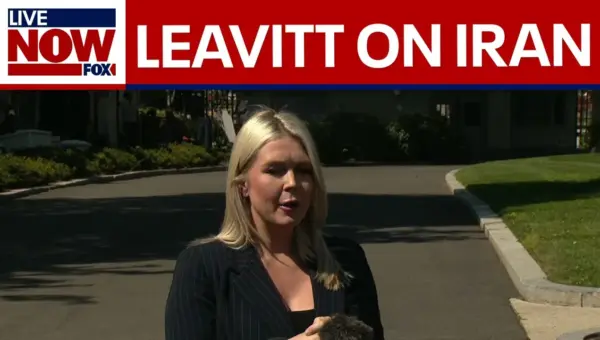
Iran Ceasefire Extended: US Tightens Economic Grip
The White House announced an extension of the ceasefire with Iran, but emphasized that economic pressure through a naval blockade continues. Press Secretary Leavitt stated the U.S. is 'strangling their economy' and awaits a unified response from Tehran amidst internal divisions. No firm deadline has been set for Iran's proposal.
Russia Tests NATO Resolve with Baltic Air Show
Russia has conducted provocative military flights over the Baltic Sea, prompting NATO to scramble jets. This action is seen as a political maneuver to project strength amid internal struggles and battlefield setbacks in Ukraine. The move highlights Russia's reliance on information warfare and hybrid tactics as its conventional military faces significant challenges.
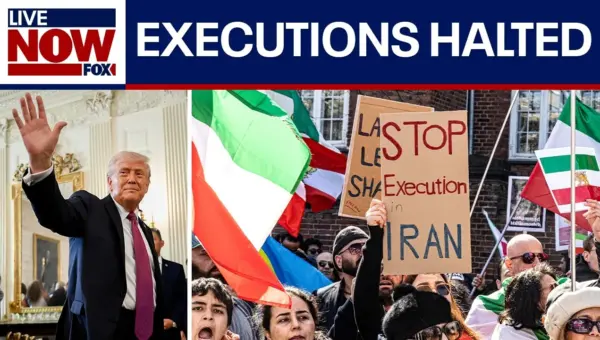
Trump Claims Credit for Iran Releasing 8 Women Protesters
Former President Donald Trump announced that Iran has halted the execution of eight women protesters, stating his request as U.S. President led to the decision. Four women will be released immediately, while the other four will serve one-month prison sentences.