Iran Appoints New Leader Amid Escalating Conflict with U.S.
Iran has appointed Mushtabah al-Khamenei as its new Supreme Leader amidst escalating conflict with the U.S. The move comes as U.S. casualties rise and speculation grows about the deployment of American ground troops. The nation faces internal divisions and external pressures as the war intensifies.

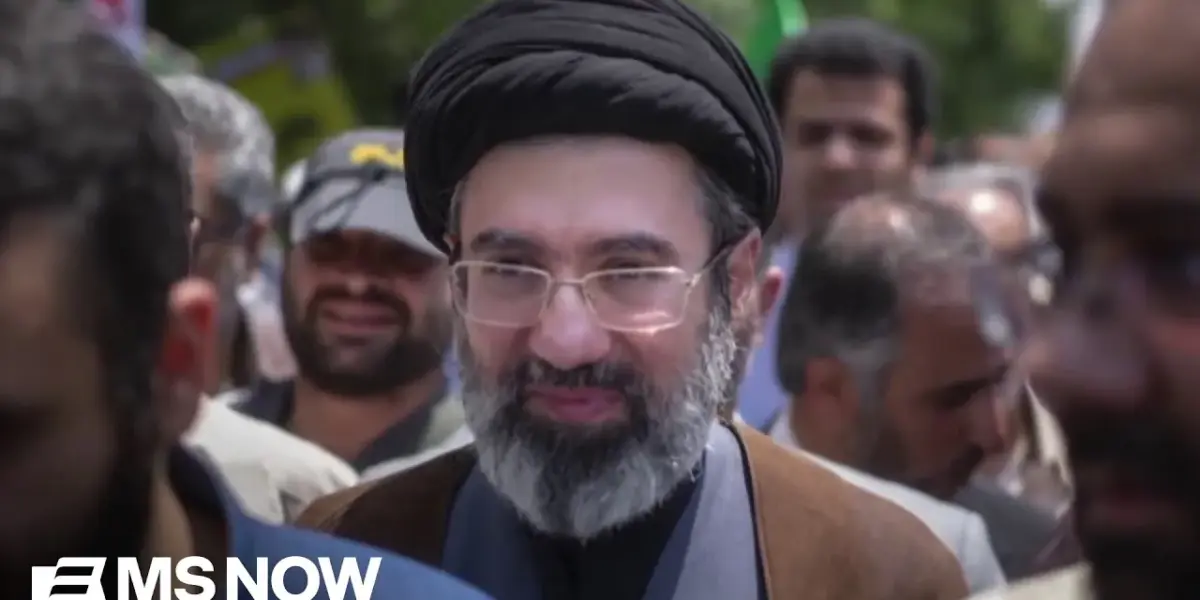
Iran Names New Supreme Leader, Mushtabah al-Khamenei, as Conflict Intensifies
In a significant development, Iran’s Assembly of Experts has appointed Mushtabah al-Khamenei as the country’s new Supreme Leader, succeeding his father, Ayatollah Ali Khamenei. The announcement, carried by Iranian state media, comes as the ongoing conflict between Iran and the United States escalates, marked by retaliatory strikes and growing speculation about the potential deployment of U.S. Ground troops.
Escalating Military Tensions and U.S. Casualties
The appointment of the new Supreme Leader coincides with a grim milestone in the conflict: the death of an eighth U.S. Service member from injuries sustained in earlier Iranian attacks across the Middle East. This escalating violence has seen the U.S. and Israel conducting massive strikes against Iran’s oil facilities, causing visible plumes of smoke over the region. Simultaneously, Iran has continued its retaliatory strikes, hitting Gulf countries despite an apparent apology from Iran’s president for striking neighboring nations just days prior.
Speculation Mounts Over U.S. Ground Troop Deployment
Amid the heightened tensions, discussions between the U.S. and Israel regarding the potential deployment of special forces into Iran have surfaced. The objective of such an operation would reportedly be to secure Iran’s stockpiles of highly enriched uranium. This move would almost certainly necessitate the presence of American or Israeli soldiers on Iranian soil, marking a significant escalation in the conflict.
“Every sign that I’m seeing is that they’re flirting with the idea of ground troops… Then we could be in for something that lasts. I mean, we all remember Iraq.
This could last months. This could last years.”
A Shadowy New Leader for Iran?
Mushtabah al-Khamenei remains a relatively unknown figure both inside and outside Iran. Described as a “shadowy figure,” his public profile is minimal, with most information about him derived from second-hand reports.
He is believed to have connections to his father’s office and various security services within Iran. While some within the regime have attempted to portray him as a modernizer, concerns persist about his hardline stance and his ability to unite the country’s disparate factions.
The appointment has drawn criticism from prominent Iranian figures, including former President Hassan Rouhani and former National Security Advisor Ali Larijani, who had reportedly pleaded with the Assembly of Experts against proceeding. The irony of a regime founded on opposition to monarchy establishing what appears to be a dynastic succession is not lost on observers.
Internal Threats and External Pressure
The new Supreme Leader faces significant internal threats. He is not considered a consensus candidate, and prominent figures within Iran have voiced opposition. Israeli officials have indicated that whoever assumes the role of Supreme Leader will remain a target, suggesting a continuous effort to destabilize Iran’s leadership.
Arash Azizi, author of “What Iranians Want: Women, Life, Freedom,” highlighted the deep internal divisions. “He does not, he’s not a consensus candidate.
That’s been clear in the last few days,” Azizi stated. He also noted that while many supporters exist, opponents are also present within the country.
U.S. Strategy and the Role of Energy
The strategic importance of energy in the U.S. Approach to the conflict is evident. Discussions have included the possibility of capturing Iran’s strategic oil field, Harg Island, which produces a substantial portion of the country’s crude oil. The idea is that controlling this economic lifeline could force Iran into surrender.
However, this strategy faces significant challenges. The potential for Iran to retaliate against other oil fields in the region, disrupting global energy markets, is a major concern.
“We know that 20 percent of the world’s oil transits or used to transit through the Strait of Hormuz. We know that Iran is going to do something to try to fight back,” a commentator noted, questioning the White House’s assessment that major oil shocks would be avoided.
China’s role is also a critical factor, as it relies heavily on Iranian oil. The potential disruption of energy supplies could draw China further into the conflict, complicating U.S. Objectives. Ironically, China’s investment in renewables and electric vehicles positions it better to withstand energy price spikes than the U.S., which has opposed such transitions.
The Human Cost and Future Outlook
For Iranians, both domestically and in the diaspora, the current situation is one of profound sadness and helplessness. Arash Azizi described the daily anxiety of contacting family members to ensure their safety and the pain of seeing familiar places in Tehran on fire. “The reality is their fate is being decided not by themselves, but by Donald Trump, by Israel and by different factions of the regime that doesn’t represent them,” Azizi lamented.
The conflict has brought war to the doorstep of ordinary Iranians, who largely desired peace and stability. The new regime faces the immense challenge of navigating this war, securing a new social contract with its people, and finding a diplomatic path forward with the U.S. and Israel.
Looking Ahead
The coming weeks will be critical in determining the trajectory of this escalating conflict. The effectiveness of the new Iranian leadership in consolidating power, the potential for U.S. Ground troop involvement, and the broader geopolitical implications, particularly concerning energy markets and China’s role, will be closely watched.
Source: Iran announces new Supreme leader while U.S. is “flirting with the idea” of ground troops (YouTube)

Related Articles
Trump Claims Credit for Iran Releasing 8 Women Protesters
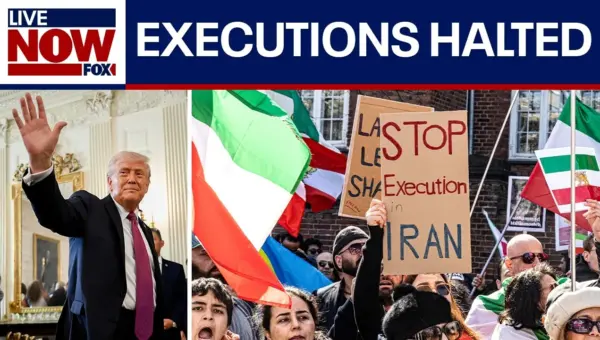
Former President Donald Trump announced that Iran has halted the execution of eight women protesters, stating his request as U.S. President led to the decision. Four women will be released immediately, while the other four will serve one-month prison sentences.

Mandelson’s Putin Lobbying Sparks Judgment Concerns
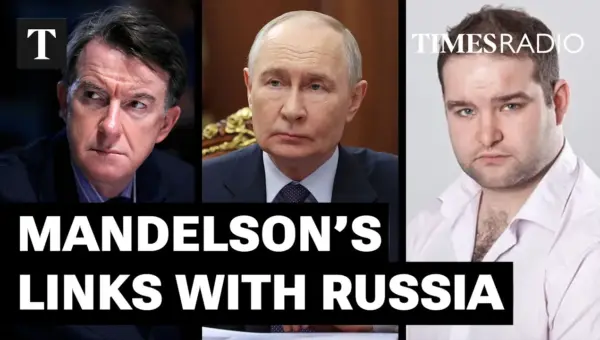
Lord Mandelson is facing scrutiny for lobbying Russian President Vladimir Putin in 2017 on behalf of a Russian company, AFK Sistema. While his actions were not illegal, critics question his judgment given Russia's adversarial stance towards the UK at the time. Mandelson received significant financial compensation for his role, adding another layer to the controversy.


Fox News Spins Falsehoods as Trump’s Iran Deal Collapses
Donald Trump's Iran deal efforts reportedly collapsed, leading to conflicting narratives from media outlets. While some promoted a strong negotiation, others claim the deal failed due to Trump's actions, with Fox News accused of spreading false information about a coup in Iran to mask the outcome.