Noem Out at DHS; Trump Taps Mullen Amidst Policy Shift
Kristi Noem has been removed as Secretary of Homeland Security and appointed special envoy for the Shields of the Americas. Mark Wayne Mullen is reportedly set to take over DHS leadership amidst criticism of Noem's tenure and past strategies. The transition signals a potential shift in the department's approach to immigration enforcement and national security.

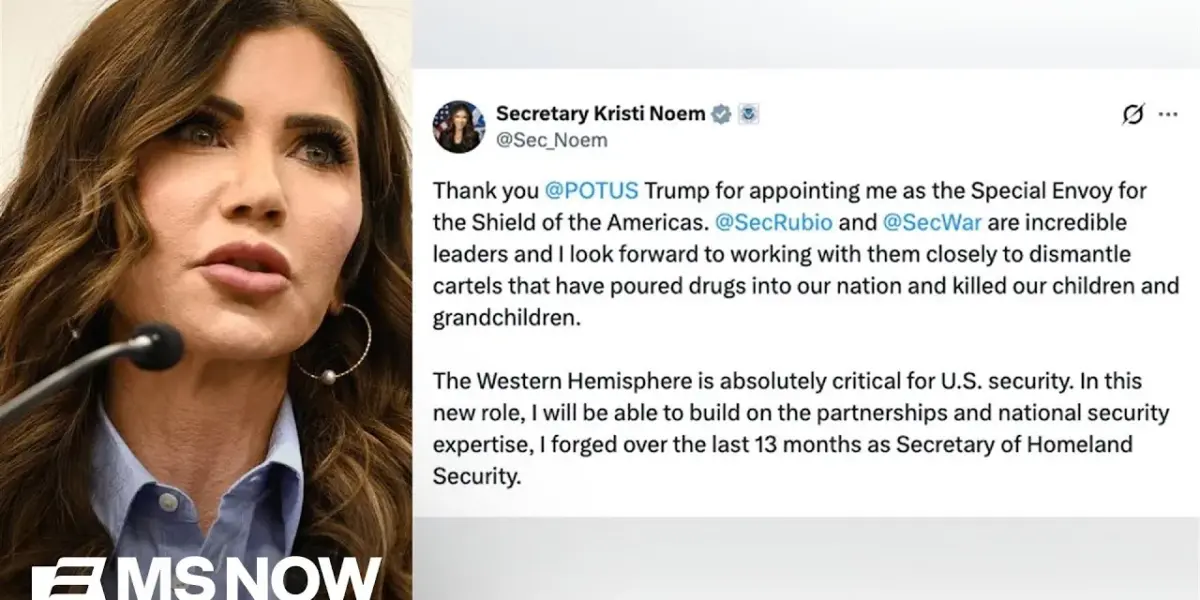
Kristi Noem Departs Department of Homeland Security, Special Envoy Role Announced
Kristi Noem has been removed from her position as Secretary of the Department of Homeland Security (DHS), a move confirmed by her social media post thanking President Trump for appointing her as the special envoy for the Shields of the Americas. The announcement comes amid criticism of her tenure, particularly concerning the handling of protests and immigration enforcement strategies. Noem’s new role will focus on dismantling cartels and strengthening national security partnerships in the Western Hemisphere.
Mark Wayne Mullen Tapped to Lead DHS Amidst Controversy
Following Noem’s departure, President Trump has reportedly appointed Mark Wayne Mullen to potentially lead the DHS. This decision has drawn scrutiny, with some observers, including former acting ICE director John Sandweg, expressing concern over Mullen’s past statements and lack of direct border state experience. Sandweg noted Mullen’s comment characterizing a protestor as a “deranged individual who came in to cause massive damage with a loaded pistol, was shot and killed,” suggesting a need for a more measured response, akin to that of former acting ICE Director Tom Homan.
“I would hope for more measures. No, he said it to Fox. He said it to Fox.
Excuse me. Yeah, yeah.
No, it’s unfortunate. I wish, you know, you’d hope for a more measured response similar to the one like you were talking about earlier that Tom Homan gave.”
Criticism of Noem’s DHS Leadership and Minneapolis Response
Noem’s tenure at DHS has been marked by controversy, particularly her response to protests in Minneapolis. Critics, including Senator Tom Tillis, have pointed to an emphasis on “quantity over quality” in operations, including the deployment of border patrol agents in urban environments and aggressive confrontations with protesters. This approach, characterized as “surge operations” and “very, very public displays of force,” has been described as divisive within the administration and not uniformly supported.
Sandweg suggested that Noem’s legacy will be defined by the Minneapolis response and the operational design, stating, “All of that is going to be her legacy.” He expressed hope that her departure would resolve the debate over whether to pursue more Minneapolis-style operations or a traditional immigration enforcement approach.
Concerns Over DHS Leadership Continuity and Policy Direction
The transition at DHS has also raised concerns about policy continuity and the potential for a return to controversial practices. Jacob Soboroff, a journalist covering immigration, cautioned that the appointment of new leadership following Kersten Nielsen’s departure in 2019, after the family separation policy, led to interim leaders like Kevin McAleenan and Chad Wolf, both of whom were involved in that policy. This history has led to questions about how much the “culture” at DHS is likely to change, especially with key immigration advisor Stephen Miller remaining in his position.
Sandweg acknowledged that President Trump may have initially “liked the operations” until they “went south.” However, he noted that Tom Homan, upon his deployment to Minneapolis, was “not shy about saying he was not happy with the way things had gone,” indicating a desire for a “smarter” and more targeted approach.
Shifting Tactics and Potential for a New DHS Approach
There were reports of a divided DHS regarding the “Noem/Border Patrol Bavino type approach” of surge operations. Sandweg indicated that the emphasis on quantity over quality and public displays of force was not a uniform administration position, with opposition from figures like Homan and the CBP commissioner. This internal tension suggests that Noem’s removal could signal an end to that particular style of operation.
“I am actually slightly optimistic here that the elimination of Secretary Noem is going to see hopefully an end to that style of operation, right? That we’re not going to see another Minneapolis, another Chicago,” Sandweg stated, while acknowledging that “time will tell” if Mullen adopts similar tactics.
Noem’s Pre-Departure Awareness and New Role Focus
The timing of Noem’s departure and her awareness of the impending change have been subjects of speculation. Reports suggest she had been “on the outs” and had to “pitch herself to the president” after the Minneapolis incident to avoid being fired. Her social media post, appearing shortly after the news broke, confirmed her new role and expressed enthusiasm for working with Secretary Rubio and other leaders to combat cartels and enhance national security.
In her statement, Noem said, “In this new role, I will be able to build on the partnerships and national security expertise I forged over the last 13 months as Secretary of Homeland Security.” This indicates a strategic shift, moving from direct operational command to a focused envoy role targeting transnational criminal organizations.
Looking Ahead: The Future of DHS and Immigration Policy
The coming weeks will be crucial in determining the future direction of the Department of Homeland Security under new leadership. The focus will be on whether Mark Wayne Mullen can implement a more targeted and effective immigration enforcement strategy, moving away from the controversial surge tactics. Kristi Noem’s effectiveness as a special envoy in combating cartel activity and securing the Western Hemisphere will be closely watched, potentially reshaping the administration’s approach to international security threats.
Source: Kristi Noem addresses new position, thanks Trump (YouTube)

Related Articles


California Faces Claims of Free Gender Care for Migrants
A new report claims California offers free gender-affirming care, including surgeries, to undocumented immigrants. State officials deny these claims, stating Medi-Cal has strict eligibility. The controversy raises questions about state spending and accountability.


Beef Prices Soar Despite Trump Admin’s Price Cut Promises
Despite campaign promises to lower grocery prices immediately, beef costs have hit record highs, according to federal data. An investigation by MS NOW's JM Rieger reveals shifting statements from the Trump administration regarding efforts to control food prices. Consumers continue to feel the pinch as beef remains unaffordably expensive.
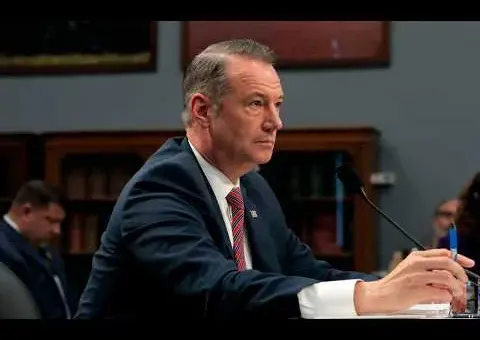
ICE’s Top Leader Departs: What Does This Mean for Immigration Enforcement?
Todd Lyons, the acting director of ICE, is stepping down to move into the private sector. His tenure was marked by efforts to enforce the Trump administration's immigration policies, focusing on removing violent criminals. This leadership change comes at a critical time for immigration enforcement debates in the U.S.