Europe Divided Over Iran Conflict Amidst US Strikes
Europe's response to the US and Israeli strikes on Iran is marked by division, with France taking a defensive military posture. Tensions are also rising between the US and European allies like the UK and Spain over their level of support, while Germany offers cautious cooperation.

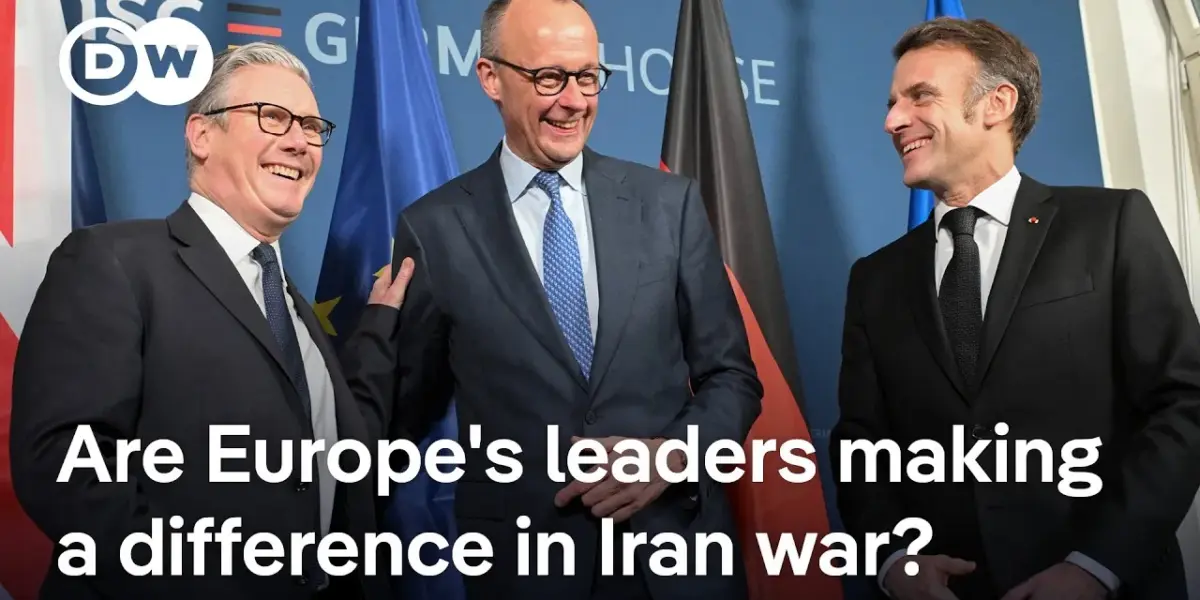
Europe’s Fractured Response to Middle East Tensions
Europe finds itself at a critical juncture, grappling with a divided and often hesitant response to the escalating conflict between the United States, Israel, and Iran. While the US and Israel have undertaken direct strikes against Iran, key European nations are struggling to forge a unified and decisive stance, reflecting a familiar pattern of discord in modern international relations, particularly when navigating actions taken by the United States under the Trump administration.
France Takes a Proactive, Defensive Stance
Amidst the prevailing uncertainty, French President Emmanuel Macron has emerged with the most robust and proactive response. Macron announced the deployment of France’s nuclear-powered aircraft carrier, the Charles de Gaulle, and its accompanying strike group to the Mediterranean. This significant military asset movement is intended to strengthen the defenses of countries in the region that have been targeted by Iran in retaliation for the US and Israeli strikes.
“In addition to the assets already in place, fighter jets, anti-aircraft defense systems, and airborne radar have been deployed in recent hours. We will continue with these efforts as needed. First, in light of this unstable situation and the uncertainty of the days ahead, I have ordered the aircraft carrier Charles de Gaulle along with its air assets and frigate escort to head towards the Mediterranean.”
Terry Schultz, DW’s Brussels correspondent and NATO expert, clarified the strategic intent behind France’s move. “I don’t think President Macron wants to make an offensive difference to the war. Uh he says that he’s making these moves in a defensive posture,” Schultz explained.
France’s decision is partly motivated by recent drone attacks on its own bases, signaling that its national interests are directly at stake. The deployment of radar and air defense systems underscores a defensive posture, rather than an intention to join offensive operations alongside the US and Israel.
While Macron acknowledged concerns about the legality of international law in the operations, France’s existing defense agreements with nations like Qatar and Kuwait, and its air bases in the UAE, provide a framework for offering support to regional partners. The visible deployment of the Charles de Gaulle, however, may be intended to project an image of capability, even if offensive action is not currently planned.
Transatlantic Tensions Flare Over Allied Support
The conflict has also exposed significant rifts between the US and some of its European allies, particularly concerning the level of support provided for the strikes against Iran. French President Macron had previously warned that the war risked spilling over into Europe, and President Trump has voiced strong displeasure with the perceived lack of cooperation from key partners.
UK’s Restraint and Trump’s Disappointment
British Prime Minister Keir Starmer is identified as one of the primary sources of this dissatisfaction. Reports indicate that the UK did not permit the use of its bases for the initial wave of strikes against Iran. Starmer’s stated position, “the UK did not believe in regime change from the skies,” has drawn sharp criticism from President Trump.
“So we are very surprised. This is not Winston Churchill that we’re dealing with.
I will say the UK has been very, very uncooperative and they ruin relationships. It’s a shame.”
Trump’s remarks highlight a stark contrast between his expectations and the UK’s approach to the conflict.
Spain Denies Base Access, Faces Retaliation Threats
Spain’s Prime Minister Pedro Sanchez also faced President Trump’s ire for his government’s stance. Sanchez characterized the US strikes as contributing to “a more hostile and uncertain international order” and denied permission for the US to utilize jointly operated military bases. This refusal prompted a strong reaction from President Trump, who threatened economic repercussions.
“I could tomorrow stop or today even better, stop everything having to do with Spain, all business having to do with Spain. Have the right to stop it.
Uh embargos, do anything I want with it. And we may do that with Spain.”
Terry Schultz elaborated on the complexities of these threats, noting that Spain has been a target of Trump’s criticism before, particularly regarding defense spending within NATO. However, Schultz pointed out that Spain’s response, emphasizing that trade deals are managed at the European Union level, suggests Trump’s ability to unilaterally impose sanctions on a single EU member may be limited.
Germany’s Cautious Cooperation
In contrast to the UK and Spain, German Chancellor Olaf Scholz appears to have navigated the situation with more favor from the US. Scholz, who was in Washington, received praise from President Trump. Germany’s contribution involves allowing the US to utilize its bases, such as the significant Ramstein Air Base, for operations in the Middle East.
This includes the relocation of over a dozen aircraft from Spain to Germany. Chancellor Scholz has maintained a cautious approach, avoiding direct criticism of US actions while also being reluctant to offer explicit support, reflecting a broader European discomfort with operations that may not fully align with international law.
Europe’s Deepening Concerns Over Conflict Spillover
The specter of the conflict directly impacting Europe is a growing concern across the continent. The drone attack on a UK base in Cyprus, regardless of intent, has forced European leaders to re-evaluate their roles and the potential for direct involvement. Beyond potential military implications, European nations are actively working to evacuate citizens from the volatile region, a task complicated by dangerous airspace conditions.
“I think not just in Brussels, but in every European capital because as as you say, we we have seen uh drone attacks hit bases um in Cyprus. Whether or not those that was intentional, who knows? But nonetheless, it did uh force a rethink on the part of European leaders about um what role they will have to play,” Schultz stated.
The diversion of European military resources to support operations in the Middle East means these assets are unavailable for homeland defense or other NATO and EU commitments. This stretching of resources, coupled with the possibility of further escalation, leaves European leaders deeply worried about the unfolding situation.
The Challenge of Unified European Action
The question of whether European leaders possess the ‘backbone’ to stand up to President Trump’s often harsh rhetoric and demands remains a significant point of discussion. Schultz suggests that historical patterns, particularly within NATO and the EU, indicate a difficulty in achieving a unified voice against the United States.
European leaders often prioritize defensive or humanitarian missions for their deployed assets, rather than providing unconditional support for US-led operations. President Trump’s repeated criticisms and perceived success in getting his way may stem from this observed challenge in achieving cohesive European action.
Looking Ahead: Europe’s Strategic Balancing Act
As the situation in the Middle East remains volatile, Europe faces a complex strategic balancing act. The continent must contend with internal divisions, transatlantic strains, and the tangible risks of conflict spillover. The coming weeks will be crucial in observing whether European nations can coalesce into a more unified and effective response, or if the current fragmented approach will persist, leaving them more vulnerable to the escalating geopolitical tensions.
Source: Europe remains divided over Iran war, but is it actually invested? | DW News (YouTube)

Related Articles
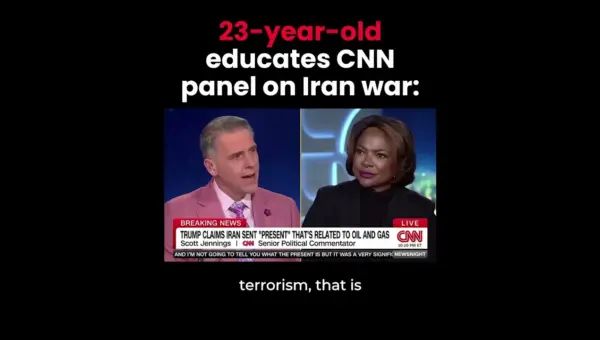
Did We Win? The Confusing Reality of US Mideast Policy
President Trump claims victory over Iran, but military deployments and regional changes suggest otherwise. Analysts highlight a gap between official statements and the complex reality on the ground. The situation raises serious questions about the costs and true outcomes of U.S. involvement in the Middle East.
US Actions Aid Putin, Fuel Iran Tensions, Analysts Claim
Analysts are criticizing recent U.S. actions, including seizing an Iranian ship and easing sanctions on Russian oil, claiming these moves benefit Russia and escalate Middle East tensions. Iran has vowed retaliation, jeopardizing planned peace talks, while oil prices have surged amidst the growing instability.
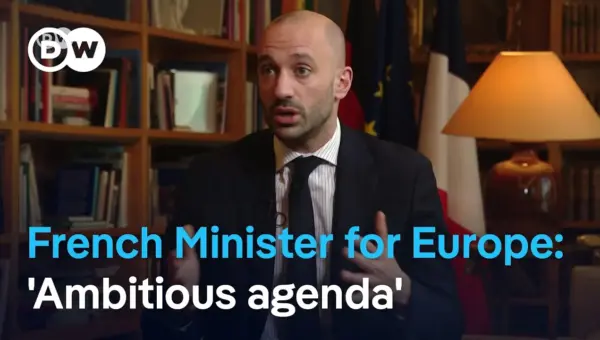
France Urges Ambitious EU Agenda Amid Global Challenges
France is advocating for a more unified and ambitious European Union, urging stronger defense capabilities and a unified voice in global affairs. Minister Delegate Jean-Baptiste Barra Hadad highlighted the need for increased cooperation between France and Germany to address geopolitical challenges, including Russia's aggression and trade pressures. He also stressed that EU enlargement is a geopolitical necessity, provided it remains demanding and merit-based.