Virginia Voters Approve Map Shift Favoring Democrats
Virginia voters have narrowly approved a ballot measure to redraw congressional districts, a move expected to benefit Democrats by potentially adding four U.S. House seats. The decision follows a trend initiated by Donald Trump and highlights the ongoing partisan battles over electoral maps. Experts predict significant Republican losses in the state as a result of the new map.

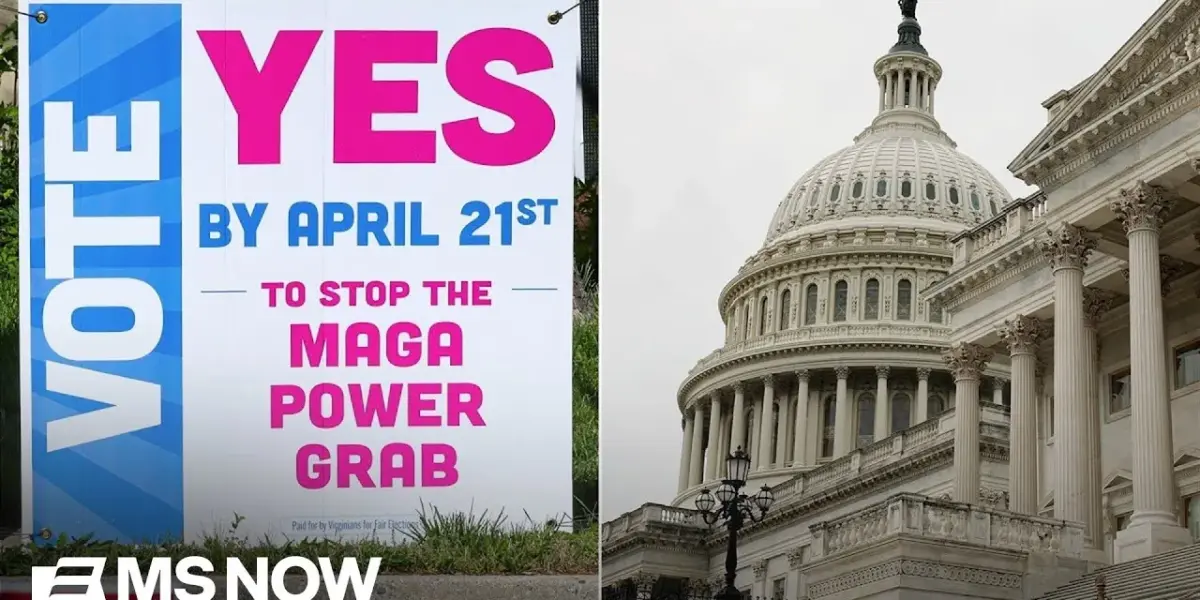
Virginia Voters Approve Redistricting Map Favoring Democrats
Virginia voters have narrowly approved a ballot measure that will redraw the state’s congressional map, a move expected to benefit Democrats. The decision could allow the party to gain as many as four U.S. House seats in the upcoming midterm elections.
This marks the seventh state to adjust its redistricting map mid-decade, a trend that began last year following encouragement from former President Donald Trump. The vote is seen as a significant step in the Democratic Party’s broader effort to secure control of the House of Representatives.
Expert Analysis Predicts Republican Losses
Larry Sabato, Director of the Center for Politics at the University of Virginia and a presidential historian, believes the new map will likely result in Virginia having four fewer Republican congressmen starting next year. While not an absolute certainty, Sabato noted that the newly approved districts make it challenging for incumbent Republican congressmen to win re-election.
He pointed out that one Republican congressman’s district was specifically designed to concentrate Republican voters, effectively saving him. This shift is expected to lead to four additional Democratic seats.
Potential Impact on House Control
The potential gain of four seats could be crucial if the House of Representatives remains closely divided. Sabato suggested that even amidst national challenges like war, high prices, and rising gas costs, these four seats could determine which party controls the House. The close nature of the vote, with results appearing to be around 52-48, highlights the divided sentiment among voters, though Sabato observed that very few Republicans appeared to vote in favor of the measure.
Voter Perspectives on Gerrymandering
Voter opinions on the redistricting measure were divided, reflecting the national debate over gerrymandering. One voter who opposed the measure stated a preference for Virginia’s historically balanced voting patterns and competition between parties.
This voter expressed opposition to gerrymandering, believing that voters, not politicians, should decide election outcomes. Conversely, a voter who supported the measure identified as a Democrat and felt the change was necessary to “level the playing field.” This voter acknowledged that the practice was not initiated by Democrats but felt compelled to respond to what they perceived as existing Republican control.
The Role of Donald Trump in Redistricting Trend
The current redistricting effort in Virginia is part of a larger trend that began with former President Donald Trump’s encouragement for states to redraw congressional maps mid-decade. Trump’s initial push in Texas last year set a precedent that other states have since followed. Sabato noted that some senior Republicans privately questioned the strategy behind this trend, calling it “insane.” They reportedly believed Democrats would not react, but the outcome in Virginia shows a strong Democratic response that aims to counter Republican gains made through similar redistricting efforts in other states.
Democrats’ Response to Republican Strategy
Sabato explained that while many Democrats dislike gerrymandering and are not accustomed to using it, they felt they had no choice but to engage in the practice to remain competitive. The decision to vote yes was largely seen as a strategic response to Republican actions, particularly those initiated or encouraged by Donald Trump.
Many Democrats viewed this as a necessary step to avoid “unilaterally disarming” in the face of Republican efforts to gain electoral advantages through redistricting. Even some Democrats who were troubled by the idea of gerrymandering ultimately voted in favor of the measure to send a message and prevent further Republican gains.
Future of Redistricting and Political Strategy
The debate over mid-decade redistricting raises questions about future political strategies. Sabato suggested that an interstate compact could be a potential solution, where states pledge not to engage in mid-decade redistricting. However, he acknowledged the difficulty of implementing such an agreement, especially when one party is actively using the practice to its advantage.
The situation in Virginia highlights the ongoing partisan battles over electoral maps and the lengths to which parties will go to influence election outcomes. The next steps will involve observing how these new districts perform in the upcoming elections and whether other states consider similar redistricting measures.
Source: Virginia passes congressional redistricting to benefit Democrats (YouTube)

Related Articles


Virginia Voters Reject Trump’s Redistricting Scheme
Virginia voters have rejected Donald Trump's redistricting scheme, potentially shifting House power and delivering a blow to his control efforts. Governor Abigail Spanberger highlighted the vote's significance, contrasting it with Trump's tactics in Texas. House Democratic Leader Hakeem Jeffries emphasized the need for Democratic oversight and a focus on lowering living costs.

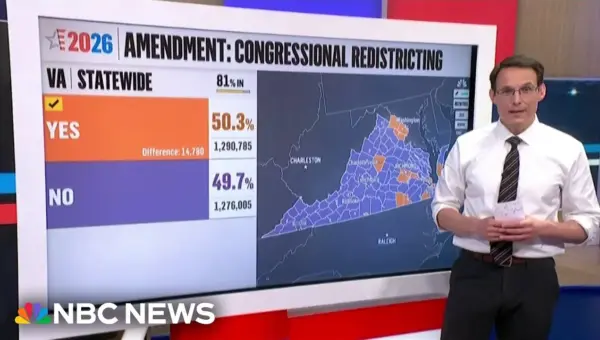
Virginia Voters Approve New Map, Boosting Democratic House Hopes
Virginia voters have approved a new congressional redistricting amendment, significantly reshaping the state's political map. The decision is projected to create a map with ten Democratic seats and one Republican seat, potentially giving Democrats the gains they need to win control of the U.S. House of Representatives.

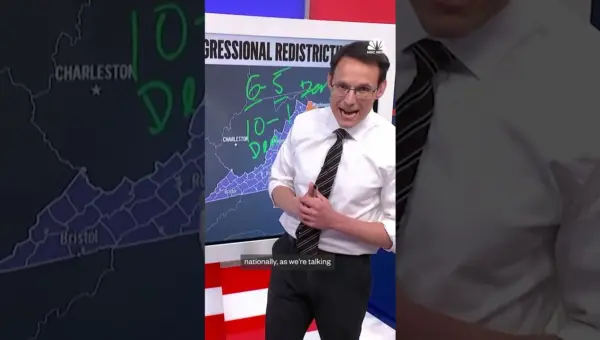
Virginia Voters Back Democrats’ Redistricting Map, Boosting House Hopes
Virginia voters have approved a new congressional redistricting map, a decision projected to give Democrats a significant advantage. The new map is expected to shift the state's congressional delegation from a 6-5 to a 10-1 Democratic majority. This outcome could be crucial for Democrats' national efforts to regain control of the House of Representatives in the upcoming midterm elections.