Pakistan, Saudi Arabia Deepen Military and Financial Ties
Pakistan and Saudi Arabia are deepening their strategic and economic ties, underscored by a new mutual defense pact and significant financial support. This closer alliance emerges amidst rising regional tensions, as both nations seek to bolster security and navigate complex geopolitical challenges. The strengthened relationship highlights a re-evaluation of security partnerships in the Muslim world.

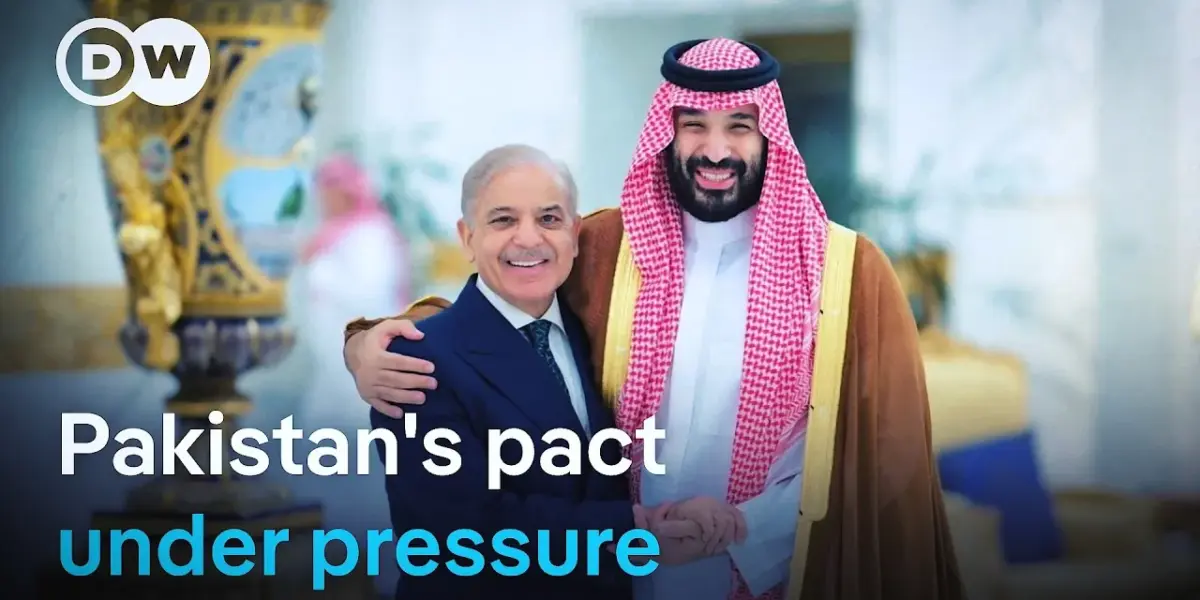
Pakistan and Saudi Arabia Forge Stronger Bonds Amid Regional Tensions
Pakistan and Saudi Arabia are strengthening their long-standing relationship, driven by mutual defense needs and economic support. This closer alliance comes as regional conflicts, particularly involving Iran, the US, and Israel, prompt a re-evaluation of security partnerships across the Muslim world. The two nations, bound by religion, finance, and security, find their alliance under a new spotlight, raising questions about their commitments and future obligations.
Bish Javage, a DW reporter with extensive experience covering Pakistan, explained the significance of this relationship. Pakistan, a populous nation with a Sunni Muslim majority, feels a strong connection to Saudi Arabia, the custodian of Islam’s holiest sites. This religious affiliation forms a foundational element of their bond, influencing political and social ties for decades.
Economic Lifeline and Strategic Defense
The economic ties between Pakistan and Saudi Arabia are vital for Pakistan’s stability. Approximately 2.5 million Pakistanis work in Saudi Arabia, sending home significant financial remittances that form a major source of foreign currency for Pakistan. Saudi Arabia has consistently provided financial assistance during Pakistan’s economic difficulties, helping to strengthen its foreign exchange reserves.
In return for this crucial financial support, Saudi Arabia gains a valuable strategic advantage from Pakistan. As a nuclear-armed nation, Pakistan offers a defense umbrella, providing Saudi Arabia with a level of security assurance. This exchange of financial stability for strategic depth has been a cornerstone of their relationship for many years.
Mutual Defense Pact: Symbolism vs. Reality
Last September, the two countries formalized their alliance by signing a mutual defense pact. On paper, this agreement signifies a serious commitment, stating that an attack on one is an attack on both. However, the practical application of such pacts can be complex, as demonstrated during recent tensions with Iran.
While the pact offers symbolic deterrence, Javage noted that nations ultimately prioritize their national interests. When Iran launched attacks, Pakistan did not militarily intervene on behalf of Saudi Arabia, as doing so would conflict with Pakistan’s own national interests and its relationship with its neighbor, Iran. The symbolic value of the defense agreement remains high, but real-world actions are guided by national priorities.
Pakistan’s Balancing Act: Mediation and Self-Interest
Pakistan found itself in a delicate position during the recent Iran-Saudi conflict. While not joining the fight, Pakistan did not remain entirely passive.
The country sent fighter jets to the Gulf and simultaneously began mediating between the US and Iran. This approach, while appearing to play both sides, was driven by Pakistan’s own strategic concerns.
A primary motivation for Pakistan’s mediation efforts was to prevent Saudi Arabia from invoking the defense agreement. Pakistan wanted to avoid being forced into a military conflict with Iran, with whom it shares a long border. By actively seeking to de-escalate tensions and mediate, Pakistan aimed to protect its own interests and maintain stability in the region.
Domestic Support and Regional Implications
Domestically, Pakistan’s alliance with Saudi Arabia enjoys broad public support due to the shared Sunni Muslim identity. However, public opinion in Pakistan also shows significant support for Iran, creating a complex balancing act for the Pakistani government. The government must carefully manage its relationships with both regional powers to maintain stability.
The recent Iranian attacks have also highlighted a broader trend in the Gulf. They exposed a perceived gap in security reliance on the United States, suggesting that American protection alone may not be sufficient for Gulf nations. This vulnerability could lead other Gulf countries to seek regional partners for defense, potentially further strengthening alliances like the one between Pakistan and Saudi Arabia.
Strengthening Ties Amidst Shifting Alliances
The conflict appears to have tightened the bonds between Pakistan and Saudi Arabia rather than driving them apart. Reports indicate that Pakistan has deployed troops to Saudi Arabia for the first time since signing the defense agreement. Pakistan sent fighter jets to the kingdom, and Saudi Arabia has provided financial aid to Pakistan, reinforcing its foreign exchange reserves.
The relationship between Pakistan and Saudi Arabia is now stronger following the recent conflict. For Pakistan, maintaining close ties with Saudi Arabia offers significant economic and strategic benefits, but it also entails risks, especially when regional conflicts escalate. As the region navigates these changing dynamics, Pakistan and Saudi Arabia appear to be drawing closer together.
Source: What's behind Pakistan's deepening ties with Saudi Arabia? | DW News (YouTube)

Related Articles


Small Nuclear Reactors Spark Energy Debate Amid Global Instability
Small modular reactors (SMRs) are emerging as a potential solution for reliable, cleaner energy, aiming to overcome the challenges of traditional nuclear power. While promising enhanced safety and flexibility, SMRs face hurdles in cost, deployment timelines, and public perception, especially when compared to rapidly advancing renewables. Global energy instability is fueling interest, but their actual impact remains to be seen.


Trump Extends Iran Ceasefire Amid Price Hikes, Faces Tough Choices
President Trump has extended the ceasefire with Iran, continuing a blockade of its ports amid rising domestic fuel prices. Analysts suggest this move is an attempt to save face as the U.S. faces economic pressure and Iran demonstrates resilience. The situation remains uncertain, with a focus on how long the U.S. can sustain its pressure campaign.

Trump Halts Iran Talks, Extends Ceasefire Amid Nuclear Standoff
President Trump has extended a ceasefire as crucial nuclear talks with Iran have collapsed, with Vice President Vance returning to the White House after Iran refused to attend negotiations. The U.S. cited Iran's refusal to commit to talks and its recent aggressive actions, including firing on an oil tanker, as reasons for the breakdown. Despite economic pressure, Iran's military capabilities remain significant.